The USS George H.W. Bush has arrived. The Iran war has now entered a new and deeply uncertain phase — and the President isn’t talking about deadlines. In the most significant escalation of naval power since the opening phase of the 2003 Iraq War, the United States now has three aircraft carriers in the waters
The USS George H.W. Bush has arrived. The Iran war has now entered a new and deeply uncertain phase — and the President isn’t talking about deadlines.
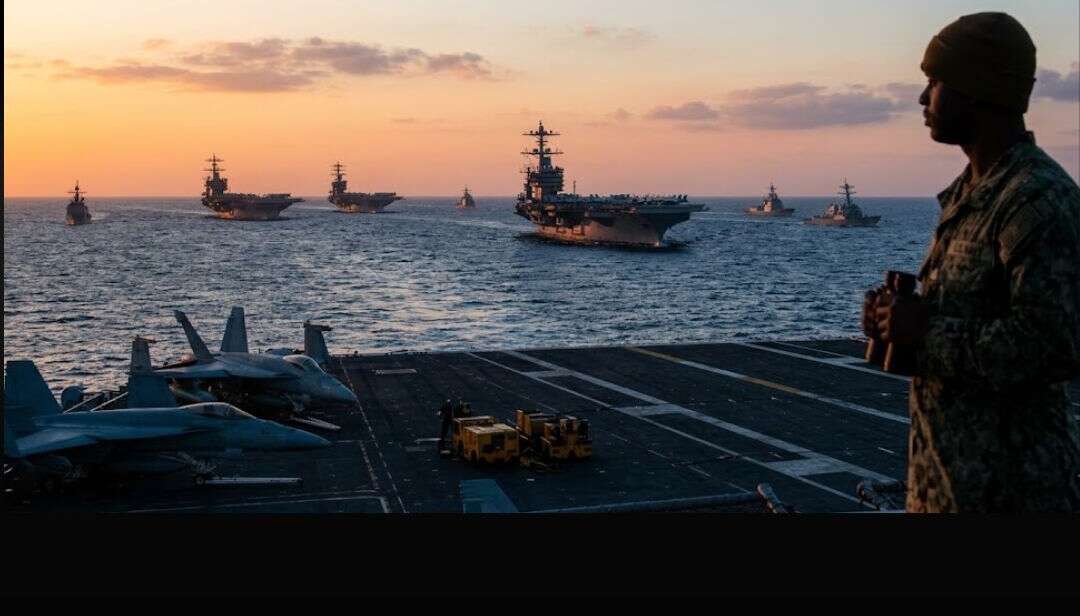
In the most significant escalation of naval power since the opening phase of the 2003 Iraq War, the United States now has three aircraft carriers in the waters surrounding Iran. For millions of Americans tracking the latest news with Iran, the deployment is both a military milestone and a political signal — one the White House is delivering with unusual deliberateness, and unusual silence.
The Third Carrier Arrives
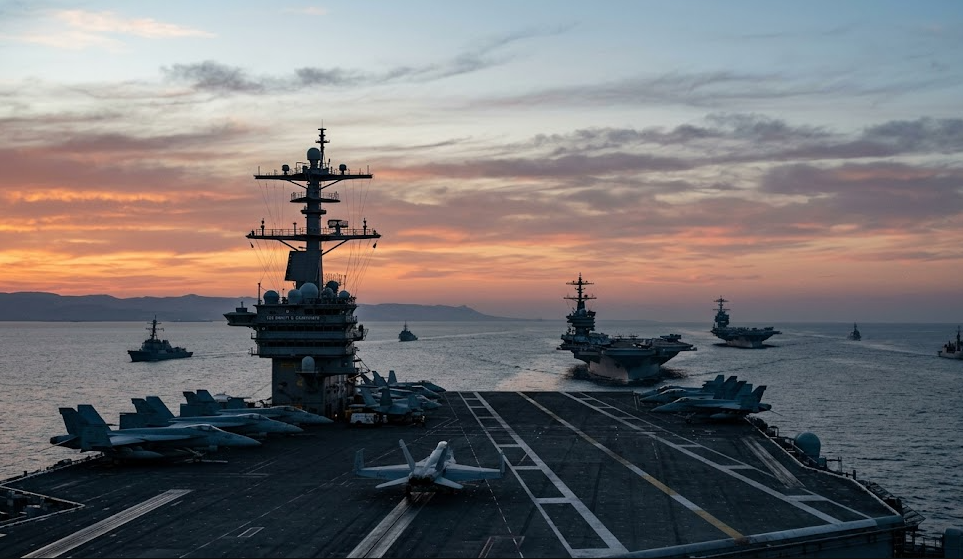
US Central Command (CENTCOM), which coordinates American forces throughout the Middle East, announced in a social media post that the third aircraft carrier, the Nimitz-class USS George H.W. Bush, had transited into its area of responsibility. CNN
The Bush, commissioned in 2009, is the newest of 10 Nimitz-class aircraft carriers in the US fleet. Almost 1,000 feet long and displacing more than 100,000 tons, it can carry more than 80 aircraft, is powered by two nuclear reactors and has more than 5,500 sailors and air crew aboard. CNN
The USS George H.W. Bush arrived after traveling around the southern tip of Africa to reach the Middle East, according to CENTCOM. iHeartRadio That route meant it avoided the Suez Canal and the Red Sea, where Iranian-armed Houthi proxies watch over the Bab al-Mandab Strait between Yemen and the Horn of Africa. CNN
This brings the full trio of American carriers in the region into focus: the USS Abraham Lincoln positioned in the Arabian Sea south of Iran, where it has been since the beginning of the war on February 28, and the USS Gerald R. Ford operating in the Red Sea. CNN
“Don’t Rush Me” — Trump Refuses to Set an Endgame
The same day the Bush’s arrival was confirmed, President Trump was asked by reporters to give Americans a timeline for ending the Iran war. His answer was three words: “Don’t rush me,” the President said, asserting that the US is in a position of strength while the Iranian military has been “severely weakened.” He compared the current six-week timeframe to decades-long conflicts in Vietnam and Iraq, stating he is “the least pressured person ever” regarding the pace of operations. NBC
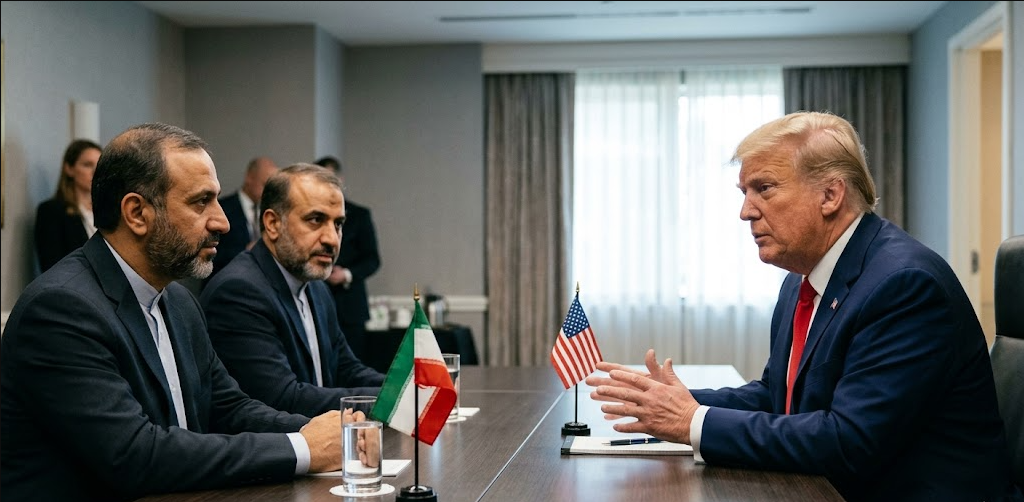
Secretary of War Pete Hegseth echoed that posture, saying the Iranian regime has a “historic chance to make a serious deal” and that the US military’s blockade is “going global.” “Our blockade is only growing and going global. And as the president said, we have all the time in the world. Iran has a historic chance to make a serious deal, and the ball is in their court,” Hegseth said. iHeartRadio
What Three Aircraft Carriers in the US Actually Means for This War
For those asking what having this many aircraft carriers in the US fleet deployed to a single theater truly signals, defense analysts have been clear: it is extraordinary.
According to data from the Center for Strategic and International Studies, three US carriers in the region would be the greatest number of American carriers there since 2003. ABC17NEWS
Military analysts suggest the presence of three carriers is designed to apply maximum psychological and military pressure on Tehran as peace talks approach. Analysts note that the imagery of such an “armada” may be as significant as its actual strike capability, serving as a warning that the US can escalate if negotiations do not proceed according to the President’s demands. NBC
The strategic advantages of the Bush specifically are notable. The Bush carries the newest F-35 fighters, which the Ford cannot handle. “Having two F-35-capable carriers adds a lot of firepower if Iran proves intransigent,” one analyst said. CNN
A US official confirmed that Washington has 19 warships in the Middle East and seven ships in the Indian Ocean, not including the Bush or the guided-missile destroyers in its strike group. CNN If the Bush is an addition rather than a replacement, analysts note it represents a massive commitment of the US carrier force — with fleet tracking websites showing only four or five of the Navy’s total of 11 carriers available for combat operations. CNN
The Iran War’s Uncertain Horizon
The latest news with Iran shows a conflict that began on February 28, now over six weeks old, with no ceasefire agreement, a tightening naval blockade, and escalating diplomatic pressure. Trump is demanding that Tehran surrender its nuclear program, reopen the Strait of Hormuz, and agree to end a weeks-long war that has destabilized much of the region. The Washington Post
Defense officials have confirmed that contingency plans are being finalized for new strikes on Iranian targets in the Strait of Hormuz, specifically targeting asymmetric assets such as small fast attack boats and minelaying vessels, which Tehran has used to disrupt key waterways. NBC
CNN military analyst and retired US Air Force colonel Cedric Leighton noted the historical significance of three carriers in the region, saying it puts pressure on Iran to reach a deal — but that it remains uncertain Iran will compromise. “The jury’s still out on that,” Leighton said. CNN
The Bigger Picture
Three aircraft carriers in the US deployed simultaneously to a single conflict zone is not a routine show of force — it is a declaration that Washington is prepared to sustain and escalate this war indefinitely. With Trump refusing to offer a timeline and his Secretary of War signaling the blockade will only expand, the Iran war has entered its most consequential phase yet.
The world is watching the waters south of Tehran. And for now, the United States is sailing them with everything it has.
Market Analysis
A quick snapshot of market trends, customer behavior, and competitor movements.