Share This Article
As the Iran energy crisis chokes off a fifth of the world’s oil supply, America’s record-breaking production is the lifeline the globe didn’t plan for but desperately needs.
For years, critics mocked President Donald Trump’s mantra of “energy dominance” as political theatre. Today, with the Strait of Hormuz effectively sealed shut and global oil markets in freefall chaos, that phrase has taken on a meaning no one anticipated. The Iran crisis has rewritten the energy rulebook overnight and whether you like Trump or not, US crude is now the asset the world is scrambling for.
The Crisis That Changed Everything
Shipping traffic through the Strait of Hormuz has been largely blocked by Iran since February 28, 2026, when the United States and Israel launched an air war against Iran. In retaliation, Iran’s Islamic Revolutionary Guard Corps issued warnings forbidding passage through the strait and launched 21 confirmed attacks on merchant ships.
The economic consequences have been staggering. Following the closure of the Strait of Hormuz, oil and LNG exports were stranded, causing Brent Crude to surge past $120 per barrel and forcing Qatar Energy to declare force majeure on all exports. Global oil supply plummeted by 10.1 million barrels per day to 97 million barrels per day in March the largest disruption in history.
Oil prices swung wildly since the conflict began, hitting a post-conflict peak of $119 a barrel on March 19. Even a brief ceasefire announcement couldn’t calm the volatility markets have whipsawed between hope and dread with every diplomatic statement out of Tehran.
Enter the United States: The World’s Last Safe Barrel
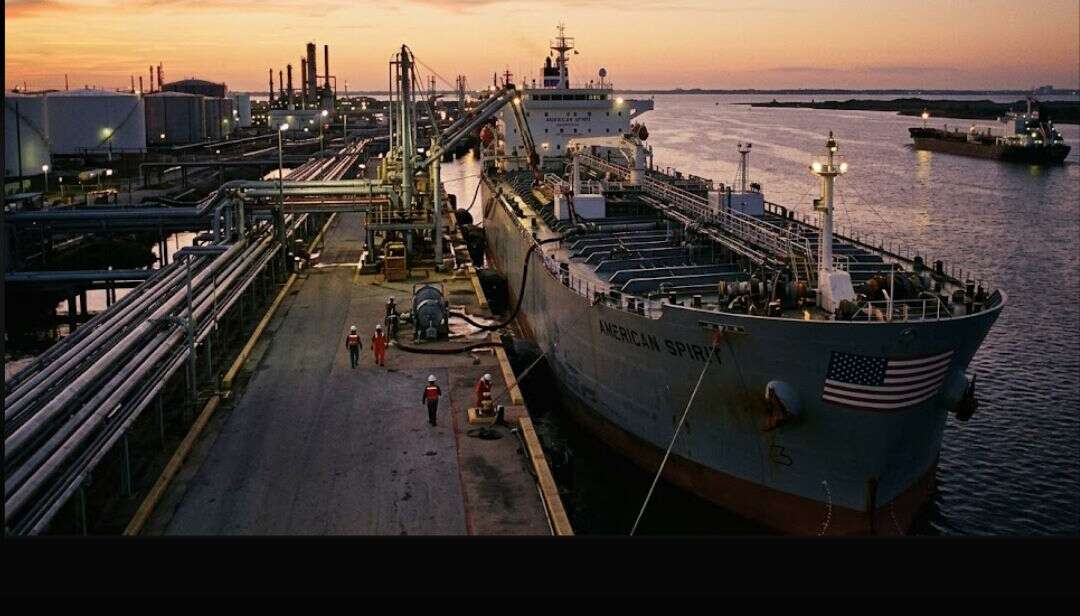
While the Persian Gulf burned, America pumped. US crude oil production reached an all-time high of 13.6 million barrels per day, with offshore production also setting a new record. The Trump Administration approved nearly 6,000 drilling permits on federal and Native American lands a 55% increase over the prior year.
The numbers are geopolitically startling: the United States today produces more oil than Saudi Arabia and Russia combined, and more natural gas than Russia, Iran, and China combined. At a moment when roughly a fifth of the world’s traded oil is stranded behind Iranian drone fire, those figures are not just economic statistics they are strategic lifelines.
In early April, exports through alternative routes most notably from the west coast of Saudi Arabia and Fujairah on the east coast of the UAE had increased to 7.2 million barrels per day from less than 4 million barrels per day before the war. But that supplemental flow is nowhere near enough to fill the gap that Iran has blown open. The world is short on barrels, and America has them.
Here are Some Related Blogs to Read
- Tuesday’s missiles didn’t come out of nowhere, Iran has been digging out hidden missile stockpiles after rejecting Trump’s peace offer.
- Not everyone in Trump’s own camp agrees on strategy, JD Vance claims Hegseth has been misleading Trump on the Iran war.
- This isn’t the only recent flashpoint at sea, a US Navy destroyer just fired on and seized an Iranian cargo ship.
- The strikes haven’t ended Iran’s nuclear ambitions either, US intel says recent strikes did only limited damage to Iran’s nuclear program.
- That brief pause before Tuesday’s attack wasn’t random, Trump had deliberately paused Hormuz operations to force Iran into a deal.
- The missiles are only half the story, Iran and Israel’s spy war is heating up amid claims of stolen F-15 secrets.
- Trump’s fights aren’t confined to Tehran, he’s now clashing with his own SCOTUS picks back home.
Vindicating Trump With Caveats
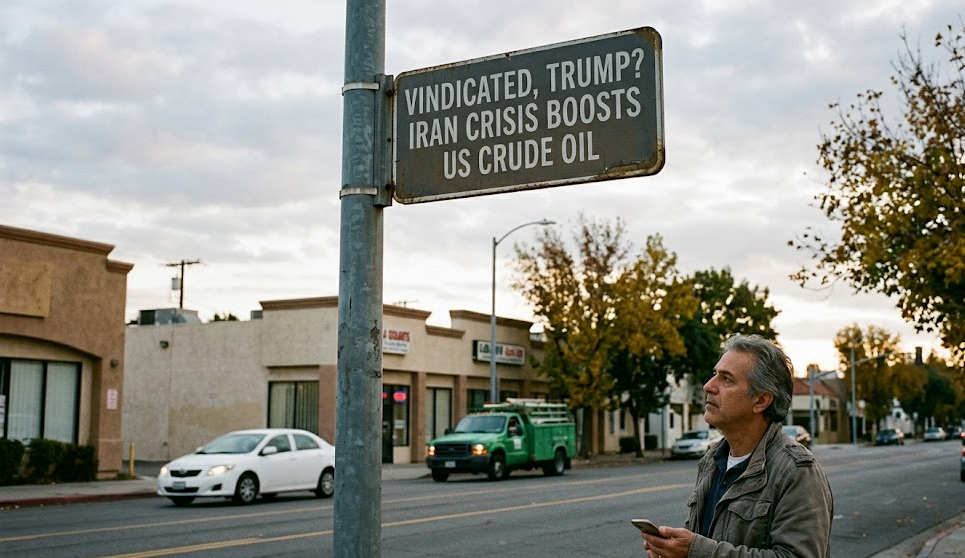
The argument for trump vindicated is superficially compelling. His administration’s relentless push to drill, permit, and export has given the United States a buffer that few other nations possess. Energy Secretary Chris Wright acknowledged that prices are likely to remain elevated for weeks but said the world will face “short-term pain to solve a long-term problem.”
But the vindication is complicated. Although US crude oil production is at record highs, the nation still imports crude oil to meet its 20-million-barrel-per-day appetite for petroleum products. Last year, crude imports totaled 6.1 million barrels per day, with about 8% coming from the Persian Gulf.
The United States is fully integrated into a global market in upheaval. “The way that supply and demand are going to balance themselves in this post-disruption world is price,” said Samantha Gross, director of the energy security and climate initiative at the Brookings Institution. “We’re going to pay the same high oil prices everybody else is paying because we’re competing for the same oil.”
Experts also note that Trump’s strategy of blocking clean energy such as wind and solar power has left Americans with fewer alternative energy sources and thus more vulnerable to supply shocks caused by the war. Energy dominance, it turns out, is not the same as energy immunity.
The Global Scramble and What Comes Next
The ripple effects of the Iran energy crisis have spread far beyond the Gulf. The Philippines became the first country in the world to declare a state of national energy emergency following the war in Iran, while Japan began releasing 80 million barrels of oil from its strategic reserves.
Goldman Sachs expects Brent crude to stabilise at around $71 per barrel in the fourth quarter of 2026 and at $80 in 2027. Morgan Stanley, however, argues that the repricing of geopolitical risk will establish a structural price floor, on the grounds that markets are unlikely to forget the demonstrated fragility of the global supply system.
The IEA is blunt: resuming flows through the Strait of Hormuz remains the single most important variable in easing the pressure on energy supplies, prices, and the global economy. IEA
The Verdict: Partial Vindication, Full Reckoning
The Iran crisis has delivered something rare in politics: a moment where an ideological energy bet meets brutal geopolitical reality. US crude is undeniably the world’s safe barrel right now in demand, politically stable, and geographically insulated from the Gulf’s chaos. Trump’s push for production records looks prescient in that narrow lens.
But the crisis has also exposed what “energy dominance” cannot fix: a globally integrated price system, an infrastructure still dependent on imported heavy crude, and a renewable energy gap that leaves American consumers paying $4 at the pump regardless of how many barrels are drilled in Texas.
Vindicated? Partially. The Iran energy crisis has made the case for American oil production stronger than ever while simultaneously revealing that no single country can fully wall itself off from the world’s most dangerous choke point.

Oil & Energy Markets
A look at crude price swings, OPEC supply moves, and how energy markets react to geopolitical shocks.

Geopolitics & Conflict
Breaking down how wars, ceasefires, and diplomatic deals ripple through global trade and security.
US Foreign Policy
Coverage of Trump administration negotiations, sanctions, and strategic decisions shaping world events.
Economy & Inflation
Tracking how commodity prices, gas costs, and supply chains affect everyday consumers.