Share This Article
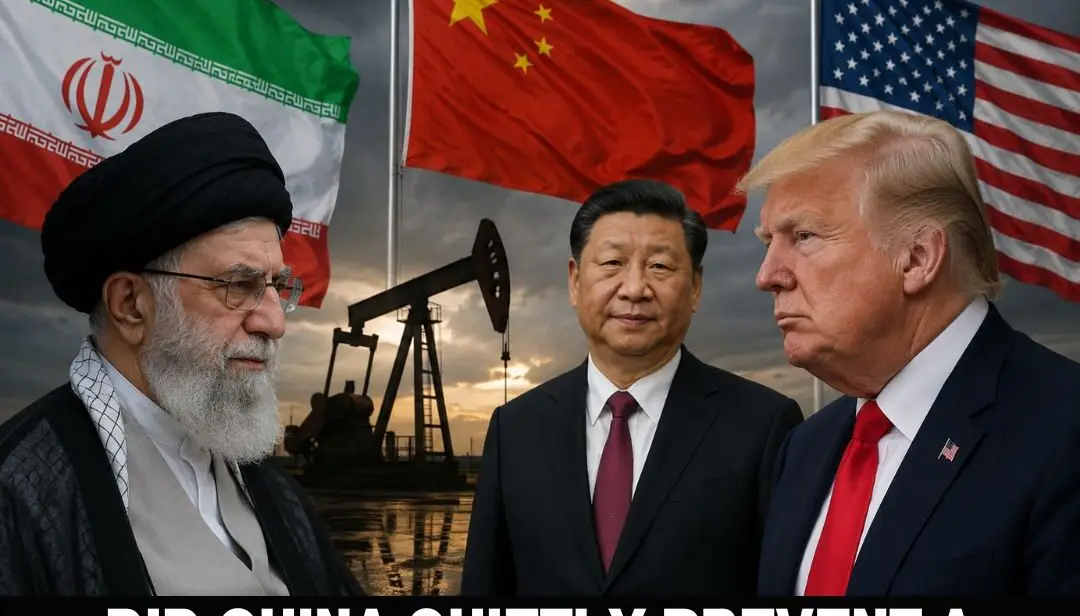
When the United States and Israel launched coordinated strikes on Iran on February 28, 2026, energy analysts braced for catastrophe. With roughly one-fifth of the world’s seaborne oil and 20% of global LNG passing through the Strait of Hormuz, forecasts of $200-per-barrel crude flooded trading desks within days. A hundred days into the Israel-Iran war, that catastrophic spike never arrived and the reason, according to a growing body of market analysis, has less to do with diplomacy than with Beijing quietly stepping back from the world’s oil market.
A Crisis That Should Have Been Worse
The numbers underpinning the crisis were severe enough on their own. Iran declared the Strait of Hormuz “closed” on March 4, 2026, following the assassination of Supreme Leader Ali Khamenei in the opening strikes. The Iranian Revolutionary Guard Corps subsequently boarded merchant vessels, laid mines, and fired on tankers attempting to transit the waterway. Global crude supplies tumbled 14% since hostilities began on Feb. 28, according to CNBC market data.
Under normal market logic, a shock of that magnitude applied to a chokepoint carrying a fifth of the planet’s seaborne oil should have sent prices into uncharted territory. Instead, Brent crude prices surged 4.9% to $97.67 per barrel following a fresh round of Israel-Iran missile exchanges in early June, with U.S. crude futures climbing a comparable amount. Painful, certainly but nowhere near the $200 scenario many had modeled.
The China Factor
The explanation, multiple Wall Street research desks now agree, traces back to Beijing. China’s move to cut crude imports from 11.7 million barrels a day in February to just under 9 million a day by late May represented a staggering voluntary reduction in global demand at precisely the moment supply was constricting.
According to J.P. Morgan analysts cited by CNBC, China’s cut represents about 74% of the decline in global crude imports an outsized share of the total adjustment that allowed the rest of the world’s energy infrastructure to absorb the Hormuz shock without the price explosion many feared.
SocGen’s commodity research team, led by Mike Haigh, went further, ranking China’s import reduction among the most consequential market interventions of the entire crisis. SocGen analysts said China’s “enormous” reduction of imports, at almost 3 million barrels a day, and lower refining activity, represented a critical rebalancing force one of the largest offsets to the shock, second only to Saudi rerouting flows, and larger than coordinated strategic petroleum reserve releases from the U.S., Europe, and Japan combined.
Why Beijing Pulled Back Not Panic, but Preparation
Crucially, China’s drawdown wasn’t a reactive scramble. Research from the Bruegel think tank shows Beijing saw the storm coming. In the first two months of 2026, Chinese oil imports actually surged 16 percent as the country stockpiled crude ahead of the anticipated US-Iran confrontation. That stockpiling cushion combined with a strategic reserve estimated at roughly a billion barrels, a few months’ worth of national supply gave Beijing room to throttle back consumption once the Strait of Hormuz crisis hit without triggering domestic shortages.
China’s own economic conditions helped too. Unlike inflation-strained Western economies, China has been dealing with deflationary pressure and virtually no wage growth, making it comparatively insulated from the energy shock echoing the same dynamic seen in 2022, when Western economies bore the brunt of energy-driven inflation following Russia’s invasion of Ukraine while Chinese exporters absorbed the shock more easily.
That said, the toll on China itself was real, not hypothetical. The Brookings Institution notes that China’s crude oil imports in March 2026 fell 2.8% year-on-year globally, but imports specifically from the Gulf dropped a much steeper 25%, forcing Beijing to absorb higher costs even as it positioned itself as an inadvertent stabilizer for the rest of the world.
Geopolitics Behind the Numbers
China’s restraint wasn’t purely economic. Diplomatically, Beijing has walked a careful line supporting neither a full embrace of Tehran nor open alignment with Washington. China and Russia jointly vetoed a Bahraini-drafted UN Security Council resolution aimed at protecting commercial shipping through the Strait of Hormuz, even as Beijing publicly called for freedom of navigation as “the shared call of the international community.” Some analysts argue this calculated neutrality avoiding overt military involvement while quietly managing its own demand let China shape the US-Iran standoff’s economic fallout without becoming a direct party to the conflict.
A Fragile Stability
Analysts caution the relief is temporary. Fitch projects that if the strait reopens by late July, Brent could fall sharply to roughly $70 by September but if negotiations toward a lasting US-Iran agreement stall further, J.P. Morgan estimates prices could climb an additional $15 per barrel by the fourth quarter as global inventories deplete and China’s stockpile cushion erodes.
Whether through strategy or necessity, China’s quiet retreat from the world’s crude markets may end up being remembered as one of the more consequential and least discussed forces that kept the Israel-Iran war from becoming a full-blown global oil shock. For more on the Strait of Hormuz crisis and its economic fallout, see the Congressional Research Service’s analysis of impacts on oil, gas, and commodities.

Oil & Energy Markets
A look at crude price swings, OPEC supply moves, and how energy markets react to geopolitical shocks.

Geopolitics & Conflict
Breaking down how wars, ceasefires, and diplomatic deals ripple through global trade and security.
US Foreign Policy
Coverage of Trump administration negotiations, sanctions, and strategic decisions shaping world events.
Economy & Inflation
Tracking how commodity prices, gas costs, and supply chains affect everyday consumers.