Share This Article
Tehran is in no hurry. Even as Washington watches the clock and Donald Trump hints that bombing could resume if a deal is not struck before his China trip Iran’s government is making clear that American deadlines mean nothing to the Islamic Republic, and that it will respond to the US peace proposal entirely on its own terms.
Iranian Foreign Ministry spokesman Esmaeil Baghaei delivered the message with deliberate bluntness on May 9: “The deadlines set by American politicians mean nothing; we do our own work, and we do not concern ourselves with deadlines or ultimatums.” The proposal, he confirmed, remains under active review, and Tehran will respond only “at the appropriate time.”
For a White House that has been oscillating between optimism and threats sometimes within the same news cycle the wait is becoming its own form of pressure.
What Iran Is Being Asked to Sign
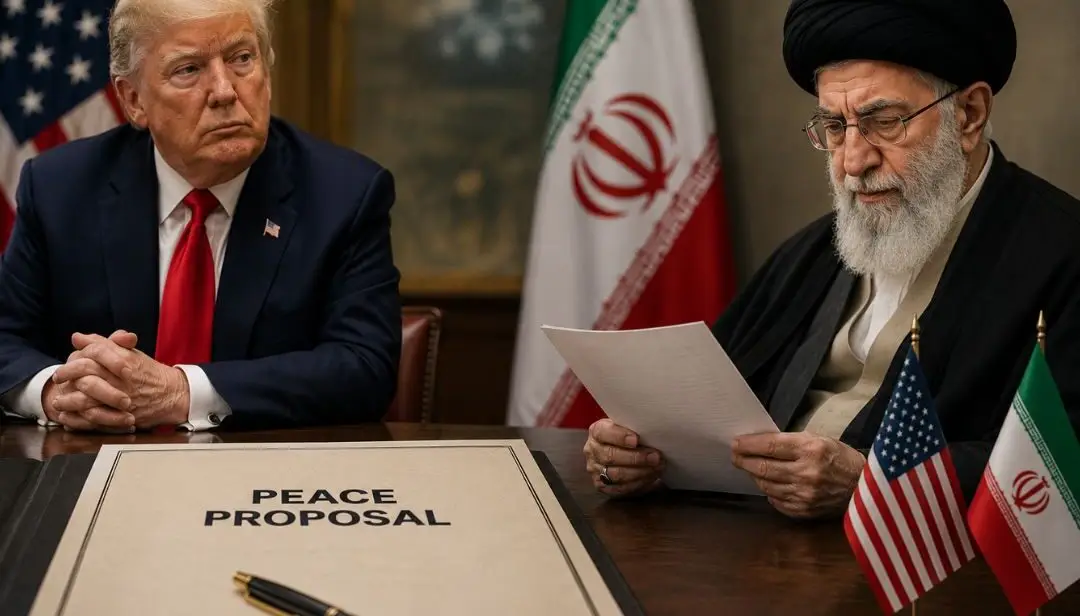
The document at the centre of negotiations is a one-page, 14-point memorandum of understanding (MOU) crafted by Trump envoys Steve Witkoff and Jared Kushner in consultation with senior Iranian officials through Pakistani intermediaries. It is a bridging document, not a final agreement designed to formally declare an end to the war and open a structured 30-day negotiation window for the harder details.
In its current form, the MOU asks Iran to accept a moratorium on uranium enrichment lasting at least 12 years a figure that splits the distance between Washington’s demand of 20 years and Tehran’s initial offer of five. After the moratorium, Iran would be permitted to enrich uranium to 3.67% for civilian purposes only. Iran would also commit in writing to never seeking a nuclear weapon and to accepting enhanced UN inspections, including snap visits.
Here are Some Related Blogs to Read
- NATO chief calls US strikes on Iran “absolutely necessary”
- Will gold rally as US-Iran tensions escalate
- Oil jumped but the market stayed calm
- 5 takeaways from Tuesday’s 2026 primaries
- US tariff system reset across 60 economies
- Trump tariffs Section 122 surcharge expires
- Trump had deliberately paused Hormuz operations to force Iran into a deal
- JD Vance claims Hegseth has been misleading Trump on the Iran war
- Iran has been digging out hidden missile stockpiles after rejecting Trump’s peace offer
Critically, the United States is also pressing Iran to remove its stockpile of highly enriched uranium from its territory entirely transferring it to a third country, with China having signalled openness to accepting custody. Iran has publicly rejected this demand, calling domestic retention of the stockpile a non-negotiable red line.
In exchange, Washington is offering the complete lifting of US sanctions on Iran, the release of billions in frozen Iranian assets, and the mutual dismantling of the competing naval blockades that have strangled the Strait of Hormuz since early March reopening the world’s most important oil transit corridor to commercial shipping.
Why Tehran Is Taking Its Time
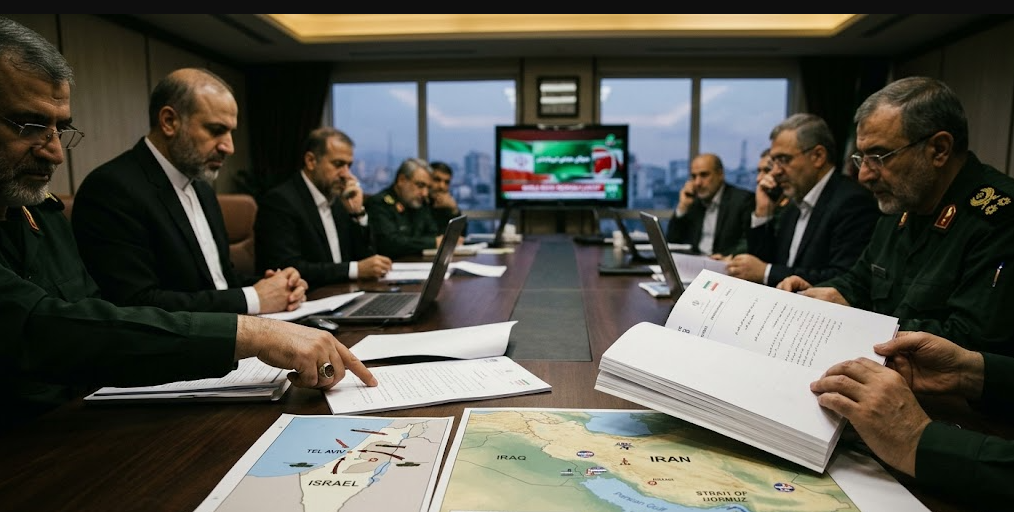
Iran’s deliberate pace is not simply stubbornness it is structural. Any formal response to the MOU requires sign-off from multiple overlapping power centres inside the Iranian state: the negotiating team led by parliamentary speaker Mohammad Bagher Ghalibaf, the Islamic Revolutionary Guard Corps, the Supreme National Security Council, and ultimately the Supreme Leader’s office. Each institution carries veto weight, and each is assessing the proposal through a different political lens.
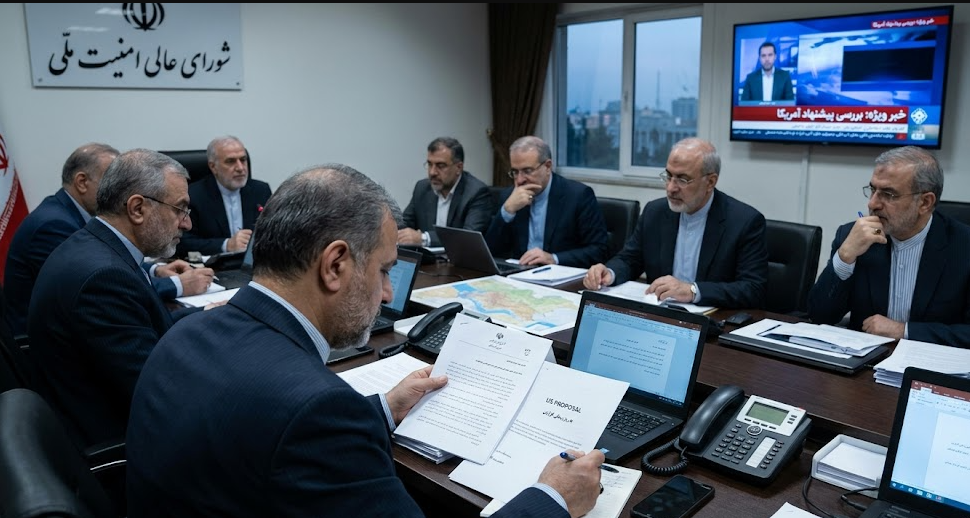
Officials in Tehran have described the document as “highly technical” and say it is being scrutinised line by line. Iran has also “strongly rejected” several specific provisions a signal that the current text, even if close, is not acceptable in its present form. American officials have acknowledged privately that Iranian leaders appear to be “of two minds”, making the path to agreement genuinely uncertain rather than merely delayed.
Trump’s China Trip: The Real Deadline
Washington has set no official deadline. But the real deadline is structural: Trump departs for Beijing on May 14 for his summit with President Xi Jinping the first US presidential visit to China in nearly a decade. The White House has made clear it wants a diplomatic breakthrough, or at minimum strong momentum toward one, before Trump sits down with Xi.
The strategic reasoning is transparent. Trump intended to use a quick Iran victory as leverage at the Beijing table. Without it, he arrives in China needing Xi’s co-operation on Iran rather than arriving as the president who already solved it. Iran International reported that if no deal is reached before Trump returns from China, the military option returns to the table a threat Trump himself has amplified, warning that if diplomacy fails, the United States “will have to go back to bombing them” at a “much higher level.”
Mixed Signals From Both Sides
The public messaging from Washington and Tehran has been whiplash-inducing. Trump told PBS the war would be “over quickly” and that he had received “very good talks” from Tehran. Hours later, the same Iran whose leadership he praised was publicly dismissing his timelines as irrelevant.
Time magazine captured the dynamic precisely: “US and Iran offer mixed messages on deal to end war.”
The mixed signals are not necessarily a sign of failure. In Middle East diplomacy, the gap between public posture and private movement is often where agreements are made. But with the China summit one week away, 20,000 sailors still stranded in the Persian Gulf, and oil markets watching every development, the window for that private movement to become a signed document is narrowing faster than either side will admit publicly.
Tehran is reviewing at its own pace. Washington is running out of clock.

Oil & Energy Markets
A look at crude price swings, OPEC supply moves, and how energy markets react to geopolitical shocks.

Geopolitics & Conflict
Breaking down how wars, ceasefires, and diplomatic deals ripple through global trade and security.
US Foreign Policy
Coverage of Trump administration negotiations, sanctions, and strategic decisions shaping world events.
Economy & Inflation
Tracking how commodity prices, gas costs, and supply chains affect everyday consumers.