Share This Article
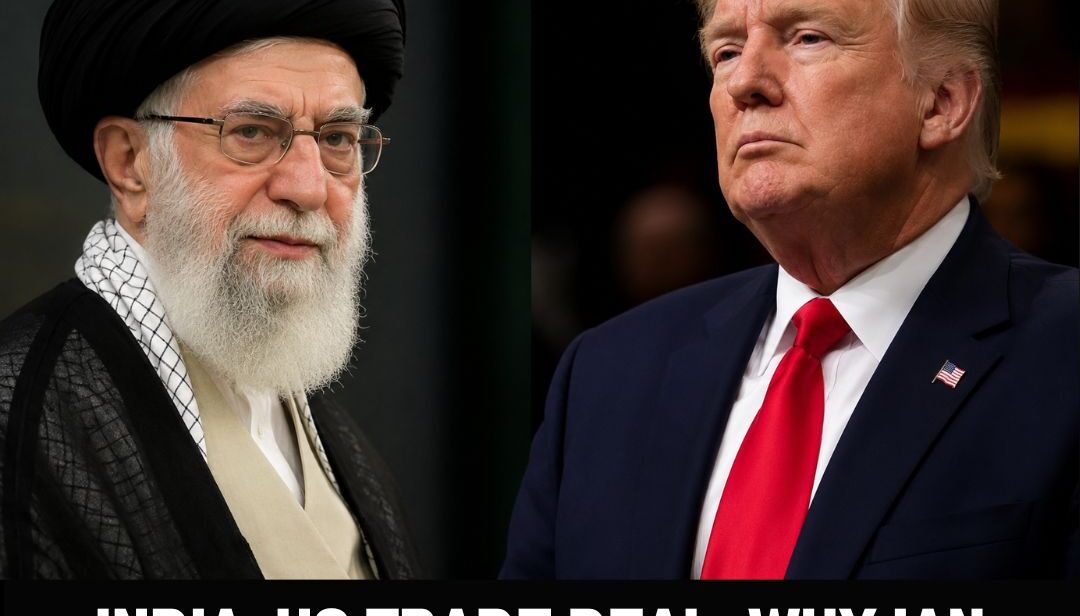
As negotiators in Washington and New Delhi inch closer to finalizing the long-delayed India-US trade deal, geopolitical analyst Ian Bremmer has offered a notably measured assessment: the agreement matters, but it doesn’t belong in the same category as the geopolitical fires currently burning elsewhere chiefly the US-Iran standoff over the Strait of Hormuz.
Bremmer, president of the Eurasia Group and one of the most closely followed voices in global political risk analysis, has spent months tracking both negotiations in parallel. His verdict draws a sharp distinction between deals that are merely beneficial and deals that are, in his words, load-bearing for the global system.
A Deal That’s Been a Long Time Coming
The India-US trade deal has had a winding road. Bremmer told NDTV in January that he expected the agreement to be finalized in the first half of 2026, even as tariff escalations and sharp rhetoric between Washington and New Delhi periodically threatened to derail talks. Commerce and Industry Minister Piyush Goyal has consistently maintained that India would only sign once terms were “fair, equitable and balanced,” with negotiations spanning multiple rounds since they were first kicked off following PM Modi’s February 2025 Washington visit.
U.S. Treasury Secretary Scott Bessent had separately flagged India as one of the administration’s priority partners, telling CNBC he expected India’s agreement to be among the first of roughly 15 to 18 bespoke trade deals the U.S. was negotiating globally. Vice President JD Vance’s visit to India was cited as evidence of “substantial progress.”
By Bremmer’s own analysis, ties between Trump and Modi strong during Trump’s first term had cooled amid tariff disputes, before behind-the-scenes diplomacy and warmer public statements pushed both sides back toward a deal.
Why “Important” Isn’t the Same as “Essential”
What separates Bremmer’s framing from the celebratory tone of many domestic commentators is his insistence on proportionality. A trade deal between two large economies is genuinely useful it can unlock market access, reduce tariff friction, and deepen a strategic partnership at a moment when, as Bremmer has noted, India needs to diversify its global business ties given Washington’s unpredictability under Trump.
But Bremmer has reserved the word “essential” for something else entirely: the resolution of the US-Iran standoff and the reopening of the Strait of Hormuz.
The distinction is about systemic risk. A delayed or imperfect India-US trade deal would disappoint exporters, complicate supply chain planning, and cost both economies some growth at the margins. By contrast, a prolonged closure of the Strait of Hormuz through which roughly one-fifth of the world’s oil and LNG trade flows threatens to disrupt energy markets, inflation, and economic stability for virtually every country on Earth, India very much included.
India’s Real Stake Is in Hormuz, Not Just Tariffs
The numbers underline why Bremmer separates the two. According to the Atlantic Council, before disrupted passage through the Strait of Hormuz began, 45% of India’s crude oil imports, half of its LNG imports, and 90% of its LPG imports passed through that single waterway. India is the world’s third-largest oil importer and fourth-largest LNG importer — a scale of dependency that dwarfs the stakes of any bilateral tariff negotiation.
When the US-Iran conflict escalated earlier this year, India’s economic exposure became immediate and severe. The U.S. Treasury issued a temporary 30-day waiver allowing Indian refiners to purchase already-loaded Russian crude without tariff penalties, explicitly to cushion the blow from Hormuz disruptions. Prime Minister Modi told parliament the crisis had triggered “unprecedented challenges” for India, even as he expressed confidence in the country’s economic fundamentals.
Indian Navy vessels reportedly increased deployments near the Gulf of Oman, escorting Indian-flagged ships attempting to transit the strait a level of strategic urgency no trade negotiation has ever required.
So when Modi told Trump in a phone call that “ensuring that the Strait of Hormuz remains open, secure and accessible is essential for the whole world,” he wasn’t speaking in diplomatic flourish. He was stating India’s actual hierarchy of national interest and one that closely tracks Bremmer’s own framing.
A Framework Deal, But Still Fragile
Bremmer’s caution is also rooted in how unresolved the US-Iran agreement still is. In his latest Quick Take analysis for GZERO Media, Bremmer noted that while the US and Iran have reached a memorandum of understanding aimed at ending hostilities and reopening Hormuz, it remains unclear exactly what was agreed, with competing narratives already emerging from Washington and Tehran. That ambiguity is precisely the kind of risk that makes the US-Iran agreement so consequential and so different from a trade deal whose terms, once signed, are comparatively straightforward to implement.
The Bottom Line
For Bremmer, the India-US trade deal represents meaningful, incremental progress in a relationship both governments want to strengthen. But it operates in a different risk category altogether from the US-Iran negotiations playing out over the Strait of Hormuz a chokepoint whose stability underwrites global energy security in a way no single bilateral trade pact ever could.
As both stories continue to develop, Bremmer’s framing offers a useful lens: not every diplomatic win carries the same weight, and knowing the difference is what separates analysis from applause.
For more of Ian Bremmer’s geopolitical analysis, visit GZERO Media.

Oil & Energy Markets
A look at crude price swings, OPEC supply moves, and how energy markets react to geopolitical shocks.

Geopolitics & Conflict
Breaking down how wars, ceasefires, and diplomatic deals ripple through global trade and security.
US Foreign Policy
Coverage of Trump administration negotiations, sanctions, and strategic decisions shaping world events.
Economy & Inflation
Tracking how commodity prices, gas costs, and supply chains affect everyday consumers.