Share This Article
The world’s most critical oil chokepoint is once again at the center of a global crisis. As Iran-US war hostilities escalate into 2026, the Strait of Hormuz through which roughly 20% of the world’s crude oil and liquefied natural gas moves daily has been effectively shut down, triggering the most severe oil prices surge since the 2022 Russia-Ukraine war.
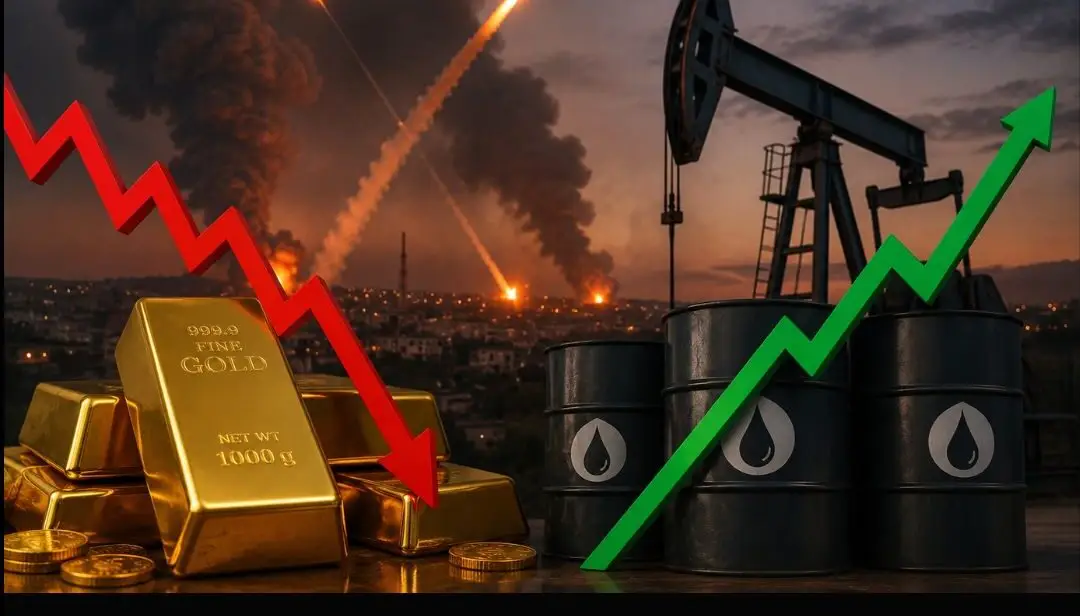
Markets are rattled. Crude benchmarks are posting historic gains. And in a twist that’s caught many investors off guard, gold the traditional safe-haven is selling off while oil climbs. Here’s a full breakdown of what’s driving the crisis and what it means for global markets.
How We Got Here: A Timeline of Escalation
The roots of the current confrontation run deep, but the modern flashpoint ignited in June 2025 when Israel launched a 12-day air campaign targeting Iranian nuclear facilities, military sites, and senior leadership. The 12-day Iran-Israel war in mid-June 2025 marked an unprecedented escalation that drew Washington into direct military confrontation with Tehran.
The ceasefire that followed proved fragile. Iran’s economy deteriorated sharply under renewed international sanctions, sparking mass protests across the country in late 2025. The economic spiral led to the outbreak of protests on December 28, 2025, which spread across Iran in January 2026. Trump threatened US intervention if Iranian security forces killed protesters yet on January 8, security forces unleashed a brutal crackdown, killing at least 30,000 people according to Iranian health ministry figures.
The breaking point came on February 28, 2026. The United States and Israel launched a series of strikes against Iran, bombing numerous sites across Tehran and the country. The strikes killed Iran’s Supreme Leader Ayatollah Ali Khamenei and several other members of Iran’s leadership, including the IRGC commander and the defense minister.
Iran’s retaliation was swift and wide-ranging. Tehran launched an unprecedented barrage of missiles and drones at multiple Gulf states for the first time in history striking all Gulf Cooperation Council (GCC) countries: Bahrain, Kuwait, Oman, Qatar, Saudi Arabia, and the UAE hitting energy infrastructure, civilian airports, and key commercial districts.
The Strait of Hormuz: Why It Changes Everything
No waterway on earth carries more economic weight than the Strait of Hormuz. At its narrowest, the strait measures just 21 miles across but the disruption of this single chokepoint is being felt in fuel pumps from New Delhi to New York.
After the United States and Israel began attacking Iran on February 28, 2026, Iran retaliated by using drones, ballistic missiles, and small attack boats to threaten and attack vessels attempting to transit the strait. As a result, insurance became unavailable or prohibitively expensive, and seafarers refused to make the journey meaning the strait has been effectively closed.
Beginning on March 4, 2026, Iranian forces declared the Strait “closed,” threatening and carrying out attacks on ships attempting to transit. The UK Maritime Trade Operations Centre reported 10 attacks on ships by March 8, with five crew members killed on two vessels.
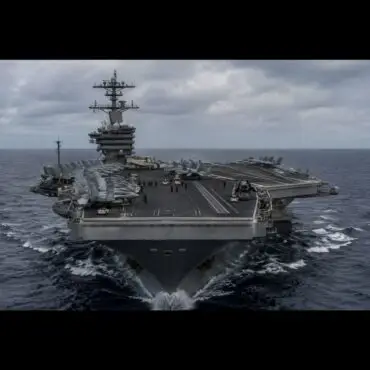
The US responded with its own escalation. On April 13, the Trump administration launched a counter-blockade of the Strait, targeting all ships seeking to reach Iranian ports. The reopening of the strait has since become a major issue in Pakistani-mediated ceasefire talks, with Iran threatening military action if the US blockade does not end.
Oil Prices Surge: How High Can It Go?
The energy market response to the military escalation has been dramatic. WTI crude futures climbed above $101 per barrel, on track for their highest close since mid-2022, as investors assessed Trump’s ultimatum urging Iran to reopen the Strait of Hormuz. Oil prices surged roughly 50% since the Iran war began.
At the peak of the Hormuz disruption, Iranian attacks on infrastructure and tankers pushed Brent crude above $114 per barrel, stoking fears of a broader energy crisis.
Pump prices are following crude higher. The national average for a gallon of regular gasoline in the US jumped by 14% in a single week to $3.41, with the last comparable weekly surge occurring during the start of the Russia-Ukraine conflict in March 2022, according to AAA data.
Analysts are now warning of an even more extreme scenario. Oil prices could surge to as high as $200 a barrel if the Iran conflict extends further and the Strait of Hormuz remains closed, according to an analysis from Macquarie Group cited by Bloomberg.
For context, US government officials and Wall Street analysts are now considering the prospect that oil could reach $200 a barrel a level that many have drawn parallels with the 1970s oil shock, warning that a prolonged Strait closure would threaten an even bigger crisis.
Is Iran Hostile to the US? The Intelligence Picture
A question circulating widely in policy circles: is Iran hostile to the US in a sustained, strategic sense or is this a tactical escalation that could de-escalate?
The answer, according to analysts, is unambiguously the former. The US military buildup in the Middle East beginning in late January 2026 the largest since the 2003 invasion of Iraq was driven by Iran’s nuclear program, the ongoing Iranian protests, and a government crackdown that killed thousands of demonstrators.
Iran’s posture has been unambiguous. It has threatened US bases across Bahrain, Kuwait, Qatar, the UAE, and Saudi Arabia, targeted desalination and energy infrastructure, and issued warnings that financial institutions holding US Treasuries could be considered legitimate military targets. Ceasefire talks are ongoing in Pakistan and Oman, but Tehran has shown no willingness to accept terms that include a full Hormuz reopening without guaranteed security concessions.
Gold Drops: The Safe-Haven Paradox
One of the most counterintuitive market signals of this crisis has been the behavior of gold. Despite the military escalation and open warfare in the Middle East, gold has lost significant ground since hostilities began.
Gold prices dropped below $5,050 per ounce as a strengthening US dollar and fading expectations for interest rate cuts outweighed the metal’s traditional safe-haven appeal. The dollar strengthened as investors sought liquidity following the announcement of the largest wave of strikes yet against Iranian targets and the effective closure of the Strait of Hormuz.
Gold fell to $4,489 per troy ounce down roughly 18.5% from its February peak of $5,627. The selloff defied conventional logic. Analysts pointed to the fact that precious metals had already priced in substantial risk premiums after gold’s 66% surge in 2025, leaving little fear premium left to add once actual war arrived.
Surging oil above $116 per barrel reinforced expectations that the Federal Reserve would maintain tight monetary policy, while the crisis strengthened the US dollar and dampened expectations of Fed rate cuts creating a double headwind that weighed on gold for a third straight session.
The dynamic is clear: oil is absorbing the geopolitical fear premium while gold is being sold to cover losses elsewhere in portfolios a pattern consistent with prior supply-shock crises.
What Comes Next: Ceasefire or Wider War?
The US and Iran are scheduled to hold negotiations in Oman, after months of escalating rhetoric and military signaling. Analysts caution that any ceasefire deal faces enormous structural obstacles including Iran’s demand for Hormuz protections, US insistence on permanent nuclear disarmament, and ongoing Israeli opposition to any agreement that leaves the Iranian regime intact.
The US, Iran, and a group of regional mediators are reportedly discussing terms for a possible 45-day truce that could pave the way for a more permanent resolution to the conflict. Markets are watching these talks closely, as any credible ceasefire signal would likely cause oil to reverse sharply.
For now, energy markets remain on a war footing. The world hasn’t seen a supply shock of this magnitude in more than 50 years and by most analyst accounts, the hardest part of the crisis may still be ahead.

Oil & Energy Markets
A look at crude price swings, OPEC supply moves, and how energy markets react to geopolitical shocks.

Geopolitics & Conflict
Breaking down how wars, ceasefires, and diplomatic deals ripple through global trade and security.
US Foreign Policy
Coverage of Trump administration negotiations, sanctions, and strategic decisions shaping world events.
Economy & Inflation
Tracking how commodity prices, gas costs, and supply chains affect everyday consumers.