Brent crude has slid to its lowest level in seven weeks, caught in a simultaneous squeeze from collapsing Chinese import demand and mounting optimism that a US-Iran peace framework could finally reopen the Strait of Hormuz — the world’s single most critical oil transit chokepoint.
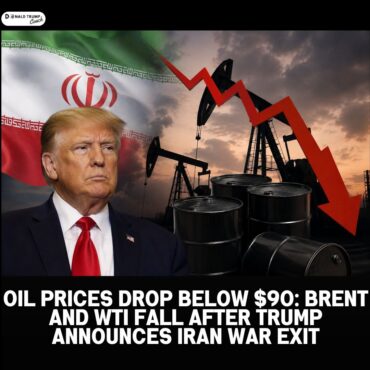
Futures settled near $93–$94 per barrel on Tuesday, a sharp retreat from the near-$117 highs seen in the immediate aftermath of the February 28 US-Israel strikes on Iran that effectively shuttered the strait. For energy traders, two forces are now pulling prices firmly in one direction: weaker demand out of Beijing and a fragile-but-real diplomatic thaw in the Gulf.
China’s Oil Demand Collapses to an Eight-Year Low
The headline numbers out of Beijing are stark. China’s crude imports fell to approximately 7.8 million barrels per day (bpd) in May 2026 — the lowest monthly intake since October 2017 and nearly 4 million bpd below the country’s 2025 average import pace.
The drop is not, however, a collapse in end-user fuel consumption. Chinese refiners are drawing down a strategic inventory cushion estimated at over 1 billion barrels, a stockpile built precisely for disruptions of this magnitude. With Gulf cargoes priced sky-high and logistically tangled, Beijing’s state refiners are simply substituting domestic reserves for overseas supply.
The IEA’s May 2026 Oil Market Report confirmed the scale of the shift: Chinese seaborne crude imports plunged by 3.6 million bpd between February and April, with similar pullbacks recorded in Japan (-1.9 mb/d), South Korea (-1 mb/d), and India (-760 kb/d).
For global oil markets, this is a meaningful cap on prices. China is the world’s largest crude importer, and when it steps back — even temporarily — the demand signal reverberates across every major trading desk.
Related: How the Strait of Hormuz Closure Is Reshaping Global Energy Trade
Iran-US War Latest: Peace Talks and the Hormuz Wildcard
The Iran-US war latest developments are equally central to the current price slide. After months of hostility following the February conflict, diplomatic channels are showing the most sustained activity since the ceasefire was first brokered in April.
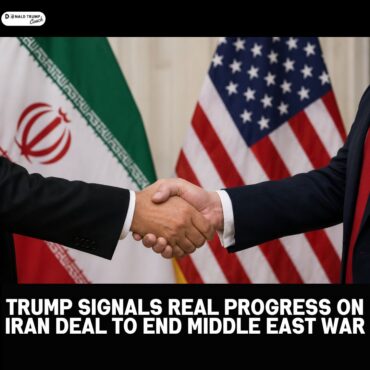
President Trump declared in late May that a peace deal is “largely negotiated” and would be announced “shortly,” describing a memorandum of understanding as a first-phase agreement, to be followed by broader nuclear and sanctions talks within 30 to 60 days. Iran’s Foreign Ministry confirmed the MOU framework, though senior officials have signaled nothing is final.
The talks — mediated primarily through Pakistan — center on four core issues: extending the ceasefire, reopening the Strait of Hormuz to commercial shipping, limits on Iran’s nuclear enrichment program, and a phased sanctions relief roadmap.
There is, however, a serious complication: Israel’s continued operations in Lebanon. Iranian state media outlet Tasnim reported on June 1 that Tehran suspended negotiations with Washington until Israel fully withdraws from occupied Lebanese territory and halts all attacks in Gaza and Lebanon. The suspension triggered a fresh bout of oil market volatility before a partial ceasefire between Iran and Israel was confirmed, with both Netanyahu and Iranian officials signaling a temporary halt to direct exchanges.
The Strait of Hormuz remains effectively closed. Since Iranian forces formally declared it shut on March 4, shipping traffic has collapsed to roughly 5% of its pre-conflict monthly volume of around 3,000 vessels. The strait handles approximately 20% of global petroleum and 20% of liquefied natural gas transiting world markets — numbers that make its continued closure the single biggest supply risk in energy markets today.
OPEC+ Adds Supply Despite Ongoing Risks
Adding further downward pressure on Brent, OPEC+ approved an additional 188,000 bpd increase in July production quotas, even as regional supply uncertainty persists. The move reflects a broader group strategy to recapture market share while non-Gulf producers — particularly the US, Brazil, Canada, and Venezuela — continue ramping up output in response to the crisis.
The EIA’s June 2026 Short-Term Energy Outlook projects Brent averaging around $105/b through June and July, assuming the Strait remains substantially closed in the near term, with oil shipments gradually resuming in Q3 2026. A full return to pre-conflict traffic levels is not expected before early 2027.
For reference, J.P. Morgan’s base case — a June reopening of the Strait — sees Brent settling near $100/b for the rest of 2026. Fitch Ratings goes further, warning that a late-July reopening could trigger a sharp sell-off, with Brent potentially averaging $70/b from September onward as the current disruption is characterized as a “temporary logistical supply shock” rather than a structural loss of production capacity.
Israel Middle East Peace: The Missing Piece
The path to any durable Israel Middle East peace deal runs directly through Tehran’s demands. Iran has tied its cooperation on Hormuz reopening to meaningful Israeli concessions in Lebanon and Gaza — a linkage that gives Netanyahu’s government significant leverage over global oil markets, whether intentional or not.
Trump has publicly pressed Israel to stand down, saying he deterred a “major raid on Beirut” as recently as June 1. Whether that diplomatic pressure holds through the final stages of a US-Iran framework — and whether a broader middle east peace deal involving Israel, Iran, and regional Arab states is even achievable this year — remains the defining uncertainty for Brent pricing into Q3 2026.
For now, markets are cautiously pricing in progress. But cautiously is the operative word.
What’s Next for Brent Crude?
The near-term outlook hinges on three variables:
- Hormuz reopening timeline — Even a credible announcement of a phased reopening could push Brent down $10–15/b within days, per analyst estimates.
- China’s inventory draw — Analysts warn that China’s billion-barrel buffer will not last indefinitely. A resumption of aggressive import buying would tighten global supply quickly.
- OPEC+ discipline — With non-Gulf producers already expanding output aggressively, any OPEC+ production undercutting could amplify the downside.
For energy investors, commodity traders, and policymakers tracking the Iran-US war latest developments, the current window is one of maximum uncertainty — and maximum opportunity in either direction.