Share This Article
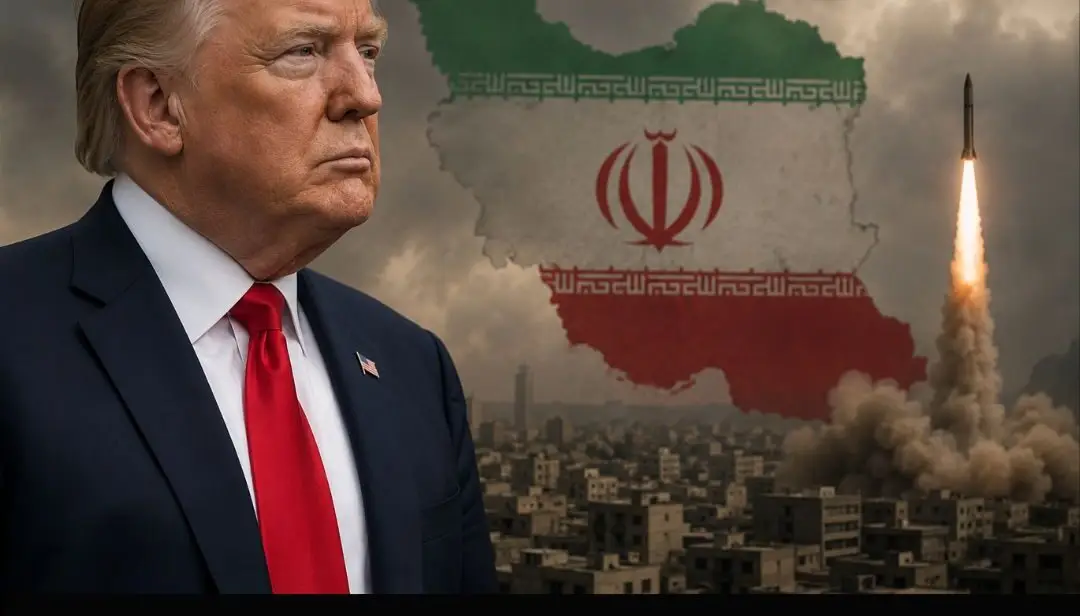
There is a specific kind of political crisis that is more dangerous than open opposition and that is the crisis of a leader whose declared reality no longer matches the operational one. Donald Trump is living inside that crisis right now. The Trump Iran War strategy, sold to the American public as a masterclass in maximum pressure diplomacy, is showing fractures that no amount of Truth Social posting can paper over. Missile strikes continue. The Strait of Hormuz remains contested. And on Capitol Hill, members of his own party are quietly and then not so quietly asking the question that defines the entire Iran-US War moment: is the President still in command of his own foreign policy?
The War Powers Fault Line
The constitutional tension was always there. The War Powers Resolution of 1973 requires the President to notify Congress within 48 hours of committing US forces to hostilities and limits unauthorized military engagement to 60 days without Congressional approval. Trump issued the required notification but the framing of that notification, which described operations as “limited and defensive,” is now being directly challenged by the scale and duration of what is actually happening in the Gulf.
Here are Some Related Blogs to Read
- Get the full picture on where this war is headed – more Trump-era geopolitical coverage at DonaldTrump.Coach.
- Tuesday’s missiles didn’t come out of nowhere, Iran has been digging out hidden missile stockpiles after rejecting Trump’s peace offer
- Not everyone in Trump’s own camp agrees on strategy, JD Vance claims Hegseth has been misleading Trump on the Iran war
- This isn’t the only recent flashpoint at sea, a US Navy destroyer just fired on and seized an Iranian cargo ship
- The strikes haven’t ended Iran’s nuclear ambitions either, US intel says recent strikes did only limited damage to Iran’s nuclear program
- That brief pause before Tuesday’s attack wasn’t random, Trump had deliberately paused Hormuz operations to force Iran into a deal
- The missiles are only half the story, Iran and Israel’s spy war is heating up amid claims of stolen F-15 secrets
- Trump’s fights aren’t confined to Tehran, he’s now clashing with his own SCOTUS picks back home
- Global supply chains are already bracing for impact, Goyal’s courting 50 US leaders in New York over exactly that.
- Stay ahead of the story track it live or get the full background on how the US-Iran war escalated to this point.
Senator Tim Kaine of Virginia, ranking member of the Senate Foreign Relations Committee, filed a formal War Powers challenge last Thursday, arguing that the cumulative scope of Trump Iran War operations carrier strike group deployments, offensive cyber operations, airstrikes on IRGC assets, and naval escort missions through the Strait of Hormuz constitutes undeclared war requiring explicit Congressional authorization.
More significantly, three Republican senators including members of the Armed Services Committee have co-sponsored the resolution. In a Senate where the GOP margin is razor-thin, three Republican defections on a war powers vote is not a procedural footnote. It is a structural warning.
The Rubio-Waltz Fault Line
Inside the administration itself, the foreign policy coherence problem runs deeper than Congressional pushback. Secretary of State Marco Rubio’s premature declaration that the Iran-US War was “effectively over” contradicted within 72 hours by fresh Iranian missile strikes exposed a coordination breakdown between the State Department and the Pentagon that foreign policy veterans describe as alarming.
Defense Secretary Pete Hegseth’s public statements have consistently been more hawkish and operationally specific than Rubio’s diplomatic framing reflecting two genuinely different strategic visions operating simultaneously inside the same administration. Rubio sees a transactional off-ramp with Tehran as both achievable and desirable. Hegseth and elements of the Joint Chiefs see the Iran-US War as an opportunity to permanently degrade Iranian military capacity in ways that diplomacy never achieved.
Trump, characteristically, has not resolved this tension. He has amplified it praising both men publicly while privately, according to multiple White House sources, expressing frustration that neither the military nor the diplomatic track is delivering the clean victory narrative his political operation needs.
National Security Advisor Mike Waltz has reportedly been tasked with producing a unified strategic framework but three separate attempts to align State and Defense messaging have collapsed before reaching the President’s desk.
Congress Stirs: The Authorization Question
Beyond the War Powers Resolution challenge, a broader Congressional reckoning is building over US-Iran military authorization. The current operations in the Gulf are being conducted under a combination of the 2001 Authorization for Use of Military Force written in response to the September 11 attacks and targeting Al-Qaeda and inherent presidential authority arguments that legal scholars across the political spectrum describe as constitutionally strained.
Senate Majority Leader John Thune has resisted bringing a formal Iran AUMF to the floor, calculating that a failed vote would embarrass the administration more than a procedural delay. But pressure is mounting from both directions hawks who want explicit authorization to expand operations and doves who want a statutory brake on escalation.
The Strait of Hormuz has become the legislative tripwire. Any Iranian action that results in significant American casualties would almost certainly force a floor vote and the outcome of that vote is, by current whip counts, genuinely uncertain.
The Domestic Political Arithmetic
Trump’s foreign policy problem is ultimately a political math problem. The coalition that returned him to the White House in 2024 contains two fundamentally incompatible factions on the question of Middle East military engagement.
The MAGA populist base America First, anti-interventionist, deeply skeptical of “forever wars” is already showing measurable discomfort with open-ended Iran-US War operations. Polling from Quinnipiac University released this week shows Republican approval of Gulf military operations has dropped 11 points in 30 days the steepest intra-party decline since the early months of the Afghanistan withdrawal debate.
Simultaneously, the neoconservative and hawkish donor class that funds Senate campaigns and think tanks is pushing hard for sustained military pressure on Iran viewing the current crisis as a generational opportunity to neutralize Tehran’s regional influence permanently.
Trump is attempting to satisfy both simultaneously projecting strength for the hawks while signaling off-ramp availability for the populists. It is a needle that has never successfully been threaded in American foreign policy history, and the Strait of Hormuz is not a forgiving environment for political triangulation.
What Losing Control Actually Looks Like
Foreign policy analysts are careful to distinguish between a President facing political headwinds normal in any administration and a President whose decision-making authority has been structurally compromised by internal incoherence. The indicators of the latter are specific: contradictory public statements from cabinet officials, military operations proceeding without synchronized diplomatic cover, Congressional challenges from within the governing coalition, and adversaries who have stopped believing that declared American red lines will be enforced.
On all four metrics, the Trump Iran War operation is flashing amber not yet red, but moving in a direction that historical precedent suggests does not reverse without deliberate, visible course correction.
The Iran-US War is not lost. But the battle for coherent American foreign policy in 2026 is very much still in question.

Oil & Energy Markets
A look at crude price swings, OPEC supply moves, and how energy markets react to geopolitical shocks.

Geopolitics & Conflict
Breaking down how wars, ceasefires, and diplomatic deals ripple through global trade and security.
US Foreign Policy
Coverage of Trump administration negotiations, sanctions, and strategic decisions shaping world events.
Economy & Inflation
Tracking how commodity prices, gas costs, and supply chains affect everyday consumers.