Share This Article
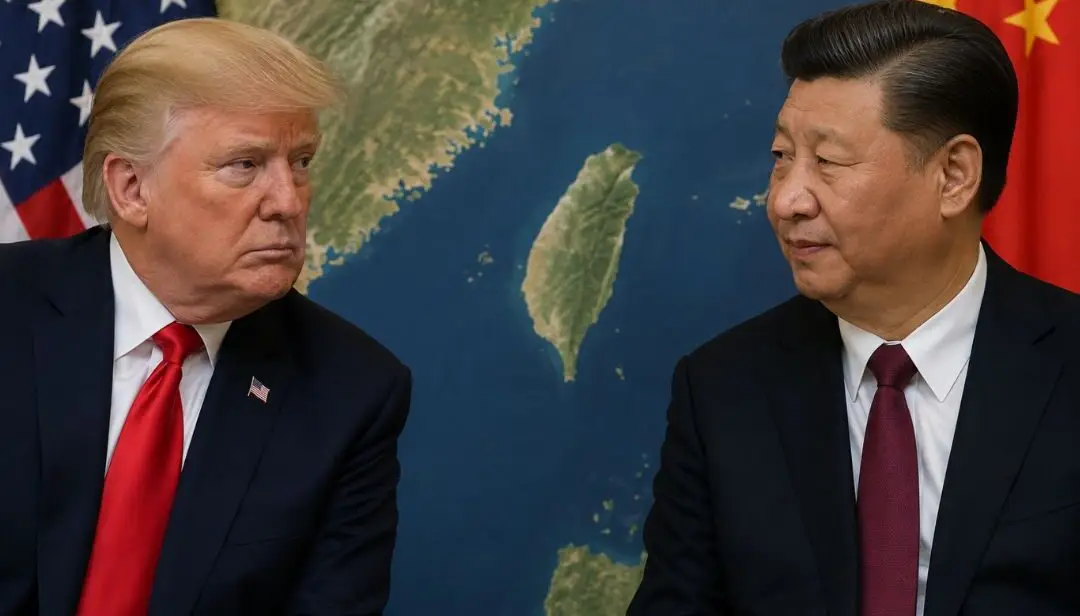
Every time Washington picks up the phone to Beijing these days, China plays the same opening note. Before trade, before Iran, before energy markets or nuclear deals there is Taiwan. And as President Donald Trump prepares to land in Beijing on May 14, China is making sure that message has been heard at full volume.
With the Trump-Xi summit now just days away, Beijing has delivered its clearest pre-meeting signal yet: “abiding by the One China principle” is not merely a preference but a “prerequisite for a steady, sound, and sustainable” bilateral relationship with the United States. That language unusually direct and explicitly conditional marks a deliberate escalation in Beijing’s diplomatic tone, one that analysts say is rare this close to a major leaders’ meeting.
China’s top diplomat Wang Yi sharpened the message further when he spoke with US Secretary of State Marco Rubio, stating plainly that he hoped Washington would make the “right choices” on Taiwan. The phrase was careful but unmistakable: Taiwan is the price of doing business with Beijing, and China intends to collect.
Here are Some Related Blogs to Read
- NATO chief calls US strikes on Iran “absolutely necessary”
- Will gold rally as US-Iran tensions escalate
- Oil jumped but the market stayed calm
- 5 takeaways from Tuesday’s 2026 primaries
- US tariff system reset across 60 economies
- Trump tariffs Section 122 surcharge expires
- Trump had deliberately paused Hormuz operations to force Iran into a deal.
- JD Vance claims Hegseth has been misleading Trump on the Iran war.
- Iran has been digging out hidden missile stockpiles after rejecting Trump’s peace offer.
The Phone Call That Set the Tone
The groundwork for this moment was laid in February 2026, when Xi Jinping and Trump held a high-stakes phone call ahead of the summit’s scheduling. Xi’s message in that conversation was unambiguous the “Taiwan question is the most important issue in China-US relations” and he urged Trump to “handle the issue of arms sales to Taiwan with prudence.”
That call set the template for everything that has followed. China has since orchestrated a steady drumbeat of diplomatic signals, military demonstrations, and summit-preparation demands, all pointing toward the same destination: a US concession on Taiwan that Beijing can bring home as a tangible political achievement.
In December 2025, the Trump administration approved what was reported as the largest-ever US arms sale to Taiwan a package worth more than $11 billion including 420 Army Tactical Missile Systems, more than 80 HIMARS rocket systems, and loitering munitions. Beijing reacted with fury. As the May summit approaches, Washington is widely expected to delay any follow-on announcements, with Trump’s team calculating that preserving negotiating space with Xi is worth the temporary pause.
The Three-Headed Agenda: Taiwan, Trade, Iran
When Trump lands in Beijing becoming the first sitting US president to visit China in nearly a decade the summit agenda will be shaped by three interlocking issues: Taiwan, trade, and Iran.
On trade, both sides enter with leverage and grievance in roughly equal measure. On Iran, Washington urgently needs Beijing to use its economic stranglehold over Tehran China buys over 90% of Iran’s oil to push the Islamic Republic toward a nuclear deal and reopen the Strait of Hormuz. On Taiwan, China holds the upper hand, and it knows it.
Beijing’s ask on Taiwan is layered. At a minimum, China wants the United States to shift from “non-support” to active “opposition” to Taiwan independence a shift in language that would carry enormous symbolic weight in Chinese domestic politics. China also wants reductions in US arms sales to Taipei, fewer US naval transits through the Taiwan Strait, and a rolling back of the institutional and diplomatic ties Washington has quietly deepened with Taipei under successive administrations.
In exchange and this is the deal Beijing is dangling China will use its leverage with Tehran, potentially accept custody of Iran’s enriched uranium stockpile, and cooperate on broader frameworks to stabilise the Middle East.
Taiwan Pushes Back, Washington Walks a Tightrope
Taiwan is watching every development from Taipei with deep unease. The island’s government has not been consulted on the summit’s agenda and has no seat at the table where decisions about its future may be shaped. Analysts at the Center for American Progress warned this week that the Trump administration’s “contradictory Taiwan signals” risk serious strategic instability creating uncertainty for Taipei, US allies in the Indo-Pacific, and the credibility of American security commitments across the region.
China, meanwhile, has not backed away from military pressure. The PLA has continued sending warplanes and naval vessels around Taiwan almost daily, a practice that serves as a continuous reminder of Beijing’s ultimate intentions regardless of what diplomatic niceties are exchanged in summit rooms.
Xi’s Opening Note, Every Single Time
The geopolitical calculus heading into May 14 is as intricate as any in recent American foreign policy. Trump is arriving in Beijing with an economy strained by his own tariff wars, a blockade in the Persian Gulf he cannot sustain indefinitely, and a peace deal with Iran that requires Chinese co-operation to close. Xi is arriving as the indispensable partner fully aware that the United States needs China more than it is comfortable admitting.
And so China sings its opening note Taiwan clearly, repeatedly, and with the confidence of a country that knows the song is being heard. Whether Trump is prepared to harmonise, resist, or negotiate a different key entirely will define not just the summit’s outcome, but the shape of the Indo-Pacific for years to come.

Oil & Energy Markets
A look at crude price swings, OPEC supply moves, and how energy markets react to geopolitical shocks.

Geopolitics & Conflict
Breaking down how wars, ceasefires, and diplomatic deals ripple through global trade and security.
US Foreign Policy
Coverage of Trump administration negotiations, sanctions, and strategic decisions shaping world events.
Economy & Inflation
Tracking how commodity prices, gas costs, and supply chains affect everyday consumers.