A transatlantic trade relationship that had appeared to stabilise under last year’s Turnberry Agreement was thrown back into turmoil on May 1, 2026, when President Donald Trump announced he was raising tariffs on all cars and trucks imported from the European Union from 15% to 25% — accusing the bloc of failing to honour a
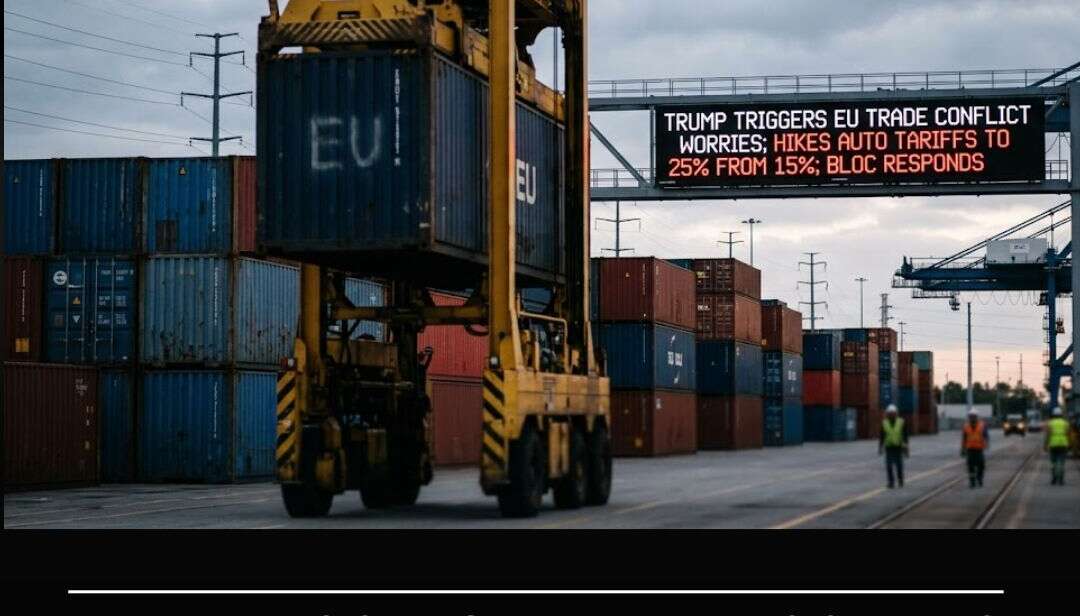
A transatlantic trade relationship that had appeared to stabilise under last year’s Turnberry Agreement was thrown back into turmoil on May 1, 2026, when President Donald Trump announced he was raising tariffs on all cars and trucks imported from the European Union from 15% to 25% — accusing the bloc of failing to honour a deal both sides had publicly committed to just months earlier.
The announcement, made via Truth Social in Trump’s characteristic style, landed without detailed justification and with immediate effect for the following week, jolting European markets, alarming German automakers, and forcing Brussels into a rapid diplomatic and legal response.
Trump’s Accusation: Non-Compliance With the Turnberry Deal
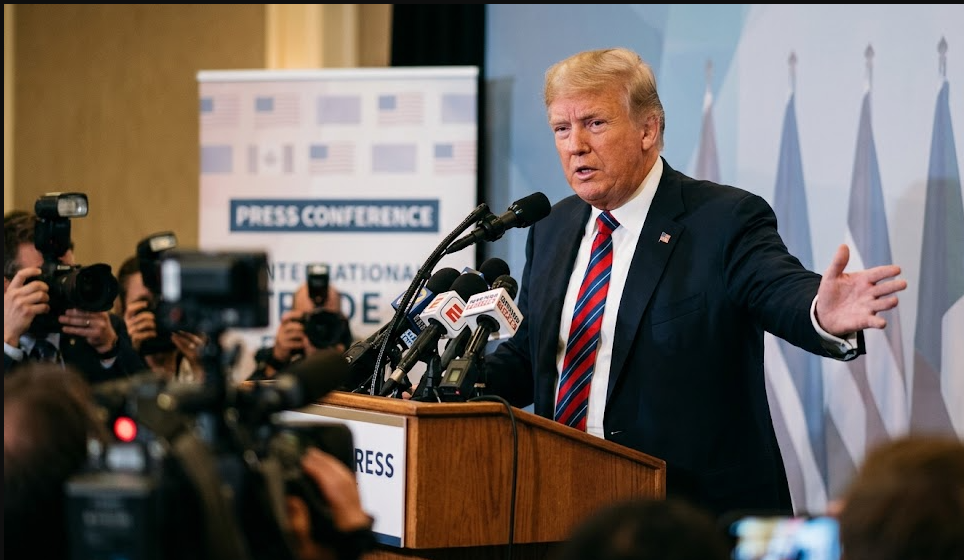
Trump’s stated justification was blunt: the EU, he claimed, was “not complying with our fully agreed to Trade Deal.” He offered European automakers a direct path to avoid the tariff entirely — relocate production to the United States. “If they produce Cars and Trucks in U.S.A. Plants, there will be NO TARIFF,” he posted on Truth Social.
A White House statement followed, asserting that the EU had “failed to make substantial progress on their agreed-upon commitments” under the framework. The administration, however, provided no specific details of which commitments had been breached or by what measure progress had been deemed insufficient — a deliberate vagueness that Brussels found both frustrating and legally untenable.
The Turnberry Agreement — named after Trump’s Scottish golf resort where the deal was struck with European Commission President Ursula von der Leyen in July 2025 — had set a 15% tariff on most goods and was hailed at the time as a framework for steady de-escalation of the trade war that had rattled transatlantic commerce since Trump’s first term. For Brussels, the deal represented a hard-won equilibrium. For Trump, it has now become a lever.
The EU Fires Back: “Clear Unreliability”
The European Commission rejected Trump’s non-compliance charge flatly. An EC spokesperson stated the commission “remains fully committed to a predictable, mutually beneficial transatlantic relationship” and was implementing its commitments “in line with standard legislative practice.” Brussels warned that should the US take “measures inconsistent with” the existing agreement, “we will keep our options open to protect EU interests.”
The sharper words came from the European Parliament. Bernd Lange, chair of the Parliament’s international trade committee and one of Brussels’ most senior trade voices, did not mince his position. Calling Trump’s announcement a display of “clear unreliability,” Lange accused Washington of repeatedly “breaking its commitments” in transatlantic trade relations and said Europe could “only respond with the utmost clarity and firmness.”
The European Commission’s carefully worded statement, combined with Lange’s sharper parliamentary language, telegraphed a two-track response: diplomacy first, retaliation ready.
German Automakers: The Hardest Hit
The immediate economic casualties of the tariff hike are Germany’s automotive giants. Volkswagen, Mercedes-Benz, and BMW collectively account for approximately 73% of all EU car exports to the United States — making them uniquely exposed to any shift in US tariff policy. In 2025 alone, the three manufacturers absorbed a combined $6 billion in losses attributable to the previous rounds of US tariffs. A jump from 15% to 25% significantly compounds that burden.
Mercedes and BMW, which import a large share of the vehicles they sell in the US directly from European plants, face particular pressure. Both brands now face a stark choice: absorb the additional cost through thinner margins, pass it on to American consumers through higher sticker prices, or accelerate the politically sensitive and operationally expensive process of shifting production to US soil.
The EU’s Countermeasures Toolkit
Brussels is not without options. The European Union has two primary mechanisms available if it chooses to escalate.
The first is the existing countermeasures package — a goods-focused retaliatory tariff list covering billions of dollars in American exports, developed and updated through multiple rounds of previous trade disputes. This is the EU’s first line of response and can be deployed relatively quickly through existing legal frameworks.
The second is the Anti-Coercion Instrument (ACI) — a newer, broader and significantly more powerful tool that Brussels has been quietly developing precisely for confrontations of this kind. The ACI allows the EU to adopt countermeasures extending beyond goods tariffs to include restrictions on US access to EU services markets, public procurement contracts, investment channels, intellectual property protections, and regulatory approvals. It is, in effect, a nuclear option in trade terms — one the EU has been reluctant to deploy but has made clear it will not leave permanently on the shelf.
A Fragile Economic Moment
The timing of Trump’s auto tariff hike is particularly destabilising. The global economy is already absorbing the shock of the Iran war — surging oil prices, Strait of Hormuz disruptions, and the largest energy supply crisis since the 1970s have darkened growth forecasts across Europe and North America. Fortune’s analysis described Trump’s announcement as hitting “a world economy that really didn’t need it.”
Adding to the complexity: the legal status of Trump’s tariff authority itself remains in flux. The US Supreme Court’s February 2026 ruling invalidated tariffs issued under the International Emergency Economic Powers Act, leaving the administration scrambling to restructure its trade arsenal through alternative legal frameworks including Section 232 national security provisions — the same authority now being used to justify the new automotive levies.
What Happens Next
Whether the 25% auto tariff proves to be a negotiating tactic — pressure designed to bring Brussels back to the table with enhanced concessions — or a genuine long-term trade policy shift remains the central question. European officials are treating it as the former while preparing for the latter.
The next move, as one Brussels trade official noted privately, belongs entirely to the EU. Whether it responds with firm countermeasures or renewed diplomacy will define the transatlantic trade relationship for the rest of 2026.
Market Analysis
A quick snapshot of market trends, customer behavior, and competitor movements.