Share This Article
Washington / Doha | May 2, 2026
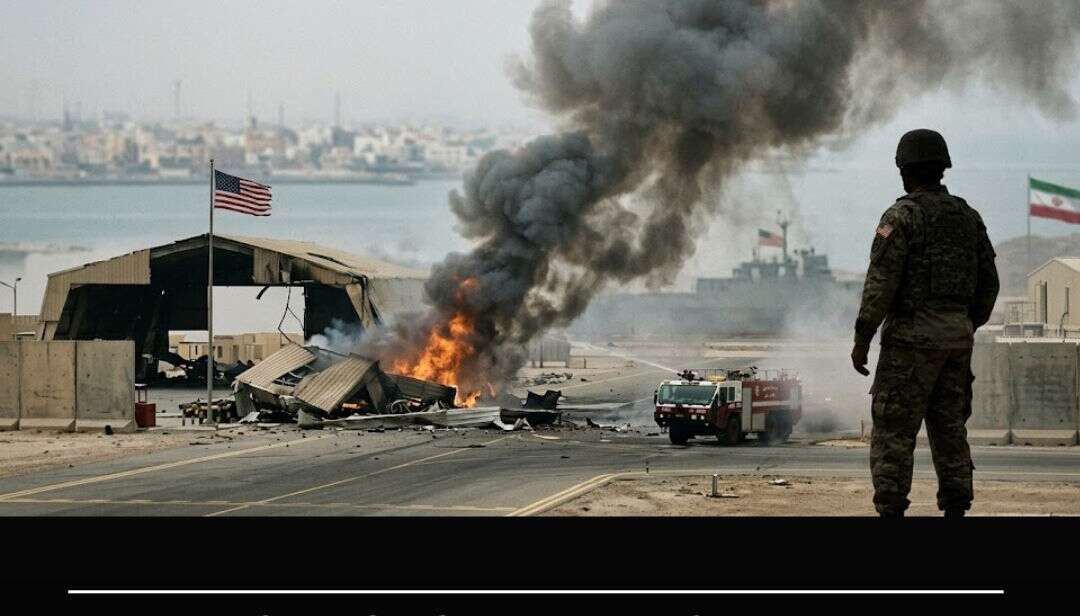
What were once the most imposing symbols of American military projection in the Middle East sprawling, fortified, and seemingly untouchable have emerged from nearly two months of Iran’s retaliatory strikes as something far more unsettling: a liability. A sweeping investigation by CNN, corroborated by assessments from Stars and Stripes, the American Enterprise Institute, and multiple defence analysts, has laid bare the full, largely undisclosed scale of the damage Iran has inflicted on US military installations across the Gulf and the geopolitical shockwaves now radiating from those craters.
The numbers are staggering. Iran targeted at least 16 US military installations across eight countries, striking more than 100 sites from Bahrain to Kuwait, Qatar to Iraq. Repair costs alone could reach $5 billion and that figure excludes the replacement value of destroyed aircraft, radar systems, and precision equipment that cannot simply be rebuilt. It is, by every metric, the most extensive damage to American military infrastructure in a single conflict since the Second World War.
What Iran Hit and How Badly
The scope of destruction defies the sanitised language of official Pentagon briefings. At Camp Buehring in Kuwait, once one of the largest American military hubs in the Gulf a micro-city of operations, logistics, and firepower the base is now described as “nearly empty and heavily damaged” following a sustained barrage of Iranian missiles and drones. At Al-Udeid Air Base in Qatar, the theatre command-and-control hub for US air power across 21 nations, the war room was struck not once, but twice.
Here are Some Related Blogs to Read
- Tuesday’s missiles didn’t come out of nowhere, Iran has been digging out hidden missile stockpiles after rejecting Trump’s peace offer
- Not everyone in Trump’s own camp agrees on strategy, JD Vance claims Hegseth has been misleading Trump on the Iran war
- This isn’t the only recent flashpoint at sea, a US Navy destroyer just fired on and seized an Iranian cargo ship
- The strikes haven’t ended Iran’s nuclear ambitions either, US intel says recent strikes did only limited damage to Iran’s nuclear program
- That brief pause before Tuesday’s attack wasn’t random, Trump had deliberately paused Hormuz operations to force Iran into a deal
- The missiles are only half the story, Iran and Israel’s spy war is heating up amid claims of stolen F-15 secrets
- Trump’s fights aren’t confined to Tehran, he’s now clashing with his own SCOTUS picks back home
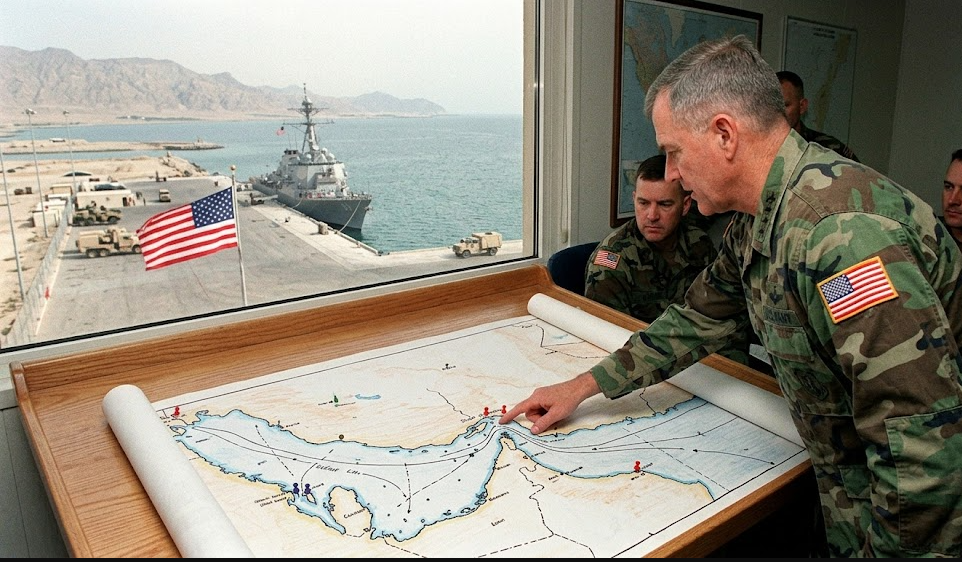
The US Navy Fifth Fleet headquarters in Bahrain sustained serious structural damage, with repair estimates for the headquarters building and at least two air defence systems alone potentially reaching $200 million. In Kuwait, four separate US bases were hit, with warehouses, runways, radar-protection structures, satellite communications infrastructure and administrative buildings all sustaining significant damage.
The inventory of destroyed equipment reads like a procurement nightmare: at least one fighter jet, more than a dozen MQ-9 Reaper drones, two MC-130 tanker aircraft, four helicopters, and an E-3 Sentry surveillance plane each representing tens of millions of dollars in precision military hardware. Iran deployed an estimated 165 ballistic missiles, two cruise missiles, and 541 drones in its retaliatory salvos, according to UAE defence ministry figures.
Perhaps most revealing was the breach of US Patriot missile defence systems by Iran’s F-5 munitions a penetration of the air defence shield that the Pentagon had not publicly disclosed and that defence analysts describe as a significant tactical revelation about the limits of America’s Gulf-based air defence architecture.
The Achilles Heel That Washington Didn’t See Coming
The deeper wound is strategic. For decades, the United States has maintained its Gulf bases as force multipliers platforms from which to project power, deter adversaries, and reassure allies. The assumption baked into that posture was that the bases themselves were safe. Operation Epic Fury, the US-Israel air campaign that launched on February 28, 2026 and killed Supreme Leader Khamenei, was premised on the belief that Iran’s retaliatory capacity could be degraded before it was fully unleashed.
That assumption has been shattered. “These bases were damaged beyond what was the expectation that the Iranians would do,” one senior US defence official told CNN. The strikes did not merely damage infrastructure they exposed the concentrated, fixed nature of American military presence in the Gulf as a structural vulnerability in an era of precision long-range missiles and drone swarms.
Stars and Stripes, in its April 29 investigation, framed the problem with blunt precision: the Iran war has revealed that US Middle East bases, long considered symbols of strength, are increasingly the Achilles heel of American regional strategy.
Gulf States Begin to Ask the Hard Questions
The damage to American bases has catalysed something equally consequential: a quiet but unmistakable reassessment among Gulf states of what it actually means to host the United States military.
A Saudi source told CNN that the war had demonstrated that “the alliance with the US cannot be exclusive and it is not impregnable.” In the UAE, prominent political commentator Abdulkhaleq Abdulla known for his proximity to the country’s leadership went further. “It is time to think about closing the American bases,” he posted publicly, noting that Emirati forces had themselves intercepted thousands of Iranian drones and ballistic missiles. “The UAE no longer needs America to defend it.”
These are not fringe voices. They reflect a growing recognition across the Gulf that American bases, far from being silent guarantors of security, have transformed their host nations into active targets. The Iran war has imposed a cost on Gulf sovereignty that no security agreement adequately priced in.
For Washington, the reckoning is equally stark. A network of bases built over decades to dominate the region’s skies and seas has been exposed not as impregnable fortresses but as concentrations of expensive, vulnerable hardware well within range of an adversary that has now demonstrated both the will and the capability to strike them at scale.

Oil & Energy Markets
A look at crude price swings, OPEC supply moves, and how energy markets react to geopolitical shocks.

Geopolitics & Conflict
Breaking down how wars, ceasefires, and diplomatic deals ripple through global trade and security.
US Foreign Policy
Coverage of Trump administration negotiations, sanctions, and strategic decisions shaping world events.
Economy & Inflation
Tracking how commodity prices, gas costs, and supply chains affect everyday consumers.