Washington D.C. | May 1, 2026 In an exclusive and strikingly candid assessment, Israel’s Ambassador to the United States, Yechiel Leiter, has declared that Iran’s Islamic Revolutionary Guard Corps — Iran’s IRGC — is now the undisputed power running Tehran, while the regime’s most dramatic strategic gambit, the closure of the Strait of Hormuz, has
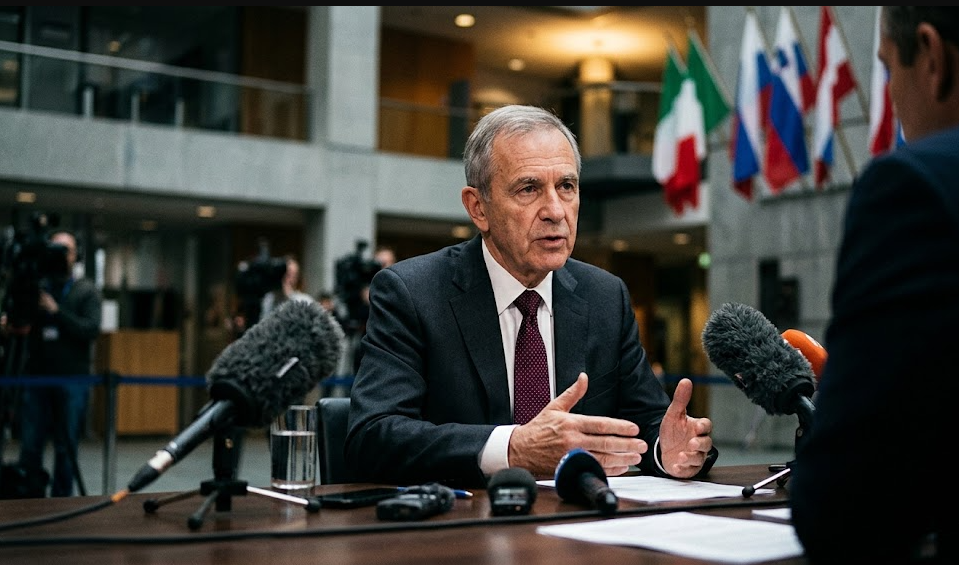
In an exclusive and strikingly candid assessment, Israel’s Ambassador to the United States, Yechiel Leiter, has declared that Iran’s Islamic Revolutionary Guard Corps — Iran’s IRGC — is now the undisputed power running Tehran, while the regime’s most dramatic strategic gambit, the closure of the Strait of Hormuz, has delivered the precise opposite of what it intended.
“If a nuclear Iran took the Strait of Hormuz, who would control the world’s oil?” Leiter warned pointedly. His words, delivered at a moment of acute global energy anxiety, were both a vindication of the original war rationale and a dissection of why the IRGC’s Hormuz card has collapsed under its own weight.
The IRGC Takes the Wheel
The context is as dramatic as the statements. When Operation Epic Fury — the US-Israel air campaign launched on February 28, 2026 — killed Supreme Leader Ali Khamenei in its opening phase, Iran’s clerical architecture fractured overnight. Mojtaba Khamenei, Khamenei’s son, was elevated to the position of Supreme Leader, but analysts and officials monitoring the situation say the title is largely ceremonial. The real power has migrated, decisively, to the military.
Multiple intelligence assessments and reports from Reuters, Iran International, and Euronews confirm that a military council of senior IRGC officers now exercises effective control over Iran’s core decision-making structure. Mojtaba Khamenei, reportedly wounded in the strike that killed his father, has not appeared publicly and communicates through IRGC intermediaries. “The IRGC has sidelined the president and the civilian leadership entirely,” Euronews reported on April 22, citing senior Iranian opposition sources.
Ambassador Leiter did not shy away from naming this shift. “The top brass of the IRGC — that’s the terrorist-sponsoring leadership — next to the army, has pretty much been eliminated,” he said, while adding an ominous rider: “Many of the top brass responsible for the nuclear weaponization program have been eliminated.” His implication was clear — the IRGC that remains is decentralized, hardened, and operationally autonomous, making it simultaneously weaker at the top and harder to fully neutralize.
The Hormuz Miscalculation
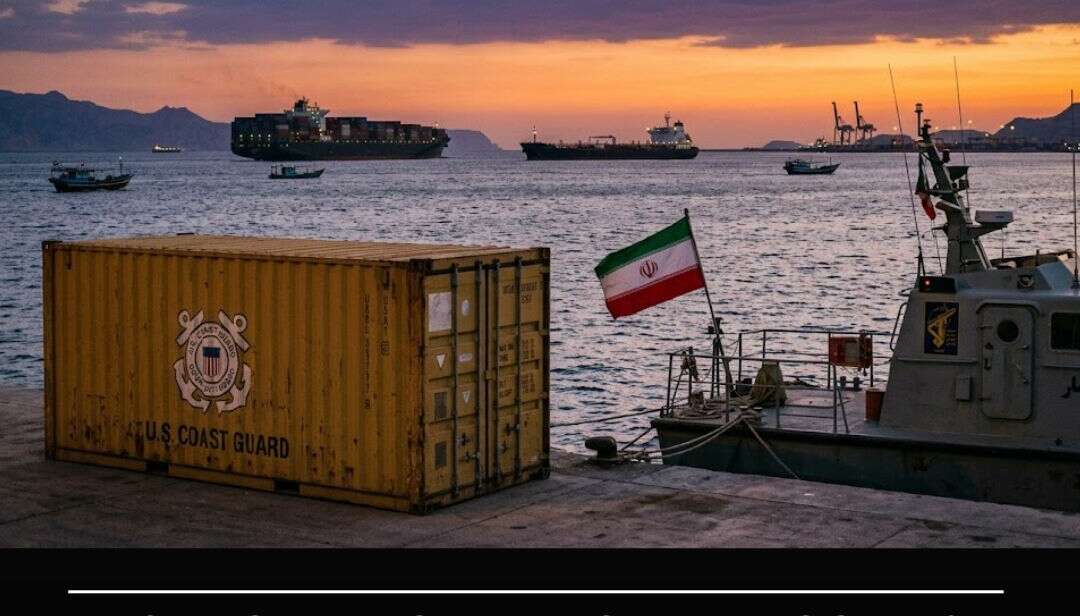
The IRGC’s decision to close the Strait of Hormuz — through which roughly 20% of global oil and LNG normally flows — was designed as a pressure weapon of last resort. It has instead become a strategic liability of the first order.
Iran’s Revolutionary Guards blocked the strait, boarded merchant ships, laid sea mines, and even opened fire on Indian-flagged vessels — alienating one of Tehran’s most important non-Western relationships in a single incident. India, which draws 60% of its LPG imports through Hormuz, has faced nationwide fuel shortages, street protests, and was forced to summon the Iranian envoy in New Delhi after Iran seized an Indian commercial ship on April 22.
The U.S. Ambassador to Israel, Jack Lew, echoed allied frustration during a joint briefing, noting that Iran’s targeting of neutral shipping had “destroyed whatever goodwill remained in the Global South toward Tehran’s position.” India’s ambassador to Israel, meanwhile, conveyed New Delhi’s fury through diplomatic channels, with Indian officials publicly warning that the ship seizure had crossed a red line.
The IRGC’s gambit also triggered a US naval blockade of Iranian ports in direct retaliation — a counter-escalation Tehran had not anticipated and is now struggling to outlast. Brent crude hit $126 per barrel at its peak in March, but rather than generating political leverage for Iran, the price shock has accelerated Asia’s breakneck pivot to renewables, with China exporting a record 68 gigawatts of solar technology in March alone. The Hormuz blockade, in other words, is hastening the very transition that makes Iran’s oil leverage permanently diminish.
The Endgame, According to Leiter
Israel’s ambassador has been unambiguous about what he believes a successful conclusion looks like. “The campaign will end when there is not an entity in Tehran that is going to threaten the region,” Leiter stated. He added: “I think that we need boots on the ground — but they’ve got to be Iranian boots, and I think they’re coming.”
His remarks point directly to the Israeli strategic thesis: that Iran’s IRGC, despite surviving the decapitation of Khamenei and two months of sustained bombardment, has overextended itself. By seizing political control, blocking global shipping, firing on neutral vessels, and isolating Iran from its few remaining partners, the IRGC has managed to unite global opinion — including from India and Gulf states — against Tehran.
“The objective here is to achieve a situation where Iran is no longer an exporter of terrorism, is no longer raining ballistic missiles on its neighbors, and is no longer in pursuit of nuclear weapons,” Leiter concluded. Whether the IRGC’s grip on power accelerates or delays that outcome remains the defining question of the conflict. But for now, Israel’s top diplomat is making the case that the Hormuz card — Tehran’s most powerful leverage — has not just failed. It has catastrophically backfired.
Market Analysis
A quick snapshot of market trends, customer behavior, and competitor movements.