A legally significant clock ran out on May 1, 2026 and the United States government’s response was to argue the clock never started in the first place. As the 60-day deadline imposed by the 1973 War Powers Resolution expired, House Speaker Mike Johnson stepped forward with a statement that was both politically calculated and constitutionally
A legally significant clock ran out on May 1, 2026 and the United States government’s response was to argue the clock never started in the first place.
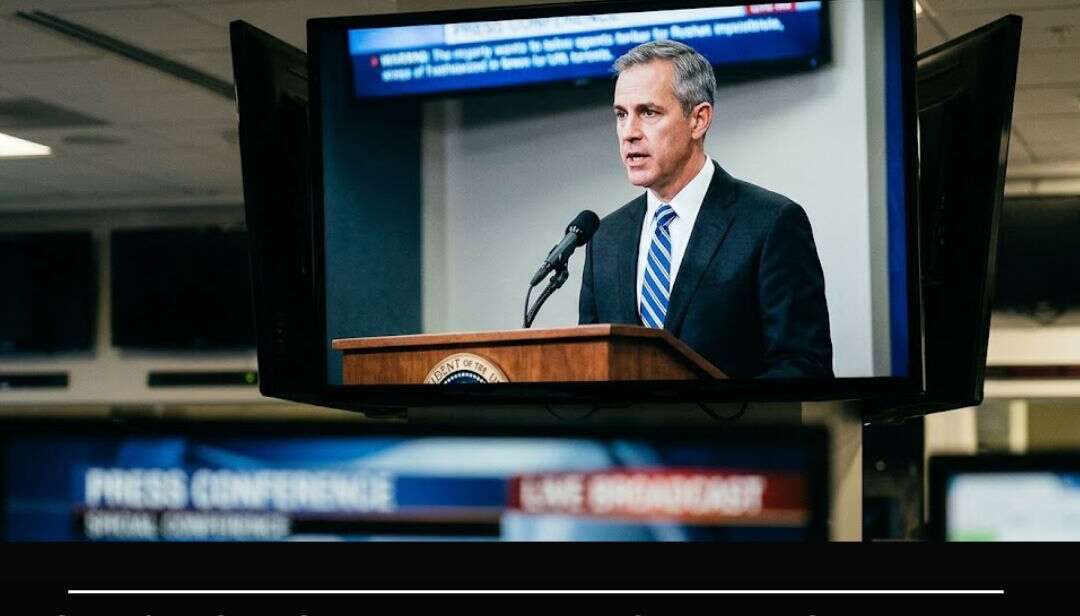
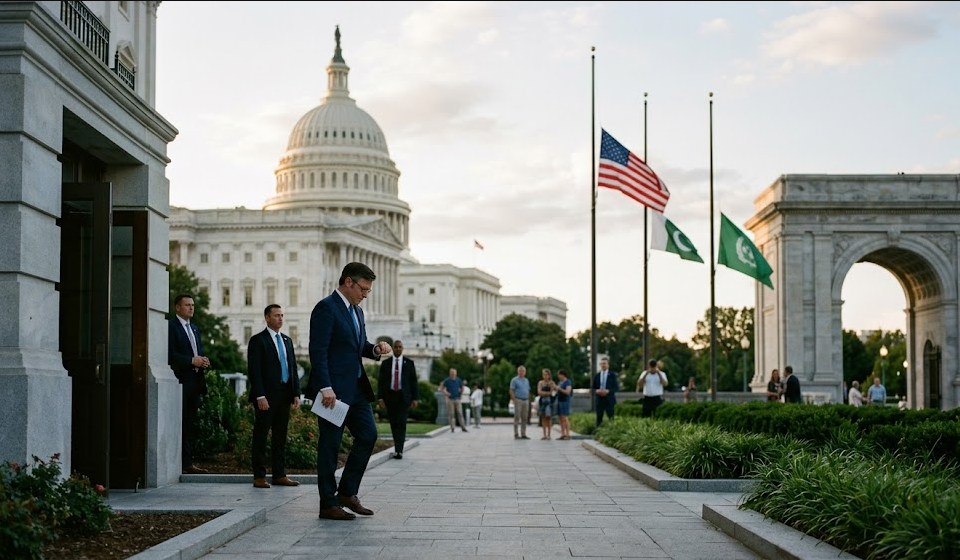
As the 60-day deadline imposed by the 1973 War Powers Resolution expired, House Speaker Mike Johnson stepped forward with a statement that was both politically calculated and constitutionally contested: the United States, he said, is simply “not at war” with Iran. The declaration drew immediate fire from Democrats, baffled legal scholars, and — in the background — added fresh anxiety to an American housing market already rattled by months of Iran-driven economic turbulence.
What the Law Actually Says
The War Powers Resolution was passed by Congress in 1973, in the shadow of Vietnam, to restrain a president’s ability to wage war without congressional authorisation. Its central requirement is straightforward: once a president notifies Congress of the introduction of US forces into hostilities, the commander-in-chief has 60 days to either obtain a formal declaration of war, secure an authorisation for the use of military force, or begin withdrawing troops. A single 30-day extension is permitted — but only if the president certifies it is needed to ensure the safe withdrawal of personnel.
President Trump formally notified Congress of military hostilities with Iran on March 2, 2026, following the launch of Operation Epic Fury on February 28. That notification started the clock. And on May 1, it ran out.
Johnson’s Argument: ‘We Are Trying to Broker a Peace’
Speaker Johnson, in an interview with NBC News at the Capitol, offered the Republican majority’s legal and political justification for ignoring the deadline. “I don’t think we have an active, kinetic military bombing, firing or anything like that,” he said. “Right now, we are trying to broker a peace.”
Johnson added that Congress should be “reluctant” to intervene in what he characterised as an ongoing diplomatic effort, not an active war. By this logic, because a ceasefire is in place, the War Powers clock either paused or stopped entirely — and the House need not force a vote to authorise or terminate the conflict.
Defense Secretary Pete Hegseth made the same argument before the Senate, stating plainly: “We are in a ceasefire right now, which our understanding means the 60-day clock pauses or stops.”
Legal Experts Are Not Convinced
Constitutional law scholars have been pointed in their rejection of the administration’s position. The War Powers Resolution, they note, contains no ceasefire exception. A pause in active bombing does not erase the legal reality that US forces remain deployed in a theatre of declared hostilities, enforcing a naval blockade and maintaining three aircraft carrier strike groups in the region.
CNN’s legal analysis concluded that “the US is blowing past” the 60-day limit — and that framing a ceasefire as a legal pause “is not something that by its text or by its design the War Powers Resolution accommodates.” Foreign Policy’s coverage of Hegseth’s Senate testimony similarly found the administration’s ceasefire-clock argument to be without legal precedent.
Enforcement, however, remains the law’s most glaring weakness. Past presidents have routinely dismissed the War Powers Resolution’s termination provision as unconstitutional. Courts have consistently refused to allow congressional lawsuits challenging presidential war-making to proceed to a merits ruling. The law has teeth on paper; in practice, it depends entirely on Congress asserting itself.
Senate Rejects Democrats — Again
Congress has not asserted itself. The Senate voted down Democrats’ sixth war powers resolution just hours before the May 1 deadline, with the procedural vote failing 47 to 50. Only two Republicans — Senator Susan Collins of Maine and Senator Rand Paul of Kentucky — crossed the aisle to support the Democratic measure, brought by California Senator Adam Schiff.
The repeated failures have transformed the war powers debate into a messaging exercise for Democrats rather than a genuine legislative check. Republican leadership shows no appetite for constraining Trump’s military posture, and with the ceasefire in place, several GOP moderates appear content to defer any harder choices for now.
The US Housing Market Feels the War
While Washington debates constitutional fine points, the Iran war’s economic consequences are landing hardest on ordinary Americans navigating the US housing market news cycle with growing alarm.
When Operation Epic Fury began on February 28, the average 30-year fixed mortgage rate stood at 5.99%. By late April 2026, that rate had climbed to approximately 6.45% — rising for four to five consecutive weeks as Iran-driven oil price surges stoked inflation fears and rattled bond markets. Mortgage rates surged to a near four-week high on April 29 alone, driven directly by Iran war headlines, according to CNBC.
Real estate agents surveyed by CNBC reported that roughly one-third of prospective buyers now cite the economy — not just mortgage rates — as their primary concern, a sharp jump from 26% in the previous quarter. The Iran conflict, oil shocks, and Federal Reserve uncertainty are keeping rates “sticky,” according to analysis from Mortgage Professional America, with the Fed holding rates steady at its most recent meeting while flagging “risks to both sides of its dual mandate.”
More housing supply is coming onto the market, and prices in some regions are beginning to ease — but pent-up homebuyer demand has been directly suppressed by the combination of higher borrowing costs and economic uncertainty tied to a war Congress cannot agree whether to call a war.
A Constitutional Confrontation Deferred, Not Resolved
The expiry of the 60-day deadline without congressional action is not a resolution — it is a deferral. If peace talks collapse and the US resumes active military operations against Iran, the legal and political pressure on Congress to act will intensify dramatically. Several Republican senators have signalled privately that their positions could change if kinetic hostilities resume.
For now, Speaker Johnson’s declaration — “we are not at war with Iran” — stands as the official Republican answer to a legal deadline the administration chose to clock out on, rather than meet.
Market Analysis
A quick snapshot of market trends, customer behavior, and competitor movements.