US War Secretary Hails Ceasefire as ‘Victory’ Claiming ‘Iran Begged for the Deal’
Theo Jorden
Share This Article
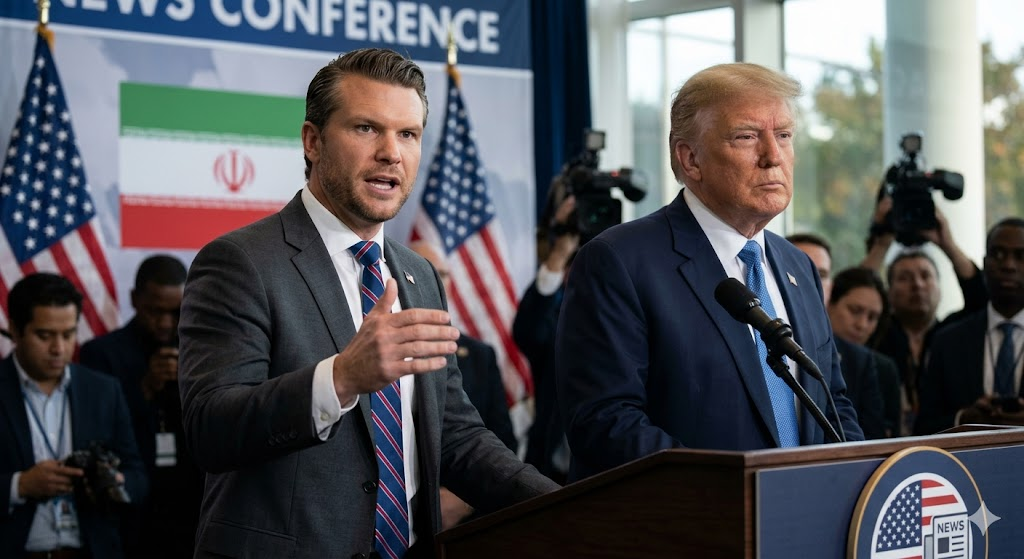
Pete Hegseth walked to the podium with the confidence of a man who just won a war. He called it “historic.” He said Iran “begged.” He declared total American victory. Tehran said nothing publicly. But the ceasefire is already cracking and the question of who actually won is more complicated than the Pentagon briefing room
Pete Hegseth walked to the podium with the confidence of a man who just won a war. He called it “historic.” He said Iran “begged.” He declared total American victory. Tehran said nothing publicly. But the ceasefire is already cracking and the question of who actually won is more complicated than the Pentagon briefing room suggests.
WASHINGTON — Defense Secretary Pete Hegseth did not mince words.
Standing before reporters on April 8 — less than 24 hours after President Trump’s Truth Social post paused 38 days of active war with Iran — Hegseth delivered a victory lap that was unambiguous, unapologetic, and characteristically blunt:
“Iran begged for this ceasefire. They came to us. This is a historic victory for the United States of America, for President Trump, and for every American who believed that strength — not weakness — is the only language our enemies understand.”
It was the most aggressive framing of a ceasefire announcement in recent American diplomatic history. And it was entirely deliberate.
The Man Behind the Message
Pete Hegseth arrived at the Pentagon as one of Trump’s most ideologically aligned cabinet choices — a Fox News host turned Defense Secretary whose confirmation was itself a political battle. He has governed the Defense Department the same way he governed primetime television: with maximum volume, minimal ambiguity, and zero tolerance for the careful diplomatic hedging that traditionally characterizes Pentagon communications.
Where Secretary of State Marco Rubio offered cautious skepticism — “I’m not sure you can reach a deal with these guys” — and VP JD Vance called the arrangement a “fragile truce,” Hegseth chose a different register entirely. He framed the ceasefire not as a pause in a complex, unresolved conflict but as a complete American military and strategic victory over a broken adversary.
The message was aimed at multiple audiences simultaneously: the American public, Trump’s political base, wavering Republican lawmakers, and — critically — Iran itself.
Was Hegseth Right?
On the raw military facts, the case for declaring victory is genuinely strong.
In 38 days of conflict, US and Israeli forces launched nearly 900 strikes in 12 hours on February 28 alone. Supreme Leader Ali Khamenei was killed. Six senior Iranian security commanders were eliminated. Nuclear facilities at Natanz, Fordow, and Isfahan were heavily damaged. Iran’s air defense architecture was systematically dismantled. The IRGC lost its command coherence. And Iran’s economy — already running at 43% inflation, a rial trading above 1 million to the dollar, food prices up 70%, and a currency in freefall — was structurally unable to sustain a prolonged confrontation with the world’s most powerful military.
Iran did not close the Strait of Hormuz from a position of strength on February 28. It closed it because it had run out of other options. By April 7, it had run out of those too.
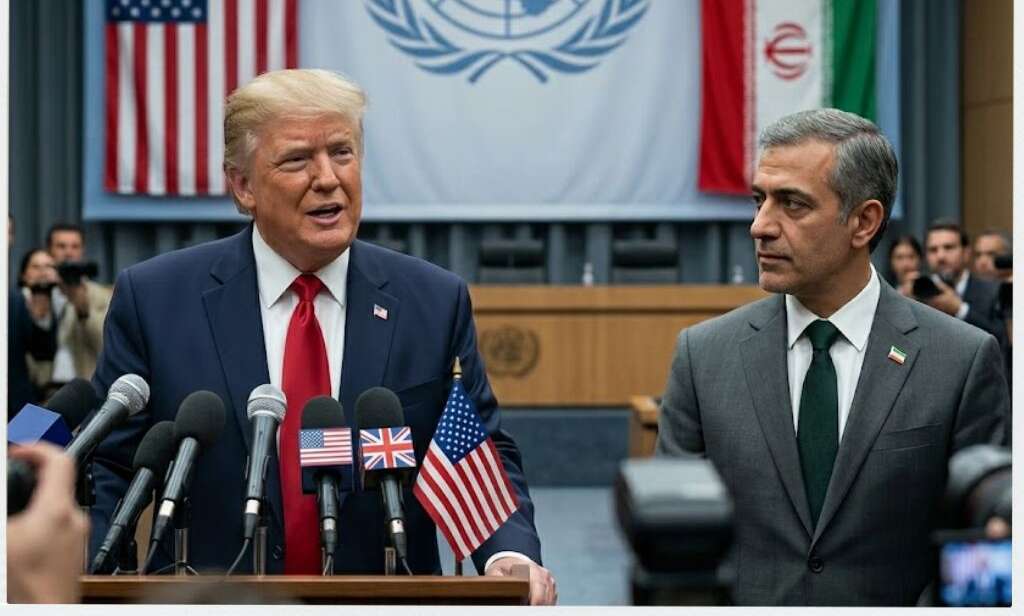
When Pakistan’s PM Shehbaz Sharif and Army Chief Asim Munir brokered the final hours of the ceasefire — calling Trump directly, relaying Tehran’s acceptance — Iran was not negotiating from leverage. It was negotiating to survive. Hegseth’s “begged” framing, stripped of its triumphalist packaging, is not factually indefensible.
What the Victory Framing Leaves Out
But declaring victory at the ceasefire announcement is also the kind of claim that history has a way of complicating.
The ceasefire was less than 24 hours old when it began visibly unraveling. Israel launched “Operation Eternal Darkness” on Lebanon — 100 airstrikes in ten minutes — a conflict explicitly excluded from the ceasefire terms. Iran accused the United States of breach. The IRGC reportedly halted Hormuz shipping again. Iran’s Lavan Island oil refinery was struck. By April 9, CNBC’s headline read: “Oil prices resume gains after Iran accuses US of breaching ceasefire deal.”
Physical oil markets — which price barrels, not announcements — never fell below $120 even as futures crashed 16%. The professional commodity traders who move actual crude did not believe the victory was complete. They were pricing the probability that Hegseth’s “historic” moment would need a sequel.
BCA Research’s chief geopolitical strategist Matt Gertken warned hostilities would “ignite later this year, if not later this month.” Ed Yardeni cautioned that “financial markets will remain sensitive to any breakdown.” And the core dispute that made this war possible — Iran’s insistence on domestic uranium enrichment rights versus Washington’s demand for complete dismantlement — remains entirely unresolved heading into Islamabad.
The Stakes of the Language
Hegseth’s “Iran begged” framing carries a specific diplomatic risk that experienced Pentagon hands understand well: it makes compromise harder.
When a Defense Secretary publicly humiliates an adversary by characterizing their ceasefire request as begging, that adversary’s domestic political environment becomes less tolerant of further concessions. Iran’s new leadership — navigating the aftermath of Khamenei’s death, mass protests, economic collapse, and 38 days of devastating military strikes — now must negotiate a final agreement while being publicly described as having begged for mercy by the US Secretary of Defense.
Every concession Iran makes in Islamabad will be framed domestically against that humiliation. Every hard line Tehran draws will be partially explained by it. Analysts at Eurasia Group noted that “victory language before a deal is finalized typically raises the domestic political cost of the deal for the other side — making the final agreement harder to close, not easier.”
The Scoreboard, Honestly Read – Here is what is true: Iran is weaker than it has been at any point since 1979. Its nuclear program is damaged. Its supreme leader is dead. Its economy is broken. Its military has absorbed the most concentrated strike campaign in the region’s modern history. It agreed to reopen the Strait of Hormuz — its single most powerful strategic weapon — as the price of a two-week pause.
If that is not a form of victory for the United States, it is difficult to define what would be.
But the ceasefire expires April 23. The talks in Islamabad carry the full weight of every unresolved issue from six prior rounds of failed negotiations. And a “historic victory” that does not produce a durable agreement will look, in retrospect, like a very expensive pause.
Pete Hegseth called it a win. The next 14 days will decide if he was right.
Oil & Energy Markets
A look at crude price swings, OPEC supply moves, and how energy markets react to geopolitical shocks.