The question circulating in classified corridors of the U.S. intelligence community is not what a victory over Iran would look like on the battlefield. It is what Iran would do if President Trump simply announced one — regardless of what the battlefield actually looked like. According to sources familiar with the matter, us spy agency
The question circulating in classified corridors of the U.S. intelligence community is not what a victory over Iran would look like on the battlefield. It is what Iran would do if President Trump simply announced one — regardless of what the battlefield actually looked like.
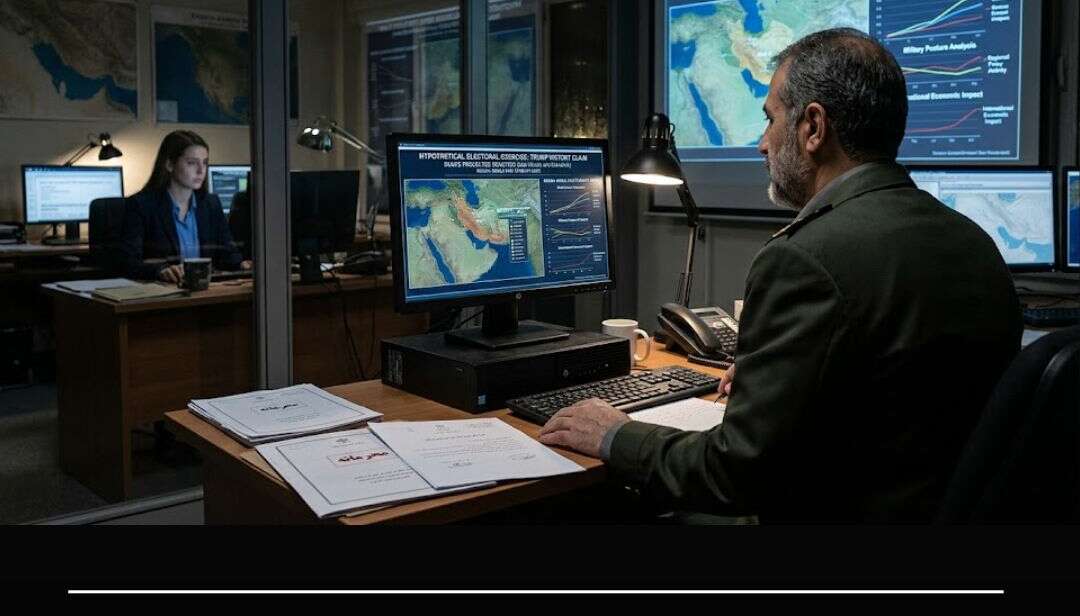
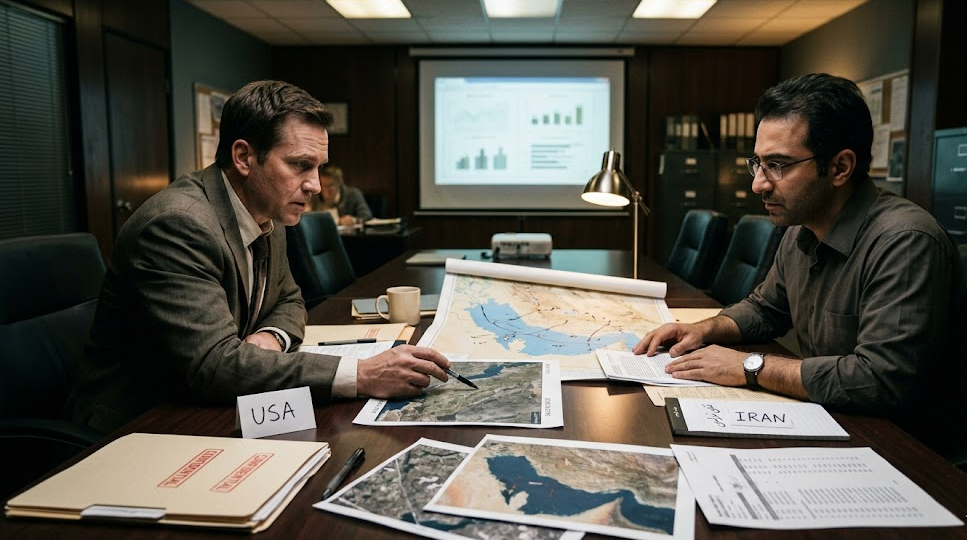
According to sources familiar with the matter, us spy agency officials are actively examining a hypothetical scenario at the direct request of senior administration officials: how would Tehran respond if Trump unilaterally declared victory in the two-month-old Iran war and began drawing down American forces in the region? The analysis has been framed not as military planning but as political modeling — a window into whether the president could credibly exit a conflict that has become a growing liability without handing Iran what it would portray as a strategic triumph.
The Intelligence Community’s Assignment
The examination spans multiple scenarios. In the first — where Trump declares victory and simultaneously reduces U.S. military presence — the intelligence assessment concludes that Iran would almost certainly interpret the move as an American retreat, presenting it domestically and internationally as proof that the Islamic Republic had outlasted the world’s most powerful military. In the second scenario — where Trump claims victory rhetorically but maintains a heavy forward troop presence and keeps the naval blockade in place — Iran’s calculus shifts. The IRGC and civilian leadership would likely read it as a negotiating posture, analysts believe, not as a genuine conclusion to hostilities.
Both outcomes present Trump with unresolved contradictions. Neither amounts to what his rhetoric has promised.
The CIA, when contacted by journalists, stated it was “not familiar with the intelligence community’s reported assessment” — a careful non-denial that neither confirmed nor closed the story.
The Political Engine Behind the Exercise
The request for this kind of analysis does not emerge from a vacuum. Senior administration officials and Republican strategists are increasingly alarmed at the domestic political fallout from a war now entering its third month with no resolution in sight. Gas prices above $4 per gallon have fanned economic anxiety across swing districts. Consumer sentiment has fallen to record lows. Polling shows that even a majority of Republican voters now assign blame for rising energy costs to the president.
The Iran war’s growing unpopularity has reshaped the calculus for November’s midterm elections, with Democrats openly strategizing to use the conflict as a wedge issue to retake Congressional seats. As one senior Republican official told CNN, “Everything will fall apart” if the Iran war remains unresolved and economically punishing by fall. The intelligence exercise, in this reading, is less about strategic assessment than about political escape hatch engineering — finding a version of “victory” that the American public might accept, one Iran might not immediately shred.
The parallels to the debates surrounding hypothetical Trump-Obama rematches in political circles are notable here: just as polling exercises around trump obama hypothetical rematch third term scenarios are essentially tests of messaging durability, the intelligence assessment is a stress-test of whether a particular political narrative can hold once announced.
Spy Assets Already in Place
The assessment is supported by a robust and expanding us spy plane and signals intelligence infrastructure already deployed across the Middle East theater. RC-135V Rivet Joint signals intelligence aircraft have been operating over the region since the earliest days of the conflict. U-2 Dragon Lady high-altitude reconnaissance planes, E-3 Sentry Airborne Warning and Control System jets, and scores of additional ISR (intelligence, surveillance, reconnaissance) assets have been repositioned to monitor Iranian military activity in near-real time.
These are the same tools that informed the initial strikes on February 28, and they now provide continuous feeds on Iranian force positioning, IRGC communications, storage levels at Kharg Island, and political deliberations within Tehran’s fractured command structure — the very signals that would reveal how Iran’s generals and the invisible supreme leader Mojtaba Khamenei respond to any American declaration, whether genuine or theatrical.
Notably, Trump has applied similar surveillance logic to geopolitical ambitions elsewhere. He famously ordered the us spy agency apparatus to conduct surveillance operations around Greenland — where trump claims victory on greenland as a national security imperative — justifying the operation by pointing to Russian and Chinese naval activity in the North Atlantic. The precedent is clear: for this administration, intelligence collection and political messaging are instruments of the same foreign policy instrument.
The Credibility Problem
The deeper complication for the White House is that Trump has already declared victory in the Iran war — multiple times. After the initial ceasefire was announced on April 7, Trump said the U.S. had achieved “a total and complete victory.” Defense Secretary Pete Hegseth echoed the claim. Both were subsequently fact-checked by PBS NewsHour, which found the claims directly contradicted internal U.S. assessments: Trump had previously said Iran’s nuclear program was “obliterated,” but intelligence reports subsequently indicated Iran was rebuilding. The Strait of Hormuz remains closed. Peace talks have collapsed. The naval blockade continues.
Each premature declaration of victory has eroded the credibility of the next one. If a formal, political announcement of victory is now being modeled against Iran’s likely response, it is because the White House understands that the declaration itself is a geopolitical action — one that Tehran’s IRGC generals will parse not for its truth value, but for what it reveals about American resolve, staying power, and willingness to absorb ongoing economic pain for strategic gain.
The spy agencies’ task, in the end, is to answer a question that no intelligence analysis can fully resolve: can a war be ended by announcing that it is over?
Market Analysis
A quick snapshot of market trends, customer behavior, and competitor movements.