Operation Epic Fury: The Untold Story of the US-Israel Strike on 900 Iranian Sites
Theo Jorden
Share This Article
In Iran, Saturday is a working day. Schools are open. Streets are full. At that precise moment — chosen, investigators later concluded, with deliberate awareness of the morning school rush — the skies over the Islamic Republic split open. In the first twelve hours of what the United States designated Operation Epic Fury and Israel
In Iran, Saturday is a working day. Schools are open. Streets are full. At that precise moment — chosen, investigators later concluded, with deliberate awareness of the morning school rush — the skies over the Islamic Republic split open.
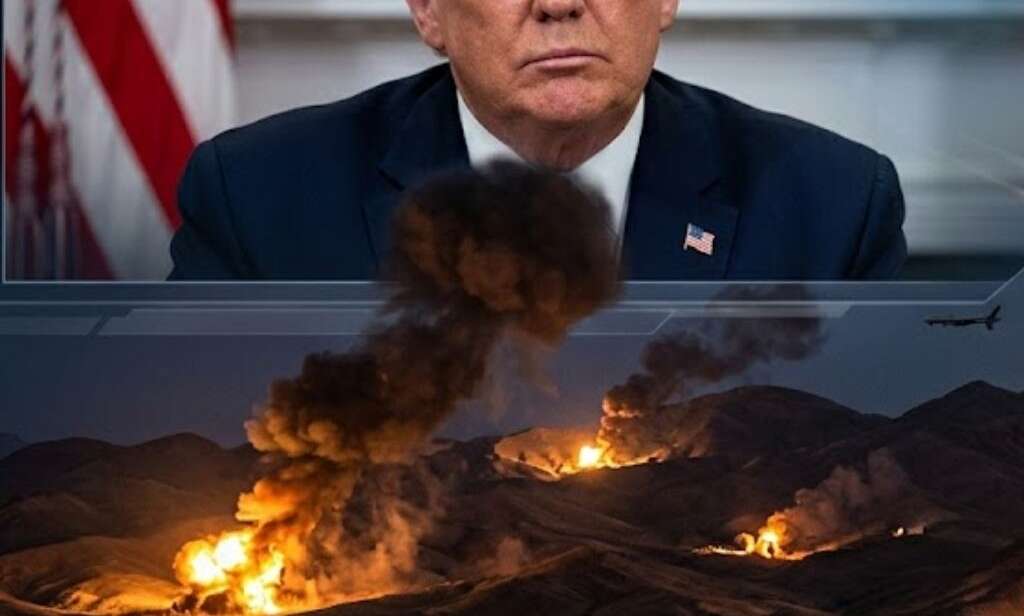
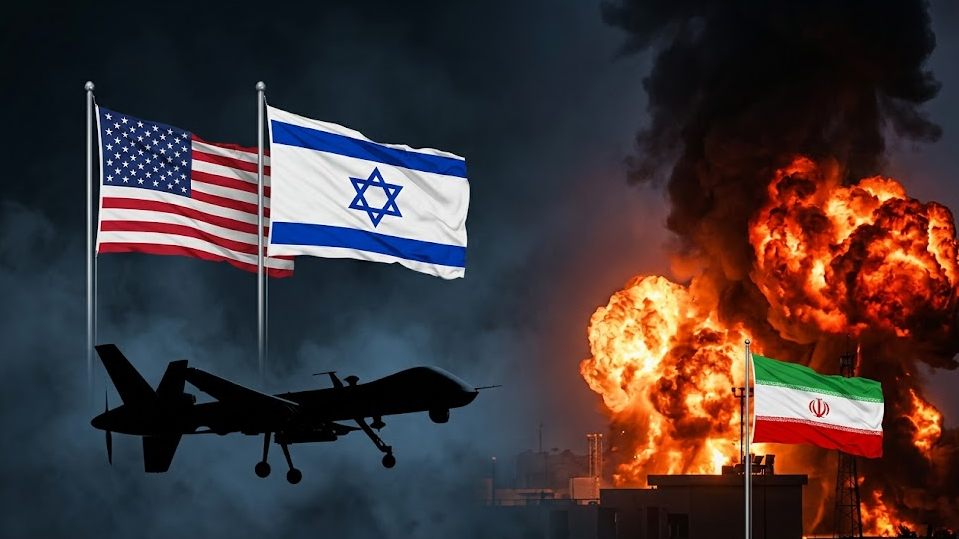
In the first twelve hours of what the United States designated Operation Epic Fury and Israel called Operation Roaring Lion, US and Israeli forces launched nearly 900 coordinated strikes across Iran. It was, by any military measure, the most concentrated assault on a single nation since the opening of the Iraq War in 2003 — and in several dimensions, it exceeded even that.
The untold story of those first hours — the planning, the weapons, the intelligence architecture that made it possible, and the devastating human cost that followed — is only now coming into full focus.
Months of Preparation, Days of Coordination
The operation did not begin on February 28. It began months earlier, in the shadows.
In late January 2026, Major General Shlomi Binder, head of the IDF Military Intelligence Directorate, quietly landed in Washington. Days later, IDF Chief of Staff Lt. Gen. Zamir made his own lightning visit to the US capital. According to Israel Hayom’s reconstruction of events, from that moment forward both militaries opened their intelligence, targeting plans, and operational playbooks to one another. Senior US Air Force officials confirmed internally that the president had effectively ordered joint strike preparations to begin.
A defining feature of the planning phase was the use of AI-enabled targeting tools that compressed the traditional intelligence kill chain. Analysts who would normally require weeks to process, prioritize, and validate target sets worked through more than 1,000 prioritized targets in the first 24 hours with a fraction of the usual analytical cell. The technology didn’t just accelerate the strike — it fundamentally changed the scale of what was simultaneously achievable.
The Arsenal: MOPs, Stealth Bombers, and Carrier Strikes
The weaponry deployed in Operation Epic Fury represented the full depth of the US military’s most advanced conventional strike capability.
At the center of the nuclear campaign were America’s B-2 Spirit stealth bombers — flying what CENTCOM described as the largest B-2 operational strike in US history. Each aircraft carried the GBU-57 Massive Ordnance Penetrator, a 30,000-pound bunker-buster specifically engineered to destroy deeply buried fortified facilities. The MOP can penetrate tens of meters of reinforced concrete before detonation. No other aircraft in any military’s inventory can carry it.
Twelve GBU-57s were dropped on Fordow — Iran’s most hardened nuclear facility, buried under approximately 80 meters of rock in the Qom mountains — and two more on Natanz. Tomahawk cruise missiles destroyed the Isfahan Nuclear Technology Center. Carrier-based F-35C Lightning II jets from the USS Abraham Lincoln flew deep stealth strike packages into Iranian airspace. US Navy submarines torpedoed Iranian naval vessels; the IRIN Dena was sunk off the coast of Sri Lanka.
By day’s end, Iran’s air defense network — built over decades at enormous cost — was 80% destroyed.
Decapitation: Seven Leaders in One Day
The opening wave’s most consequential target was not a facility. It was a man.
Supreme Leader Ali Khamenei was killed in an Israeli precision strike on his compound on February 28. Defense Minister Aziz Nasirzadeh, IRGC Commander Mohammad Pakpour, and Defence Council Secretary Ali Shamkhani were killed in the same wave of strikes. Four senior Ministry of Intelligence officials died alongside them. The IDF confirmed seven Iranian security leaders killed in the first hours. Khamenei’s daughter, son-in-law, granddaughter, and daughter-in-law also died in the strikes on his compound.
The decapitation strategy had a flaw the planners did not fully account for. The IRGC, built with institutional redundancy across its command structure, did not collapse. It decentralized. Each role was filled as its holder was eliminated, and the organization kept fighting.
The Minab School: The Strike That Shocked the World
Twelve hours into the operation, a strike in Minab — a small city near Bandar Abbas — hit what US targets identified as a naval base compound.
What the missiles actually destroyed was the Shajareh Tayyebeh girls’ elementary school. Three distinct strikes — a triple-tap — leveled the building. At least 175 civilians were killed, more than 100 of them schoolchildren. The Guardian’s independent investigation found no indication the building served any military purpose. Minab’s mayor confirmed the adjacent military compound had been vacated for 15 years. The school was the only operational facility on site.
Over 120 members of Congress signed a letter demanding answers. The strike became the defining atrocity image of the war — and the moment international condemnation of the operation reached its peak.
Thirty-Nine Days of Fire – The initial 900 strikes were not the end. They were the beginning.
Over the following 39 days, US forces alone hit more than 13,000 targets across Iran. Hegseth announced the destruction of more than 450 ballistic missile storage facilities and 800 one-way attack drone storage facilities. The missile supply chain — Iran’s most feared asymmetric tool — was dismantled factory by factory. By the time the ceasefire was announced on April 7, Defense Secretary Pete Hegseth declared Iran’s defense industrial base “completely destroyed.”
“They can no longer build missiles, build rockets, build launchers, or build drones,” Hegseth said. “Their factories have been razed to the ground, set back in historic fashion.” He added his most pointed line of the conflict: “We negotiate with bombs.”
General Dan Caine, the top US military officer, offered the more precise accounting: approximately 90% of Iran’s weapons factories hit, more than 80% of its missile facilities struck, and nearly 80% of its nuclear industrial base degraded. The discrepancy between his numbers and Hegseth’s declaration of total destruction became a quiet point of contention within the Pentagon.
The human toll inside Iran, as documented by the NGO HRANA through March 17, stood at 3,114 dead — including 1,354 confirmed civilians and 1,138 military personnel.
What Operation Epic Fury Changed – Going into the Islamabad peace talks, the military calculus was stark. Iran’s nuclear infrastructure had been struck harder than at any point in its history. Its air defenses were mostly gone. Its missile arsenal had been degraded to a fraction of its pre-war capability. Its supreme leader was dead. Its defense-industrial base, by the Pentagon’s own assessment, had been set back by years if not decades.
That devastation is the leverage Vance, Witkoff, and Kushner carried to the negotiating table. It is also the grievance — compounded by 1,354 civilian deaths and a girls’ school in Minab — that Iran carried in.
Operation Epic Fury achieved its military objectives with a precision and scale that stunned the world. Whether the peace it created will last is the question that 40 days of bombs could not answer.
Oil & Energy Markets
A look at crude price swings, OPEC supply moves, and how energy markets react to geopolitical shocks.