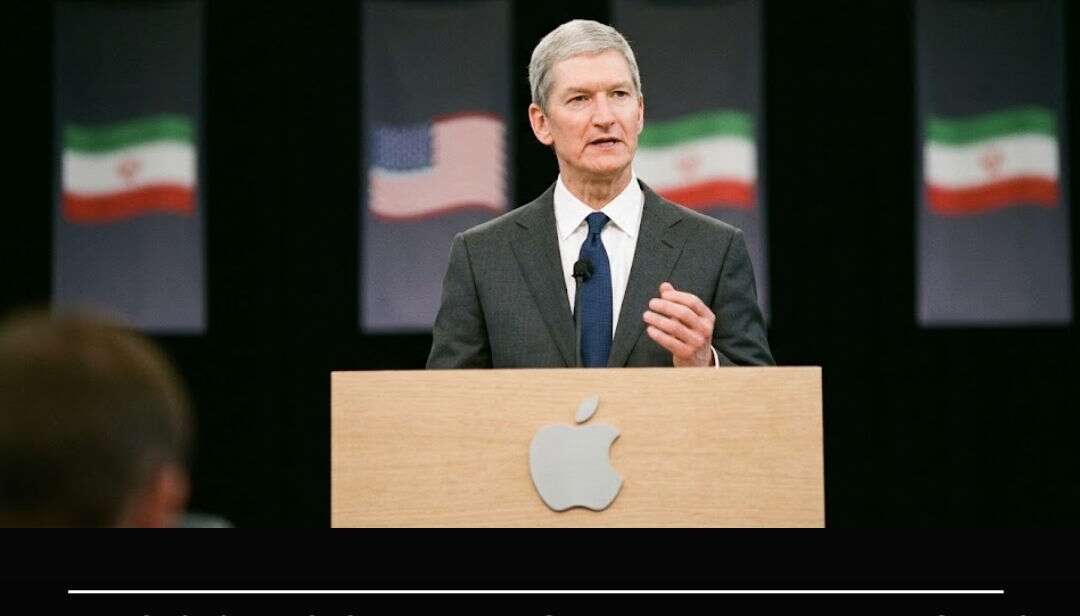
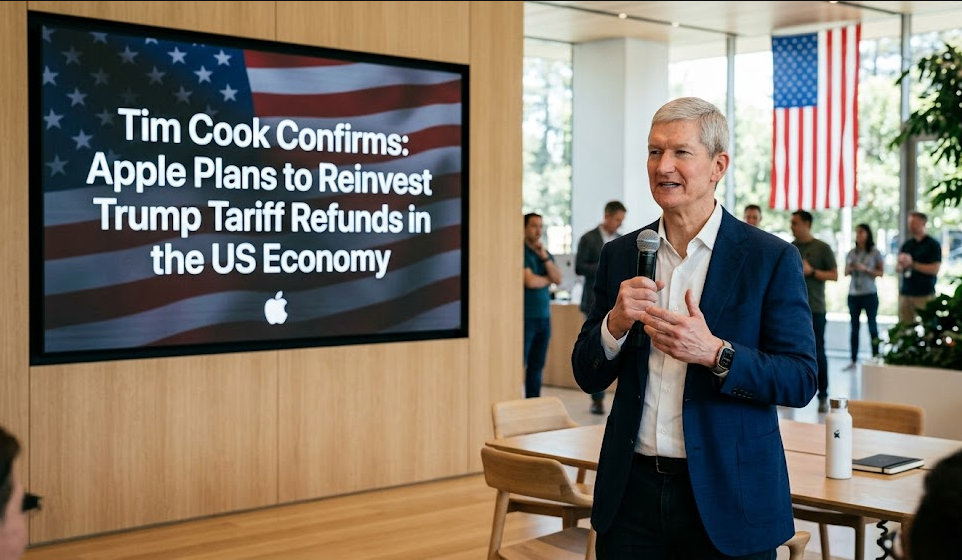
Cupertino | May 1, 2026 In a move that blends legal recovery with political optics, Apple CEO Tim Cook has confirmed that the company is actively pursuing refunds on Trump tariffs it paid over the past year — and that every dollar recovered will be funnelled back into the United States economy. The disclosure came
In a move that blends legal recovery with political optics, Apple CEO Tim Cook has confirmed that the company is actively pursuing refunds on Trump tariffs it paid over the past year — and that every dollar recovered will be funnelled back into the United States economy. The disclosure came during Apple’s blockbuster Q2 2026 earnings call on April 30, where the company reported record revenue of $111.2 billion, a 17% year-on-year increase.
“We are following the established processes to apply for refunds of tariffs paid,” Cook stated on the call. “Any amount received will be invested into US innovation and advanced manufacturing — in addition to our prior commitments.”
The announcement underscores how Trump tariff news continues to ripple across corporate America, even after the Supreme Court effectively dismantled the legal basis for those levies.
The Supreme Court Struck It Down — Now Apple Wants Its Money Back
The backdrop to Cook’s announcement is a landmark constitutional ruling. On February 20, 2026, the US Supreme Court voted 6–3 to strike down the broad reciprocal tariffs Trump had imposed in April 2025 under the International Emergency Economic Powers Act (IEEPA). The Court found that invoking IEEPA to address trade deficits — and applying sweeping import duties on nearly every trading partner — exceeded the president’s statutory authority and usurped Congress’ tax-setting role.
The ruling immediately raised a $166 billion question: what happens to the money the government already collected? US Customs and Border Protection (CBP) launched its bulk refund claims system — known as the CAPE portal — on April 19, 2026, allowing businesses to begin filing for repayment. Apple, which had accumulated an estimated $3.2–3.3 billion in tariff payments, is expected to recover approximately $2.5 billion through this mechanism. Refunds are not expected to arrive before July 2026 and will not appear in the current quarter’s results.
Cook’s Political Calculation: The “Trump Whisperer” at Work
Tim Cook’s decision to publicly commit to reinvesting the refund is being widely read as a masterclass in Washington relationship management. The Apple CEO has cultivated one of Silicon Valley’s most closely watched relationships with the Trump White House, earning the informal title of the “Trump whisperer” for his ability to negotiate favorable treatment for Apple amid escalating trade pressures.
That calculus matters. Trump, in a characteristically blunt statement last month, said he would “remember” companies that chose not to apply for tariff refunds — a pointed signal to corporate America about loyalty and optics. Cook’s simultaneous pledge to seek refunds and reinvest them stateside appears designed to satisfy both the legal opportunity and the political expectations of the current administration.
“This is exactly the kind of deal-making language Trump responds to,” one senior trade analyst told Bloomberg. “Cook is effectively saying: we’ll take the money the courts say we’re owed, and we’ll put it straight back into America.”
Adding to a $600 Billion US Commitment
The refund reinvestment plan does not stand alone. Cook stressed it would supplement — not replace — Apple’s existing American Manufacturing Program (AMP), a $600 billion, four-year commitment to US manufacturing and innovation that the company unveiled earlier in 2025 under pressure from the Trump administration. Apple had also previously secured an exemption from 100% semiconductor import tariffs by pledging a $100 billion domestic investment tranche.
The scale of Apple’s US commitment now positions the company as one of the most prominent corporate voices in US economy news — a tech giant visibly reshaping its supply chain strategy while navigating Trump’s tariffs through every available legal and diplomatic channel.
What It Means for the Broader Economy
Apple is far from alone. Companies including Costco, Revlon, and Bumble Bee Foods filed refund lawsuits even before the Supreme Court ruled. The Trump administration has indicated the total refund liability sits at $166 billion — a figure that, when returned to businesses across the economy, could generate a significant secondary investment wave.
However, economists caution that consumers who bore higher prices during the tariff period are unlikely to see direct relief. While some companies like FedEx have pledged to pass refunds to customers, Apple has not made such a commitment, opting instead for the manufacturing and innovation route.
For now, the trump tariff saga has entered a new chapter — one where the courts, not the White House, are setting the terms, and where America’s most valuable company is betting that investing those recovered billions domestically is both the right policy and the right politics.
Market Analysis
A quick snapshot of market trends, customer behavior, and competitor movements.