The January 2025 ceasefire was supposed to end the Gaza war in phases. Phase 1 held — barely. Phase 2 collapsed before it began. Now US envoys are talking directly to Hamas — a designated terrorist organization — in a last-ditch attempt to revive a deal that may already be beyond saving. DOHA / WASHINGTON
The January 2025 ceasefire was supposed to end the Gaza war in phases. Phase 1 held — barely. Phase 2 collapsed before it began. Now US envoys are talking directly to Hamas — a designated terrorist organization — in a last-ditch attempt to revive a deal that may already be beyond saving.
DOHA / WASHINGTON / GAZA — The ceasefire was never meant to last this long without a breakthrough.
When the January 19, 2025 agreement between Israel and Hamas took hold — brokered through weeks of grueling negotiations in Doha with Qatar and Egypt as lead mediators and Trump’s special envoy Steve Witkoff as the critical American pressure point — it was structured in three phases. Phase 1 delivered a 42-day pause, humanitarian aid surges, and a partial hostage-for-prisoner exchange. It was fragile, contested, and frequently on the verge of collapse. But it held.
Phase 2 was supposed to convert that fragile pause into a permanent ceasefire. It never happened. And now, with Israeli military operations having resumed across northern and southern Gaza, with the humanitarian situation deteriorating back toward catastrophe, and with the remaining hostages still in tunnels beneath the rubble — US envoys have returned to direct talks with Hamas in a last-ditch attempt to revive negotiations that have structurally stalled.
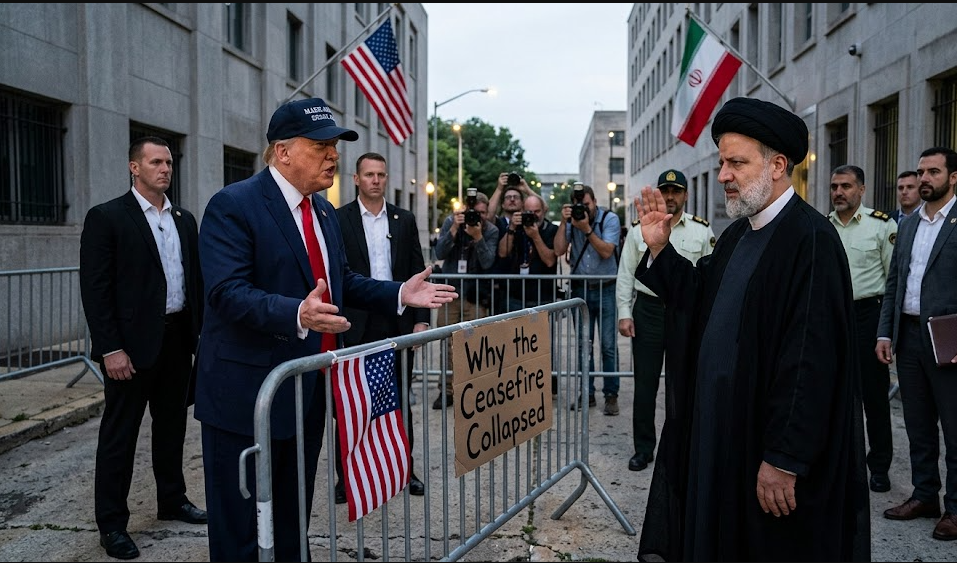
Why the Ceasefire Collapsed
The Phase 2 breakdown was not a surprise to anyone watching closely. It was the predictable consequence of two irreconcilable positions that the Phase 1 agreement deliberately deferred rather than resolved.
Hamas entered Phase 2 negotiations with a non-negotiable core demand: a permanent, binding ceasefire with a full Israeli military withdrawal from Gaza, an end to the blockade, and Hamas retaining a governance role in the post-war territory. For Hamas’s leadership — operating from Doha and underground in Gaza following Yahya Sinwar’s killing in October 2024 — surrendering governance was surrendering existence as an organization.
Israel, under Prime Minister Benjamin Netanyahu, entered Phase 2 with an equally non-negotiable position: no permanent ceasefire until all hostages are returned, Hamas is fully disarmed, and Hamas has no role in any future Gaza governance structure. Netanyahu faces a governing coalition in which far-right ministers Itamar Ben-Gvir and Bezalel Smotrich have threatened to collapse the government if any agreement legitimizes Hamas’s continued existence.
Between those two positions, there is no mathematical middle. Phase 2 talks stalled, then suspended, then collapsed. Israel resumed military operations in March 2025. The war — which had killed more than 50,000 Palestinians by the end of Phase 1 — continued.
The Direct Talks Controversy
Into that stalemate, the Trump administration made a decision that broke a decades-long American policy norm: direct contact with Hamas.
US hostage envoy Adam Boehler became the first senior American official to openly engage in direct negotiations with Hamas representatives — bypassing the traditional Qatari and Egyptian intermediary structure that had governed all prior US-Hamas contact. Boehler framed it simply: “We have Americans being held. I will talk to whoever I need to talk to bring them home.”
The decision immediately drew criticism from multiple directions. Israel’s government expressed private fury — Netanyahu’s office called direct US-Hamas talks “a legitimization of a terrorist organization.” Congressional hardliners demanded Boehler’s resignation. Legal scholars debated whether direct negotiations with a State Department-designated foreign terrorist organization required special authorization.
The Trump administration’s response was characteristically blunt: results matter more than process. Steve Witkoff — simultaneously managing the Iran ceasefire negotiations in Islamabad — confirmed the direct channel as deliberate policy: “We are not going to let bureaucratic norms stand between American citizens and their families.”
The Hostage Crisis Driving Urgency
The direct talks exist because the hostage situation is deteriorating in ways that create urgent domestic political pressure.
Of the approximately 59 hostages who remained in Gaza after Phase 1 exchanges concluded, intelligence assessments suggest a significant number may no longer be alive. Families of the hostages — who have maintained a relentless public campaign for over two years — have grown increasingly desperate and increasingly critical of both the Israeli government and the US administration for allowing Phase 2 to collapse without a deal.
The Hostages and Missing Families Forum issued a statement calling the resumption of direct US-Hamas talks “the first serious diplomatic development in months” while warning that “every day of delay is a day some of our loved ones may not survive.”
Hamas has signalled it is willing to negotiate a comprehensive hostage release in exchange for a permanent ceasefire — but has refused to separate the two tracks, insisting the hostages will not be released in stages without a binding commitment to end the war permanently.
What Qatar and Egypt Are Doing
Qatar’s mediation infrastructure — which produced the January 2025 ceasefire — remains the primary diplomatic framework. Qatari PM Mohammed bin Abdulrahman Al Thani has shuttled between Doha, Tel Aviv, and Washington repeatedly since Phase 2 collapsed, attempting to construct a bridging proposal that gives both sides enough ambiguity to claim partial victory.
Egypt has focused on the humanitarian corridor dimension — negotiating aid access arrangements that have become increasingly contentious as Israel has tightened entry restrictions on food, medicine, and fuel entering Gaza. The UN’s World Food Programme warned in March 2026 that northern Gaza faces conditions “indistinguishable from famine” for the second time in the conflict.
What Comes Next
The direct US-Hamas talks in Doha are focused on a narrow, immediate objective: a temporary humanitarian pause long enough to verify which hostages are alive, extract any who require urgent medical care, and create space for a broader Phase 2 framework negotiation to restart.
It is not a peace deal. It is not Phase 2. It is an attempt to prevent complete breakdown while the pieces of a larger agreement are reassembled.
The obstacles are structural and familiar. Netanyahu cannot politically survive agreeing to Hamas governance. Hamas cannot organizationally survive agreeing to full disarmament. The hostages are the only currency both sides still share — and they are running out of time.
Direct talks with Hamas were once unthinkable American policy. They are now American policy. Whether they produce results before the remaining hostages run out of time is the question that will define this chapter of the conflict.
Market Analysis
A quick snapshot of market trends, customer behavior, and competitor movements.