Share This Article
At 12:29 PM EDT on June 12, a single post on X from Pakistan’s Prime Minister Shehbaz Sharif reordered the geopolitical landscape of the Middle East:
“Peace has never been this close as it is now.”
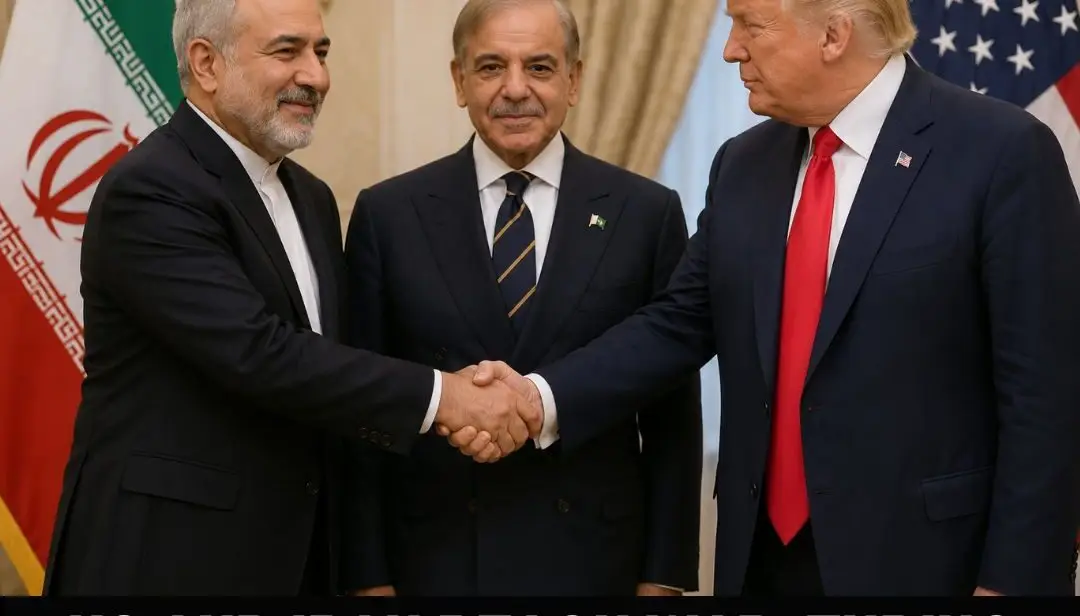
Sharif confirmed that the United States and Iran had agreed on a “final, agreed upon text” of a war-ending peace deal the culmination of 103 days of conflict, six weeks of fragile ceasefire, and months of back-channel diplomacy conducted through Pakistani couriers between Washington and Tehran. Islamabad, the prime minister announced, was “working closely with both sides to finalise the next steps.”
Within hours, Iran’s Foreign Minister Abbas Araghchi confirmed the MOU “has never been closer.” The Trump administration said officials were operating with 80–85% confidence the agreement would be signed within days. Oil prices dropped 3.4% to $87.33 per barrel on the news. After 103 days of the worst energy supply crisis since the 1973 Arab oil embargo, the world exhaled cautiously.
How Pakistan Became the Peacemaker
The story of Islamabad’s mediation role is one of the most improbable diplomatic pivots of the decade. Pakistan shares a long, porous border with Iran. It has deep historical relationships with Gulf states. It holds nuclear capability of its own. And it has maintained formal neutrality in the Iran-US War a neutrality that gave it credibility with both sides when the shooting started.
Pakistan’s formal mediation began almost immediately after Operation Epic Fury launched on February 28, assassinating Supreme Leader Ali Khamenei and triggering Iran’s retaliatory strikes. By April 8, Pakistan had brokered the first two-week ceasefire an agreement that held long enough to create space for the talks that would produce June 12’s breakthrough.
The Islamabad Talks opened April 10–11. Pakistan Army Chief General Asim Munir was directly involved in shuttle diplomacy between the parties. The final framework now being called the “Islamabad Declaration” bears Pakistan’s diplomatic fingerprints at every stage.
The Diplomat noted that Pakistan mediated “because it can and it must” a regional power with stakes in both preventing Iranian state collapse and maintaining its critical relationship with Washington. The New Arab observed that the successful mediation “reflects South Asia’s rise” as a diplomatic force, restoring Pakistan to a geopolitical centrality it “has not enjoyed since the 1970s, when it became a bridge between East and West.”
For Islamabad, the strategic dividend is multi-layered. It repositions Pakistan as indispensable to US interests. It counters years of Indian diplomatic efforts to marginalise Pakistan on the world stage. And it removes the existential threat of a prolonged, destabilising war on Pakistan’s western border one that risked spillover into Iran’s Sistan-Baluchistan province and across into Pakistan’s restive Balochistan region.
What the Agreement Contains And What It Doesn’t Yet
The June 12 agreement is a Memorandum of Understanding — not a permanent peace treaty. The distinction matters. It is a framework that, once signed, triggers a 60-day period of technical negotiations in which the hard questions get resolved: nuclear enrichment duration, uranium disposal mechanism, sanctions relief sequencing, and the future of Iranian proxy forces across Lebanon, Iraq, and Yemen.
What the MOU confirms: a complete halt to US and Israeli military strikes on Iran; a commitment from Tehran to reopen the Strait of Hormuz without tolls and clear the IRGC’s sea mines within 30 days; a 60-day ceasefire extension covering Lebanon; and the beginning of negotiations over lifting sanctions and unfreezing Iranian assets — with relief implementation conditioned on verified Iranian compliance.
What remains unresolved: the duration of uranium enrichment restrictions (Washington wants 20 years; Tehran is offering five), the precise mechanism for disposing of Iran’s stockpile of 440.9 kilograms of 60% enriched uranium — enough for eleven nuclear weapons — and the extent of IAEA verification access after a 97-day monitoring blackout since February 28.
A senior Trump administration official stated the architecture explicitly: “No money will be released to Iran until it honours its commitments.” Benefits, the official said, “only accrue if they actually deliver.” The signing ceremony — expected in Geneva within days will likely be attended by Vice President JD Vance, according to Trump administration signals.
Trump himself offered characteristic candour on the uranium question: the deal “conceptually deals with Iran’s nuclear material” an acknowledgment that the most dangerous element of the agreement is still being worked out.
Iran-US War: From 900 Strikes to a Signed Text
The arc from war to agreement spans 103 days of the Iran-US War Latest a conflict that began with nearly 900 US-Israeli strikes in 12 hours on February 28 and has cost thousands of lives, displaced over one million people, and triggered the largest oil supply disruption in recorded history.
The human toll by June is staggering. Iran’s Ministry of Health documented over 3,468 deaths including more than 1,200 civilians. US coalition losses totalled 28 killed 13 Americans, 15 Israelis. Lebanon has seen over 3,593 killed in the resumed Israel-Hezbollah war, with more than one-sixth of its population displaced. Across the broader conflict zone, UNHCR counted over 4.8 million displaced people.
The economic destruction compounded the human toll. The Strait of Hormuz closure stripped 12.8 million barrels per day from global oil supply, pushed Brent crude from $71 to $120 per barrel at peak, drove US pump prices to $4.56 per gallon, and added an estimated $1.1 billion per day in stranded revenue losses for Gulf oil states and Iraq.
As of June 12, commercial shipping through the Strait remains limited US military forces shot down two Iranian drones targeting vessels in the waterway on the night of the Pakistan PM’s announcement. Only 29 of 109 large oil tankers tracked by maritime monitors had successfully exited the strait. The mines laid by Iran’s IRGC since March 10 remain in the water.
Netanyahu: “Not a Party” But Watching Closely
Israeli Prime Minister Benjamin Netanyahu confirmed June 12 that Israel is formally “not a party” to the US-Iran Memorandum of Understanding a status that reflects both his exclusion from the negotiations and his deep reservations about their outcome.
“As long as I am the Prime Minister of Israel, Iran will not have nuclear weapons,” Netanyahu declared, extracting a public commitment from Trump that the final deal must mandate complete removal of enriched uranium and full dismantling of nuclear infrastructure. Trump’s response to Netanyahu’s resistance “I call the shots. Netanyahu won’t have any choice” has defined the power dynamic between Washington and Jerusalem throughout this conflict.
Times of Israel analysis concluded that the deal has forced Israel into “seeking guarantees, not victory” a painful concession for a prime minister who began this war with maximalist objectives and faces a domestic election in October 2026.
Israel pressed Washington to prevent the unfreezing of Iranian assets as part of the agreement a demand the US has so far declined to accept.
Global Reaction: Cautious but Historic
The United Nations passed a resolution co-sponsored by 136 member states supporting the ceasefire framework with Russia and China abstaining. A competing Russian draft urging all parties to return to diplomacy failed to pass. Saudi Arabia called for all parties to end the violence while condemning the “dire consequences” of the conflict. The EU urged maximum restraint and praised diplomatic progress.
Al Jazeera reported that the question of when the Strait of Hormuz will be fully safe for commercial shipping remains unanswered mine clearing could take weeks to months even after an agreement is formally signed. Markets are pricing June optimism but watching July delivery.
The 60-day clock begins the moment both parties sign. What happens in those 60 days on uranium, on inspections, on sanctions, on Lebanon will determine whether June 12, 2026 is remembered as the day the Middle East war ended, or merely the day it paused.

Oil & Energy Markets
A look at crude price swings, OPEC supply moves, and how energy markets react to geopolitical shocks.

Geopolitics & Conflict
Breaking down how wars, ceasefires, and diplomatic deals ripple through global trade and security.
US Foreign Policy
Coverage of Trump administration negotiations, sanctions, and strategic decisions shaping world events.
Economy & Inflation
Tracking how commodity prices, gas costs, and supply chains affect everyday consumers.