Share This Article
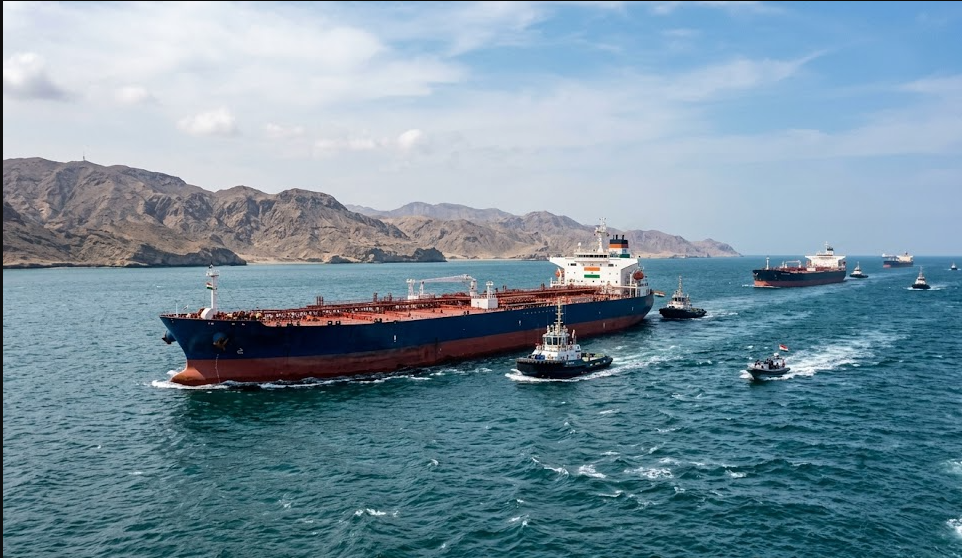
India is preparing to send oil tankers through the Strait of Hormuz for the first time since Iran closed the waterway on March 4, 2026 a high-stakes maritime gamble that reflects the severity of the energy crisis now gripping the world’s third-largest oil importer as the US-Iran war reshapes global supply chains from the Persian Gulf to the refineries of Mumbai and Chennai.
The move comes after weeks of diplomatic back-channels, naval deployments, and emergency supply diversification that have exposed just how exposed India’s 85% import-dependent energy economy truly is when the world’s most critical oil chokepoint shuts without warning.
The Blockade That Changed Everything
When Iranian forces closed the Strait of Hormuz in retaliation for the joint US-Israel Operation Epic Fury strikes which killed Supreme Leader Ali Khamenei India immediately felt the rupture. Roughly 40% of India’s crude oil flows transited through the strait. Within days of the closure, that supply simply stopped.
The human scale of the disruption was immediate: over 38 Indian-flagged vessels became stranded in the Persian Gulf and Gulf of Oman, carrying approximately 1.67 million tons of crude oil, 320,000 tons of LPG, and 200,000 tons of LNG. Two Indian-flagged ships were targeted by gunfire from Iranian gunboats and forced to turn back. The VLCC Sanmar Herald came under fire despite receiving prior clearance to pass a warning that no piece of paper from Tehran was worth much when IRGC patrol boats were on the water.
Nearly 20,000 Indian seafarers found themselves trapped in the conflict zone. The oil tankers sitting idle in the Gulf represented not just cargo but livelihoods, refinery throughput, and the energy backbone of a $3.7 trillion economy.
Here are Some Related Blogs to Read
- Get the full picture on where this war is headed – more Trump-era geopolitical coverage at DonaldTrump.Coach.
- Tuesday’s missiles didn’t come out of nowhere, Iran has been digging out hidden missile stockpiles after rejecting Trump’s peace offer
- Not everyone in Trump’s own camp agrees on strategy, JD Vance claims Hegseth has been misleading Trump on the Iran war
- This isn’t the only recent flashpoint at sea, a US Navy destroyer just fired on and seized an Iranian cargo ship
- The strikes haven’t ended Iran’s nuclear ambitions either, US intel says recent strikes did only limited damage to Iran’s nuclear program
- That brief pause before Tuesday’s attack wasn’t random, Trump had deliberately paused Hormuz operations to force Iran into a deal
- The missiles are only half the story, Iran and Israel’s spy war is heating up amid claims of stolen F-15 secrets
- Trump’s fights aren’t confined to Tehran, he’s now clashing with his own SCOTUS picks back home
- Global supply chains are already bracing for impact, Goyal’s courting 50 US leaders in New York over exactly that.
- Stay ahead of the story track it live or get the full background on how the US-Iran war escalated to this point.
The Russia Squeeze Arrived at the Worst Moment
India’s energy crisis did not arrive in a vacuum. For two years, Russian crude had served as a critical stabilizer discounted barrels that allowed India to manage import costs while Gulf supplies tightened. Russian crude made up roughly one-third of India’s oil imports through 2025, with volumes averaging 1.7 million barrels per day.
Then, on April 11, 2026, a US waiver allowing countries to purchase Russian crude expired removed by an administration already fighting one energy war in the Middle East and unwilling to extend exceptions that complicated its sanctions architecture. The timing, as CNBC noted bluntly, created “a mounting supply squeeze”: India losing Iranian transit barrels through Hormuz while simultaneously losing access to discounted Russian barrels through US policy pressure. Both pillars of India’s energy cost management vanished within weeks of each other.
Indian oil marketing companies began bleeding up to ₹1,000 crore ($120 million) per day as the government held pump prices artificially low to protect inflation-sensitive voters absorbing losses that the Finance Ministry warned placed “considerable downside risk” on India’s GDP growth forecast, already revised down to 6.7% from an earlier projection of 7.7%.
For a detailed analysis of how the Hormuz crisis intersects with Russia and Ukraine war dynamics and India’s energy dependency, see CNBC’s coverage of the Hormuz blockade hitting India as the Russian oil waiver expired.
Naval Escorts and Diplomatic Corridors
India’s response has operated on two tracks simultaneously. On the military side, the Indian Navy launched Operation Urja Suraksha on March 25, 2026, deploying over five frontline warships including Visakhapatnam-class destroyers to escort oil tankers and cargo ships west of Hormuz. The navy positioned vessels east of the strait in a deliberate non-escalatory posture, escorting ships to the mouth without entering the waterway itself.
On the diplomatic side, Prime Minister Narendra Modi called Iranian President Masoud Pezeshkian on March 12, stating directly that “the safety and security of Indian citizens, as well as the need for unimpeded transit of goods and energy resources, remain India’s top priorities.” National Security Advisor Ajit Doval led back-channel negotiations that reportedly secured an informal guarantee from Tehran.
On March 26, Iranian Foreign Minister Abbas Araghchi confirmed that ships owned by five nations China, Russia, India, Iraq, and Pakistan would be permitted to transit the Strait. The exemption reflected both India’s diplomatic persistence and Tehran’s calculation that alienating New Delhi entirely would undermine any post-war diplomatic standing Iran hoped to preserve.
The Tankers Head Back In
With final government approval expected imminently, India’s oil tankers are preparing to make the transit. The strategic petroleum reserve covering 9.5 days of consumption from facilities at Mangaluru, Visakhapatnam, and Padur has bought time but cannot substitute for restored supply flows indefinitely. Combined with commercial refinery stocks, India holds roughly 74 days of crude buffer, still short of the IEA’s recommended 90-day standard.
The UAE has agreed to store 30 million barrels in India’s SPR infrastructure a deal signed during PM Modi’s May 2026 visit alongside new defense cooperation pacts that reflect how completely the US-Iran war has redrawn India’s strategic partnerships in real time.
Seventy percent of India’s crude imports are now routed via the Cape of Good Hope adding 3,500–4,000 nautical miles and up to two additional weeks per voyage. The cost is real and cumulative. Restoring the Strait of Hormuz transit, even partially, is not optional it is existential for the energy arithmetic that keeps India’s economy running.

Oil & Energy Markets
A look at crude price swings, OPEC supply moves, and how energy markets react to geopolitical shocks.

Geopolitics & Conflict
Breaking down how wars, ceasefires, and diplomatic deals ripple through global trade and security.
US Foreign Policy
Coverage of Trump administration negotiations, sanctions, and strategic decisions shaping world events.
Economy & Inflation
Tracking how commodity prices, gas costs, and supply chains affect everyday consumers.