Share This Article
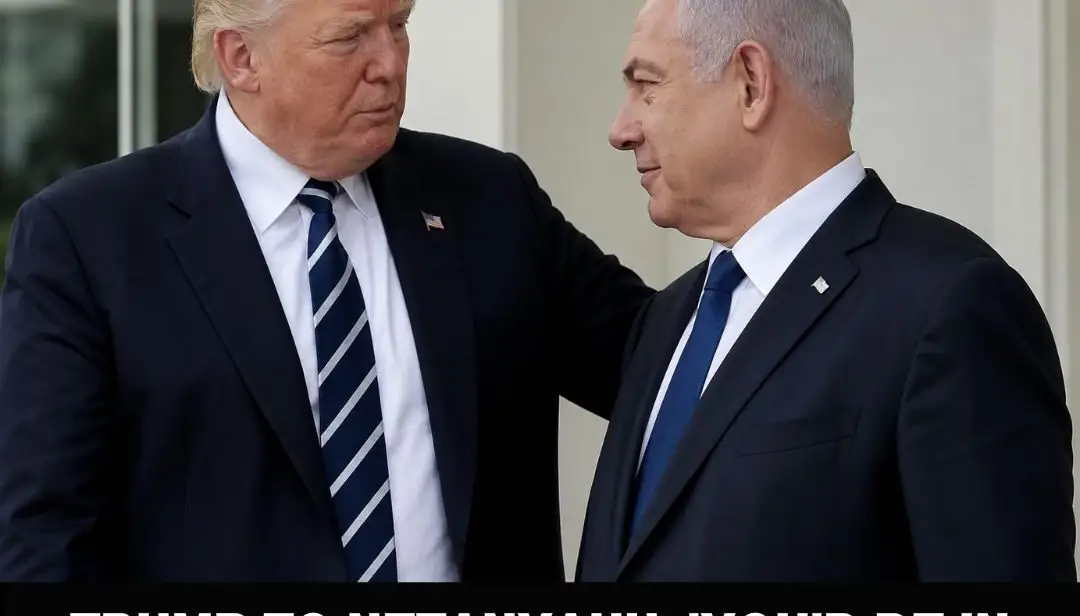
It was described by US officials as one of the worst phone calls between Donald Trump and Benjamin Netanyahu since Trump returned to office. According to multiple sources cited by Axios and The Times of Israel, the call on June 1-2, 2026 opened with Trump demanding to know “What the fuck are you doing?” and escalated from there.
“You’re fucking crazy,” Trump told Netanyahu, according to the sources. “You’d be in prison if it weren’t for me. I’m saving your ass. Everybody hates you now. Everybody hates Israel because of this.”
The trigger was Israel’s military escalation in Lebanon. The consequence was immediate: Israel announced it no longer planned to strike Hezbollah targets in Beirut’s southern suburbs at least temporarily. The subtext was everything: Trump’s Iran nuclear deal was on the line, Iran had just suspended negotiations in direct response to the Lebanon strikes, and the President of the United States was telling his closest Middle East ally that the alliance had a price and Israel was exceeding it.
Why Lebanon Was Threatening the Iran Deal
To understand the fury in Trump’s voice, it helps to understand what was happening diplomatically in the hours before the call. Trump had just made edits to a proposed peace framework and sent it to Iran for consideration a moment of genuine diplomatic momentum after weeks of stalled US-Iran negotiations. Iran’s response was to suspend talks entirely, citing the ongoing Israeli military operations in Lebanon as proof that Washington could not deliver the regional de-escalation Tehran had been insisting on as a precondition.
CNN reported that Trump insisted talks were “continuing, at a rapid pace” after the Netanyahu call a public assertion designed to project forward momentum even as the diplomatic machinery had effectively seized up behind the scenes. Iran has consistently demanded that any deal with Washington include a halt to fighting on all fronts, specifically Lebanon. Netanyahu’s decision to escalate against Hezbollah precisely as the nuclear framework was being finalized handed Tehran a pretext to walk away and Tehran took it.
What Israel Was Doing in Lebanon
Israel’s military operations in Lebanon had been intensifying through late May and early June. The specific action that provoked Trump’s fury was Israel’s plan to conduct major raids and strikes on Beirut’s southern suburbs the Dahiyeh district, Hezbollah’s urban stronghold including the demolition of entire buildings to eliminate individual Hezbollah commanders. Time Magazine reported that Trump viewed the operations as disproportionate, with civilian casualties running well ahead of any military justification he could defend domestically or diplomatically.
Trump’s intervention produced a specific result. The Washington Post reported that Israel and Hezbollah agreed to dial back fighting after Trump’s pressure with Hezbollah agreeing to a US-proposed ceasefire framework that would halt Israeli strikes on Beirut’s southern suburbs in exchange for Hezbollah refraining from attacks on Israel. Trump claimed credit publicly, posting that Israel and Hezbollah would “stop fighting.”
Netanyahu, characteristically, issued a defiant statement saying Israel would continue striking southern Lebanon “as planned” a formulation designed to preserve his domestic political standing while technically complying with the geographic restriction on Beirut operations.
The “Prison” Claim and What It Reveals
Trump’s invocation of Netanyahu’s corruption trial was the most politically charged element of an already explosive exchange. Netanyahu has been facing ongoing legal proceedings in Israel charges he has consistently denied and fought. Trump’s implication that his political support and diplomatic protection had shielded Netanyahu from more serious consequences is a claim that reveals the transactional nature of the relationship as Trump understands it: favors given, favors owed, and a ledger that Trump is willing to read aloud when his interests are threatened.
India TV News reported that Trump’s outburst reflected genuine fury not political theater at the sense that Netanyahu was prioritizing Israeli military objectives over Trump’s diplomatic legacy at a moment when Trump was closer to an Iran deal than any American president had been since the original JCPOA. The comment “everybody hates Israel because of this” signals that Trump is willing to distance himself from Israeli military operations when they conflict with his broader agenda a significant departure from the unconditional rhetorical support that characterized his first term.
The US-Israel Rift in Context
The Federal noted that the expletive-laden rebuke underscores a “yawning US-Israel rift” that has been building throughout the Iran war a conflict that began with a joint US-Israel operation against Iran but has since diverged significantly in terms of objectives and acceptable endpoints. Washington wants a negotiated settlement that reopens the Strait of Hormuz, brings oil prices down, and produces a verifiable nuclear commitment from Tehran. Netanyahu wants Iranian military infrastructure degraded to the point where it cannot threaten Israel for a generation and is willing to accept continuing conflict to achieve it.
Those objectives are not fully compatible. Trump’s call to Netanyahu made that incompatibility explicit in language that cannot be walked back or reframed. The alliance holds both sides have too much invested for it not to but the terms are being renegotiated in real time, and the renegotiation is loud.
Al Jazeera reported that Trump announced Israel and Hezbollah had agreed to stop fighting a claim that Netanyahu’s subsequent statement complicated, but did not entirely contradict. The Beirut strikes are paused. The Iran talks have resumed. The phone call, ugly as it was, appears to have worked.

Oil & Energy Markets
A look at crude price swings, OPEC supply moves, and how energy markets react to geopolitical shocks.

Geopolitics & Conflict
Breaking down how wars, ceasefires, and diplomatic deals ripple through global trade and security.
US Foreign Policy
Coverage of Trump administration negotiations, sanctions, and strategic decisions shaping world events.
Economy & Inflation
Tracking how commodity prices, gas costs, and supply chains affect everyday consumers.