Share This Article
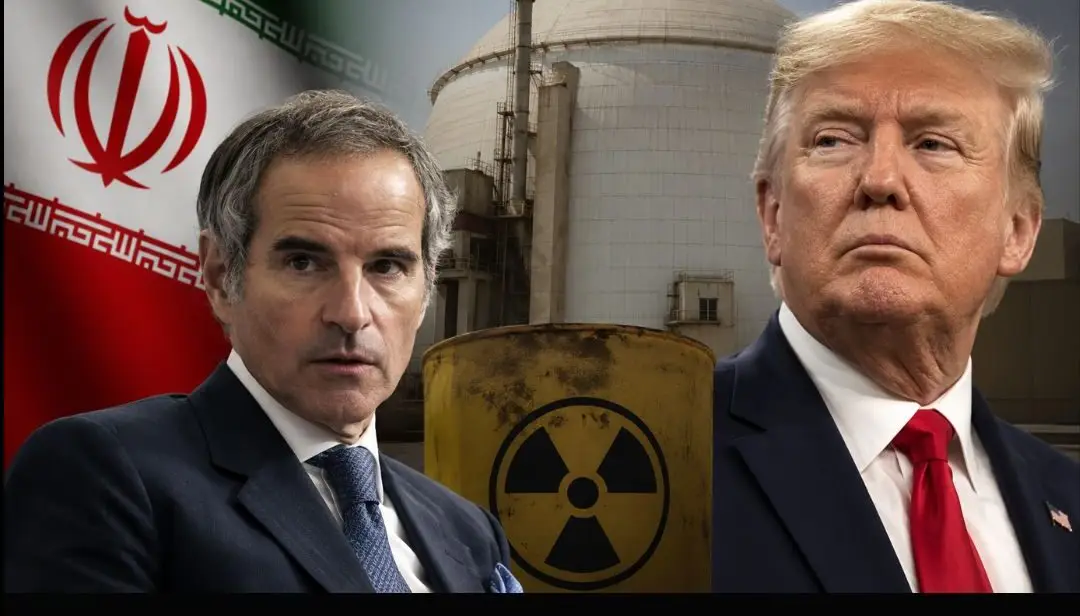
Rafael Grossi has been one of the most carefully watched figures in the US-Iran war not for what he has done, but for what he has not been able to do. Since military strikes began damaging Iran’s nuclear facilities in June 2025, the International Atomic Energy Agency has been denied access to assess the status of Iran’s enriched uranium stockpile. The IAEA chief has been watching from the outside, unable to verify what the world most urgently needs to know: where Iran’s most dangerous nuclear material is, and what condition it is in.
On June 1, 2026, Grossi broke his silence on one of the central sticking points in the US-Iran nuclear talks. In a statement to Al Jazeera, the IAEA Director General said that transferring Iran’s enriched uranium abroad is “difficult but possible” a three-word assessment that has immediate and significant implications for whether the deal Trump wants can actually be structured.
What Grossi Actually Said
The statement was precise in ways that matter. Grossi acknowledged that US President Donald Trump has repeatedly demanded Iran surrender its enriched uranium stockpile as a condition of any lasting agreement. He validated the technical premise of that demand yes, the material can be moved — while being clear-eyed about the operational challenges involved.
The primary technical obstacles, as Al Jazeera reported, center on the physical state of the material. Iran’s enriched uranium is stored in gaseous form uranium hexafluoride, or UF6 which is difficult to transport, potentially contaminating, and requires specialized handling infrastructure. One proposed solution is diluting or reducing the enrichment level before transfer, making the material less sensitive and more manageable to move. Grossi indicated that such an approach “could be” acceptable depending on negotiation outcomes.
He also addressed where the uranium is. The Washington Post reported that Grossi told the Associated Press that Iran’s highly enriched uranium is likely still at the Isfahan site believed stored beneath rubble at Isfahan, Natanz, and Fordow facilities that have been heavily damaged in strikes. The fact that IAEA inspectors have been denied access since the attacks means no independent verification of the material’s current status, quantity, or condition is possible.
Kazakhstan Steps Forward
The most concrete development accompanying Grossi’s statement is the emergence of Kazakhstan as a potential host country for Iran’s uranium stockpile. Euronews reported that Kazakh President Kassym-Jomart Tokayev expressed openness to storing Iran’s uranium at the IAEA Low Enriched Uranium Bank in Oskemen — a facility that has been operational since October 2019 and was specifically designed for this kind of international nuclear material storage arrangement.
Grossi backed this “neutral plan,” describing Kazakhstan’s offer as a potentially viable pathway. The IAEA’s involvement as the custodial institution provides the international legitimacy that both Washington and a potential future Iranian government would need to point to as evidence of genuine, verifiable denuclearization — rather than a bilateral US-Iran arrangement that either side could walk away from.
The Numbers Behind the Concern
The scale of Iran’s enriched uranium program explains why this question is the central obstacle in the negotiations. Iran currently holds approximately 440 kilograms of uranium enriched to 60 percent U-235 — significantly below the 90 percent threshold for weapons-grade material, but not by a margin that provides strategic comfort. Breitbart reported that Grossi acknowledged Iran has made “exponential progress” on its nuclear program and that the Obama-era JCPOA framework is not a useful template for current talks — a frank assessment that the deal being negotiated needs to be structurally different from its 2015 predecessor.
If the 440 kilograms of 60-percent enriched uranium were further processed to weapons grade, independent analysts estimate it could yield material for 10 to 12 nuclear devices. That calculation is why Trump’s demand for physical removal of the stockpile not just a commitment to restrict enrichment — is the non-negotiable core of the US position. A piece of paper saying Iran will not enrich further is verifiable only if inspectors have access. Moving the physical material eliminates the breakout risk entirely.
Iran’s Refusal and the Political Reality
Grossi’s “difficult but possible” assessment runs directly into Iran’s stated political position. Head of Iran’s Parliamentary National Security Committee Ebrahim Azizi rejected transfer plans outright, stating Iran will not move its stockpile and considers its nuclear program “non-negotiable.” The late Supreme Leader Khamenei reportedly issued a directive before his death that enriched uranium should not be sent abroad a directive that retains symbolic authority in Iranian political culture even as the new leadership navigates the post-war diplomatic landscape.
Foreign Policy reported that the combination of physical access denial and political resistance makes the uranium transfer question the most technically and diplomatically complex element of the entire negotiation far more so than the Hormuz reopening or sanctions relief, both of which have clear implementation pathways once political agreement is reached.
What It Means for the Deal
Grossi’s intervention matters for a specific reason: it shifts the conversation from whether uranium transfer is theoretically desirable to whether it is technically achievable. Trump has staked his public position on demanding it. Iran has rejected it. The IAEA chief is now on record saying the technical obstacles are real but surmountable and Kazakhstan has offered a credible neutral venue for storage.
That creates a diplomatic opening that did not clearly exist before June 1. A deal structure in which Iran’s 60-percent enriched uranium is transferred to Kazakhstan under IAEA custody with dilution as a technical mechanism and the Oskemen bank as the institutional host would allow Trump to claim the nuclear demand has been met and Iran to argue that the transfer is a technical arrangement rather than a political capitulation.
Whether that framing holds domestically in both capitals is the question that Grossi’s statement cannot answer. But the IAEA chief has removed one objection from the table: the claim that it cannot be done.

Oil & Energy Markets
A look at crude price swings, OPEC supply moves, and how energy markets react to geopolitical shocks.

Geopolitics & Conflict
Breaking down how wars, ceasefires, and diplomatic deals ripple through global trade and security.
US Foreign Policy
Coverage of Trump administration negotiations, sanctions, and strategic decisions shaping world events.
Economy & Inflation
Tracking how commodity prices, gas costs, and supply chains affect everyday consumers.