Share This Article
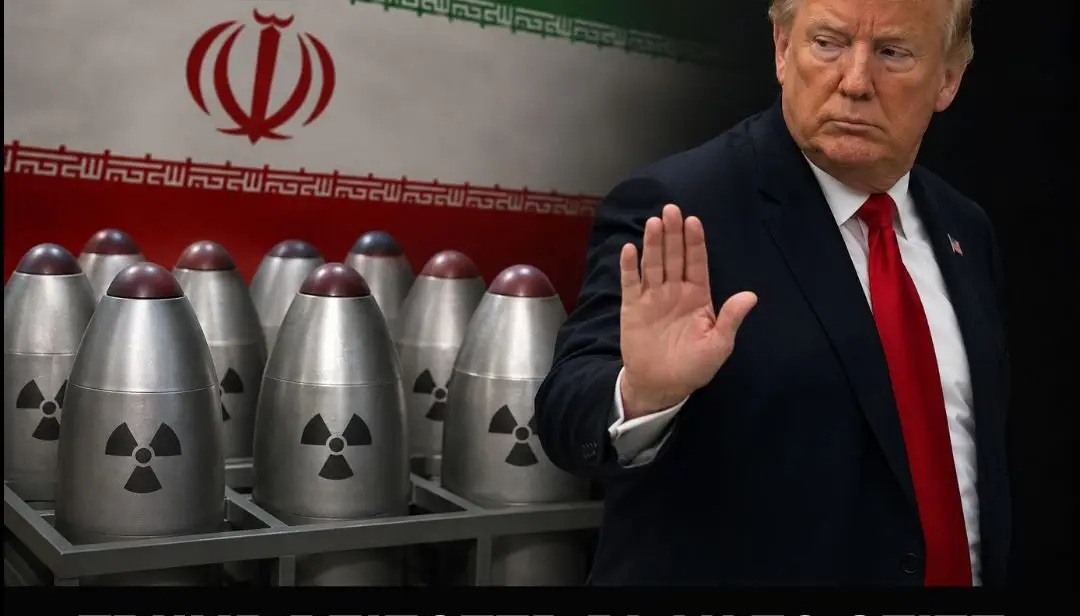
The Pentagon had a plan. Special operations teams were briefed. Cargo aircraft routes were mapped. Excavation teams trained for radioactive material extraction from underground tunnel complexes. The mission: send potentially thousands of US troops into Iran to physically seize 440.9 kilograms of highly enriched uranium enough, by Washington’s own reckoning, to build ten to eleven nuclear bombs.
President Trump paused it. Not because it was technically impossible though military commanders harboured serious doubts about that too but because of a calculation as old as American warfare: the body count.
The Plan Trump Wouldn’t Sign
CNN first reported the details on June 12. Joint Chiefs of Staff Chairman General Dan Caine had cut short a NATO meeting in Brussels on May 19 to fly to CENTCOM headquarters in Tampa for in-person briefings on the uranium seizure operation. The mission profile was unlike anything the US military had executed since the Iraq War: a runway would need to be constructed inside Iranian territory to extract the radioactive material, entrances to uranium storage facilities some backfilled with earth in Iranian defensive preparations would need to be excavated, and elite teams trained in handling nuclear material would need to hold the site long enough to extract it safely.
Sources told CNN the operation was described internally as “arguably the most operationally demanding mission Trump could authorise” one that would require weeks of hostile operations deep inside Iran, under fire, with no guarantee that all the uranium could even be located. Pentagon experts were “skeptical that a US military operation could even locate and verify all the uranium, much less safely and completely remove it under hostile conditions.”
Trump’s assessment was blunt. He was reluctant to proceed with an operation that would result in “a significant amount of American casualties” and doubted “the American people would support” it. The plan was paused.
Exactly How Much Uranium And Why It Matters
The numbers underlying the decision are alarming regardless of which option is chosen. As of the last IAEA verified data February 28, 2026, the day Operation Epic Fury began and Iran terminated all IAEA inspector access Iran held 440.9 kilograms of uranium enriched to 60% purity.
Trump envoy Steve Witkoff put it plainly: Iran has enough enriched uranium for 11 nuclear bombs.
The technical arithmetic: approximately 42 kilograms of 60% enriched uranium is sufficient to construct one nuclear device if further enriched to weapons-grade 90%. At 440.9 kilograms, Iran’s stockpile crosses the threshold for ten to eleven weapons. The final enrichment step from 60% to the 90% weapons-grade threshold would take approximately ten days using a simple cascade of around 200 IR-6 centrifuges. Iran is the only non-nuclear-weapons state under the Non-Proliferation Treaty to have ever produced uranium at 60% enrichment.
More troubling: Iran was actively expanding. The Fordow facility was adding 14 more IR-6 centrifuge cascades, set to increase monthly production of 60% material from 4.7 kilograms to 37 kilograms per month. Every month the Iran-US War drags on without a uranium resolution, the stockpile grows and the breakout window shrinks further from the already alarming ten-day estimate.
The verification crisis compounds the danger. Since February 28, Iran has disabled all IAEA surveillance cameras, removed seals from nuclear sites, and blocked all inspector access. Nobody not the IAEA, not the CIA, not the Pentagon knows the current precise location or quantity of Iran’s nuclear material. The Arms Control Association describes it as “the most significant IAEA verification blackout since the agency began monitoring Iran’s nuclear programme.”
Iran Rejects Giving It Up
The diplomatic track is no less fraught than the military one. Iran has drawn a hard line: the enriched uranium stays in Iran.
Ayatollah Mojtaba Khamenei communicating through intermediaries since his father was killed in the February 28 opening strikes has reportedly ordered that the stockpile is “not on the negotiating agenda.” Tehran’s stated rationale is strategic: surrendering its uranium would leave Iran permanently vulnerable to future US and Israeli military action, with no deterrent leverage and no path to reconstituting its programme.
Iran’s Foreign Ministry has said the country “firmly rejects” the US demand to export its uranium, even as CBS News reported in late May that Tehran had agreed “in principle” to dispose of highly enriched uranium as part of a broader framework. The contradiction reflects a negotiation in which both sides are simultaneously advancing and retreating often within the same week.
Trump’s stated alternative to military seizure is disposal: uranium either transferred to the United States and destroyed, destroyed in place on Iranian soil in coordination with Tehran, or removed to “another acceptable location.” What he has explicitly ruled out: Russia or China taking custody of the material. When asked about the Kremlin’s offer to accept Iran’s uranium as part of a peace deal, Trump was unambiguous: “No, I would not be comfortable. That would not make me comfortable.”
The reasoning is strategically coherent placing 440 kilograms of near-weapons-grade uranium in Russian hands solves one proliferation problem by creating another. But it eliminates one of the few third-party mechanisms that could verify Iranian compliance without requiring either a ground operation or Iranian self-disclosure.
Netanyahu’s Red Line
Israeli Prime Minister Benjamin Netanyahu has made the uranium question his personal red line for accepting any US-Iran deal. Despite being formally “not a party” to the memorandum of understanding Trump is negotiating Times of Israel confirmed Netanyahu was not warned before Trump’s June 11 announcement the Israeli PM has extracted a public commitment from Trump that any final deal must mandate the removal of all enriched uranium from Iran.
Netanyahu’s formulation is absolute: the conflict is not over “until Iran’s uranium stockpiles are removed and its existing nuclear sites dismantled.” Israeli Defense Minister Israel Katz has gone further, stating that “Jerusalem will have to use military force in the future to stop Iran from attaining nuclear weapons” signalling that Israel views any deal without verified uranium removal as a temporary truce, not a resolution.
Trump’s response to Netanyahu’s pressure: “I call the shots. Netanyahu won’t have any choice.” Whether that confidence is warranted depends entirely on whether Washington can bridge the gap between Iran’s refusal to export its uranium and Netanyahu’s refusal to accept a deal that leaves it in place.
What It Means for Oil Prices and the Strait
Markets are pricing optimism, not certainty. Brent crude fell to $86.98 on June 12 down nearly 4% on deal hopes with WTI settling at $84.33. The CNBC oil desk noted that traders are betting on Strait of Hormuz reopening outweighing any residual nuclear uncertainty premium.
The Strait remains closed. Iran deployed an estimated 5,000–6,000 naval mines beginning March 10. The Pentagon has deployed USS Chief and USS Pioneer for mine-clearing operations, but military estimates suggest full mine clearance could take up to six months. Baker Hughes has stated the strait may not be fully operational until the second half of 2026. Every day of closure costs Gulf oil states and Iraq an estimated $1.1 billion in stranded export revenue.
The uranium question and the Strait question are linked. Iran has indicated it will not begin mine-clearing until it receives concrete sanctions relief and security guarantees which Washington will not provide until uranium disposition is agreed. The circular logic of a negotiation conducted via missile strikes and back-channel couriers has no clean exit.
Trump paused the military seizure plan because the human cost was too high. The diplomatic cost of leaving the uranium unresolved may ultimately prove higher still.

Oil & Energy Markets
A look at crude price swings, OPEC supply moves, and how energy markets react to geopolitical shocks.

Geopolitics & Conflict
Breaking down how wars, ceasefires, and diplomatic deals ripple through global trade and security.
US Foreign Policy
Coverage of Trump administration negotiations, sanctions, and strategic decisions shaping world events.
Economy & Inflation
Tracking how commodity prices, gas costs, and supply chains affect everyday consumers.