Share This Article
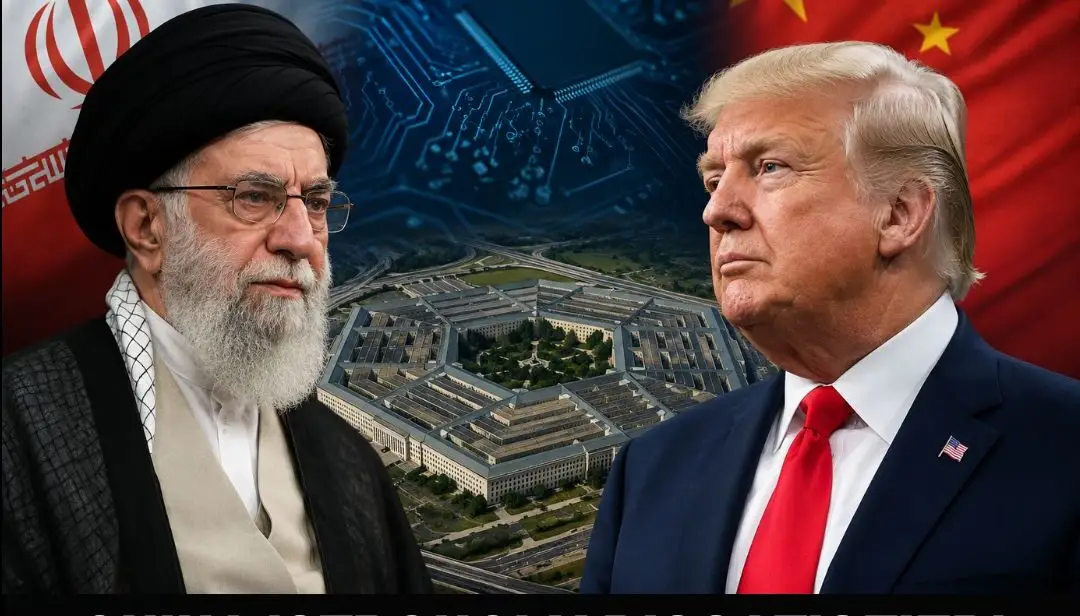
On June 8, the Pentagon quietly expanded its list of “Chinese Military Companies” to 188 entities adding some of the most recognisable names in global technology: Alibaba, Baidu, Tencent, BYD, CATL, DJI, SMIC, COSCO Shipping, and dozens more. Five days later, Beijing’s response arrived with the force of a diplomatic thunderclap.
“China is strongly dissatisfied and firmly opposes this,” the Commerce Ministry declared on June 13. If Chinese firms were not treated fairly, Beijing warned, it would “inevitably retaliate resolutely and forcefully.”
Foreign Ministry spokesperson Lin Jian sharpened the language: Washington was “overstretching the concept of national security and formulating various types of discriminatory lists to go after Chinese businesses.”
The announcement has detonated at one of the most delicate moments in US-China relations in years adding a new front to a week already defined by Iran-US War ceasefire drama, collapsing oil prices, and a Strait of Hormuz that remains mined and shut.
What the Blacklist Actually Does And Doesn’t Do
The Section 1260H list, authorised under the National Defense Authorization Act, is carefully constructed to sting without severing. It does not impose automatic sanctions. It does not block US investment. It does not prohibit private-sector commercial dealings.
What it does: ban the listed companies from direct Pentagon procurement contracts starting June 30, 2026, and from indirect third-party supply chain contracts starting June 2027. It complicates access to US capital markets, creates reputational risk that deters institutional investment, and critically names these companies as entities that “support China’s military,” a designation that carries permanent diplomatic weight regardless of the contractual fine print.
TechCrunch reported that the Pentagon’s formal finding is that Alibaba, Baidu, BYD, and others operate within China’s military-civil fusion doctrine Beijing’s strategy of leveraging civilian technology development for defence capability. Under Chinese national security law, every company on the list is legally obligated to cooperate with state intelligence services upon request.
The companies disagree. Alibaba called its inclusion “a mistake” with “no basis” and pledged to “take all available legal action.” Baidu stated the designation was “entirely baseless.” BYD said there was “no justification” and that the move would not affect its non-US business dealings a line that reflects both legal reality and commercial bravado.
The Firms and What They Represent
The breadth of the June 8 designation reflects how completely the US government has concluded that Chinese technology and Chinese military ambition are inseparable.
The list spans the entire stack of China’s economic ascent. Alibaba and Baidu represent China’s internet economy and AI frontier. Tencent runs the digital infrastructure of 1.3 billion people. BYD and CATL are the two companies most directly threatening US dominance of the electric vehicle and battery supply chain. SMIC and YMTC are China’s most advanced semiconductor manufacturers the companies Washington has spent four years trying to cut off from advanced chipmaking equipment. DJI commands over 70% of the global commercial drone market. COSCO Shipping is one of the world’s largest cargo carriers and its designation carries direct implications for global supply chains already fractured by the Strait of Hormuz closure.
CNBC confirmed the expanded list now covers 188 entities, up from 134 the single largest expansion since the list was created. The House Foreign Affairs Committee had earlier this year passed what it described as the “largest significant export control mark-up in the history of Congress” 20 new measures in April alone as Washington systematically tightens the technological vice on Beijing.
The Summit China Says Washington Ignored
What sharpened Beijing’s anger was not just the content of the blacklist but the timing.
Presidents Trump and Xi had met in Beijing in May 2026 in a summit aimed at establishing a “delicate trade-war truce” following months of tariff escalation. A 90-day tariff truce had been agreed in Switzerland. Rare earth export controls had been officially suspended. Both sides were projecting managed competition rather than outright confrontation.
The Pentagon’s June 8 announcement, Beijing said explicitly, “ignored the consensus reached between the two leaders.” Bloomberg had earlier reported that an earlier version of the list had been published in the Federal Register then hurriedly declared “unpublished” minutes later a bureaucratic stumble that rattled markets and signalled that different arms of the Trump administration were pulling in different directions on China.
The Commerce Ministry’s June 13 statement is a direct message to the White House: the Pentagon cannot hollow out what the Oval Office agreed to build.
China, Iran, and the Oil Connection
The timing of the blacklist lands against a backdrop of deepening strategic complexity in which China, Iran, and the Strait of Hormuz are tightly interlinked.
China is the world’s largest crude oil importer, with approximately 40% of its oil imports transiting the Strait of Hormuz. Iran is its largest Middle Eastern oil supplier. Even as the Iran-US War has shut the Strait to most commercial shipping since March 1, CNBC confirmed that Iran shipped at least 11.7 million barrels of crude to China through alternative arrangements since the war began a flow that Washington has monitored with visible frustration.
The designation of COSCO Shipping on the military companies list is particularly pointed: COSCO is one of the largest tanker operators in the world, and its blacklisting creates cascading complications for oil logistics at precisely the moment the global energy market is most fragile. With Brent crude already at $87 per barrel down 4% on Iran deal optimism any new disruption to tanker supply chains carries immediate market consequences.
The Retaliation Toolkit
Beijing’s warning of “resolute and forceful” retaliation is not empty rhetoric. China has demonstrated willingness and capability to deploy economic leverage in targeted ways.
The most potent tool remains rare earth export controls. China imposed restrictions on seven rare earth elements in April 2025 in response to Trump’s Liberation Day tariffs. Despite an official suspension as part of the May 2026 truce, US News reported that actual exports of yttrium to the US have remained 70% below pre-restriction levels a de facto continuation of economic pressure beneath a diplomatic veneer.
Those controls expire November 10, 2026. The June 13 statement raises the probability they will not be renewed on cooperative terms.
Beyond rare earths: China could restrict US company operations in the Chinese market, accelerate decoupling of Chinese supply chains from US-aligned components, and expand its own equivalent of Washington’s entity lists moves that would impose reciprocal costs on American firms with deep China exposure.
What It Means for the Semiconductor Cold War
For the global semiconductor industry, the blacklist’s designation of SMIC, YMTC, and CXMT is the most consequential development. A proposed Federal Acquisition Regulation would ban US government purchases of products using semiconductors designed or produced by these companies, effective December 2027. The Match Act advancing in Congress would force Japan and the Netherlands to align their semiconductor equipment export restrictions with Washington’s, targeting the same companies.
The $600 billion global semiconductor market is bifurcating in real time into US-aligned and China-aligned ecosystems. The June 8 blacklist is not a new chapter in that story it is the latest paragraph in one that has been unfolding for four years. But at 188 companies, covering everything from drones to EVs to genomics to shipping, it signals that Washington is no longer drawing a narrow line around defence technology. It is drawing a wide one around China’s entire innovation economy.

Oil & Energy Markets
A look at crude price swings, OPEC supply moves, and how energy markets react to geopolitical shocks.

Geopolitics & Conflict
Breaking down how wars, ceasefires, and diplomatic deals ripple through global trade and security.
US Foreign Policy
Coverage of Trump administration negotiations, sanctions, and strategic decisions shaping world events.
Economy & Inflation
Tracking how commodity prices, gas costs, and supply chains affect everyday consumers.