Share This Article
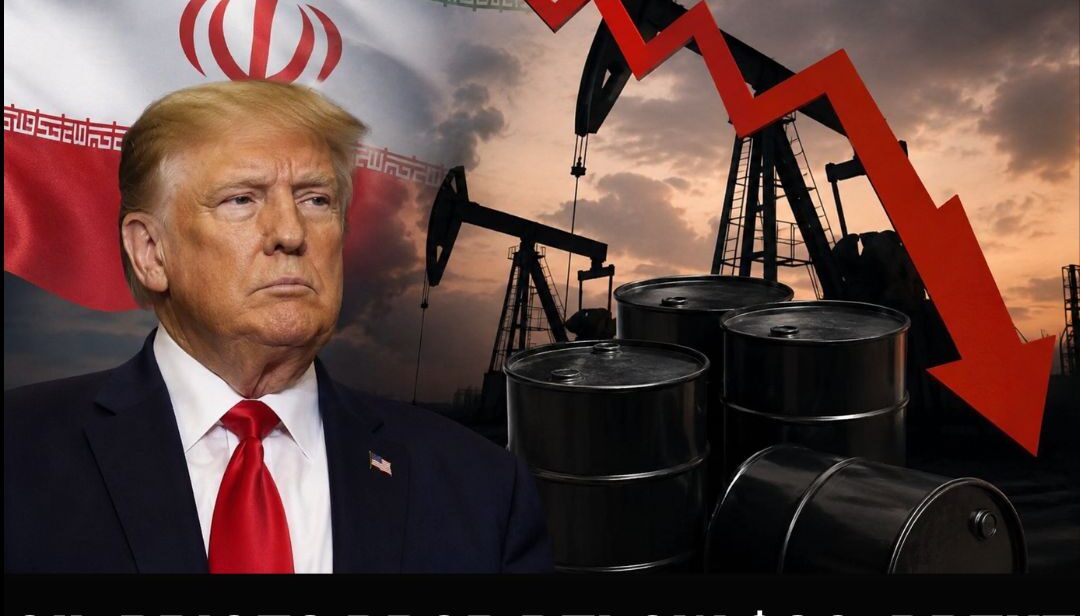
For the first time since early March, Brent crude traded below $87.43 per barrel on Friday a price point that would have seemed impossible when the same barrel cost $120 just ten weeks ago. West Texas Intermediate tracked close behind, settling in a $83–$87 range. In less than two weeks, oil markets erased roughly 20% of the crisis premium built since Operation Epic Fury began on February 28.
The catalyst: President Trump standing in the Oval Office on June 11 and announcing the end of the Iran-US War.
“We just made a great settlement of the war with Iran,” Trump declared. “The Strait will officially open as soon as we sign, which could be soon very soon, maybe over the weekend in Europe.”
Whether those words represent a genuine diplomatic breakthrough or the 38th premature deal announcement of this conflict, markets have chosen for now to believe them.
A Price Collapse in Three Acts
The journey from $120 to $87 did not happen overnight. It unfolded in three distinct phases, each triggered by a shift in the diplomatic temperature.
Phase one: The Peak ($120, March): When Iran officially closed the Strait of Hormuz on March 4 following the assassination of Supreme Leader Ali Khamenei, Brent surged to its highest level in over a decade. The International Energy Agency called it the “largest supply disruption in the history of the global oil market” with 12.8 million barrels per day stripped from global supply virtually overnight.
Phase two: The Plateau ($107–$110, April–May): A Pakistan-brokered ceasefire on April 7 stabilised prices but did not break them. Markets priced in a prolonged stalemate: the Strait remained closed, Iranian sea mines were still active, and the ceasefire was violated repeatedly. Brent averaged $107 per barrel through May. Pump prices in the US peaked at a national average of $4.56 per gallon on May 21.
Phase three: The Slide ($87, June): Deal optimism began surfacing in late May. Each credible signal that Washington and Tehran were converging triggered fresh selling as traders priced supply back into the market. Trump’s June 11 announcement accelerated the move Brent lost 4.2% that day alone, then fell another 3.26% on June 12 to close at $87.43. CNBC reported that oil had dropped 20% from its 2026 peak in under two weeks — one of the sharpest demand-repricing episodes in recent commodity history.
What the Deal Would Mean for Supply
The arithmetic of a Strait reopening is straightforward and staggering. Before the crisis, approximately 15 million barrels per day transited the strait. The closure stripped 12.8 mb/d from effective global supply. Restoring even a fraction of that flow would fundamentally reshape the energy balance.
Rystad Energy’s base case models a phased reopening beginning mid-July, with approximately 85% of lost volumes restored by October 2026. Full recovery of Iraq and Kuwait’s mature fields extends into January 2027, reflecting infrastructure damage that will outlast any ceasefire agreement.
Fitch Ratings has placed its full-year 2026 Brent average forecast at $87 per barrel exactly where it closed on June 12 — assuming a deal is finalised and the Strait reopens by end of July. Baker Hughes has cautioned the strait may not be fully operational until the second half of 2026, with nearly 80% of energy executives surveyed doubting any normalisation before August.
The physical constraint is Iran’s sea mine deployment, which began March 10. Pentagon estimates initially suggested mine-clearing could take up to six months, though officials later disputed that figure. Britain’s Royal Navy, which has confirmed it stands ready with advanced mine-sweeping capabilities, will not begin operations until a formal agreement is in hand.
At the Pump: Relief Is Already Arriving
For American consumers squeezed by months of elevated energy costs, the crude price slide is translating with its customary one-to-two-week lag into tangible relief at the pump. The national average for regular unleaded fell from $4.56 on May 21 to $4.12 by June 11 a 44-cent decline in three weeks, the fastest sustained fall since the ceasefire was first announced in April.
The EIA’s latest Short-Term Energy Outlook projects lower gasoline prices in both 2026 and 2027 as crude continues to normalize — provided the deal holds. With Brent now below $90, analysts expect pump prices to test the $3.80–$3.90 range by late summer under an optimistic scenario.
That would represent meaningful political relief for a president whose approval rating on the economy has fallen to a net -25 percentage points his worst on record partly on the back of fuel costs that helped push US inflation to a three-year high of 4.2% in May.
Energy Stocks Take the Hit
The same price drop that relieves consumers is pressuring the balance sheets of oil majors that spent months benefiting from elevated crude. Exxon Mobil and Chevron both up roughly 30% year-to-date as of March on the back of oil’s surge reported Q1 2026 earnings that already showed the strain: Exxon’s net income fell 45% year-on-year, Chevron’s tumbled 36%, even as both companies beat analyst estimates.
Both stocks slipped more than 1% on Friday’s session as crude fell below $87. For investors in energy equities, the Iran deal is a two-sided trade: peace is good for the global economy and bad for oil producer margins. Chevron, which calculates it can generate an additional $12.5 billion in annual free cash flow at $70 Brent, is better positioned than most to absorb the downside.
Netanyahu: Not a Party, Not Persuaded
Israeli Prime Minister Benjamin Netanyahu’s posture remains the most significant geopolitical overhang on any deal’s durability. Following Trump’s June 11 announcement, Netanyahu’s office confirmed Israel is formally “not a party” to the memorandum of understanding a phrase that carries weight precisely because Israel’s military capability to restart the conflict unilaterally is real.
Netanyahu has extracted public commitments from Trump that any final deal must include removal of enriched uranium, dismantling of nuclear infrastructure, limits on missile production, and cessation of proxy support. Israeli Defense Minister Israel Katz went further, hinting that “Jerusalem will have to use military force in the future to stop Iran from attaining nuclear weapons” language that makes clear Israel views any MOU as a temporary restraint, not a permanent resolution.
Trump has told Netanyahu privately and publicly that he “won’t have any choice” but to accept the US-led framework. The Israeli PM was not warned before Trump cancelled the June 11 strikes and announced the deal a pattern of exclusion that has deepened Jerusalem’s distrust of a process that started as a joint campaign and is ending as an American solo.
The Risks That Could Send Oil Back Above $90
Markets have priced a deal. The deal does not yet exist. Iran’s Foreign Ministry said as recently as June 11 that no “final decision” had been made, directly contradicting Trump’s characterisation of Supreme Leader approval. Iran’s IRGC maintains the Strait is “closed to all vessels.”
Al Jazeera analysis noted that five specific scenarios could snap oil back above $90 rapidly: Iran formally walking away from negotiations; Israel launching unilateral strikes on Iranian nuclear facilities; the 60-day ceasefire extension collapsing on a technical dispute; Trump rejecting Iranian counter-demands on enrichment rights; or OPEC+ cutting production in response to falling prices.
The Iran-US War has now produced 38 premature deal announcements in under three months. Oil at $87 reflects the market’s best guess that the 38th is the last. Every previous guess was wrong.
Gold and the Dollar: Inflation Trade Unwinds
As oil pulled back, related macro trades shifted accordingly. Gold eased below $4,200 per ounce on Friday but held most of its recent gains supported by a weakening dollar as peace optimism reduced safe-haven demand. The US dollar index fell 0.5% on May 25 when deal signals first emerged, a move that has broadly continued as the narrative has shifted from war escalation to diplomatic resolution.
The inflation trade that drove gold from $3,200 to $4,450 during the crisis peak is gradually unwinding a sign that markets believe, at least tentatively, that the worst of the energy price shock is behind them.

Oil & Energy Markets
A look at crude price swings, OPEC supply moves, and how energy markets react to geopolitical shocks.

Geopolitics & Conflict
Breaking down how wars, ceasefires, and diplomatic deals ripple through global trade and security.
US Foreign Policy
Coverage of Trump administration negotiations, sanctions, and strategic decisions shaping world events.
Economy & Inflation
Tracking how commodity prices, gas costs, and supply chains affect everyday consumers.