Share This Article
By Staff Reporter | May 23, 2026
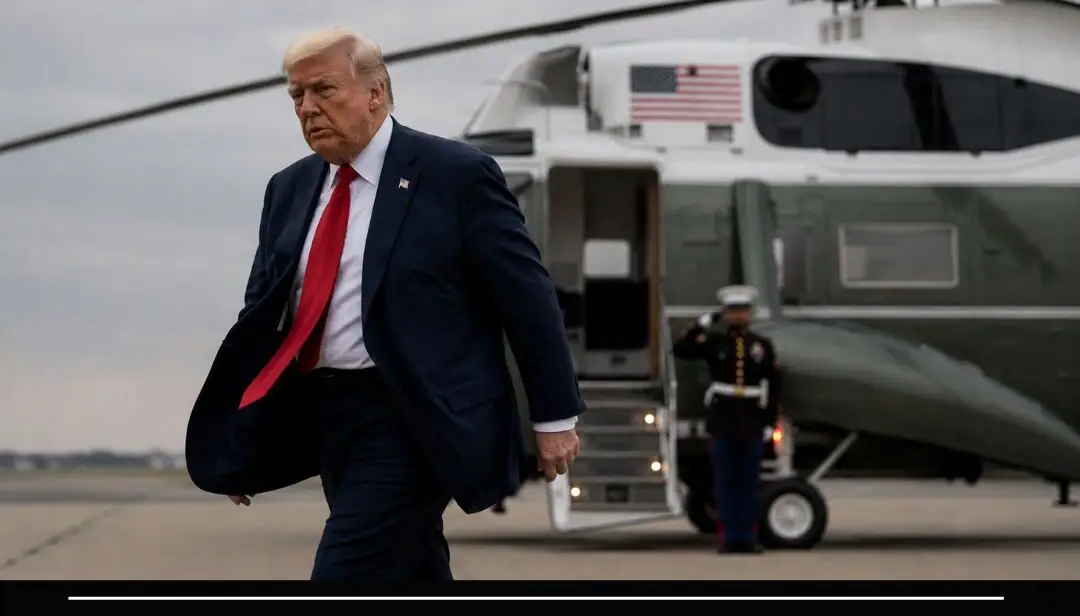
President Donald Trump abruptly canceled his planned weekend retreat to his Bedminster, New Jersey golf club on Friday, May 22, returning directly to the White House after a scheduled appearance in New York a last-minute reversal that immediately ignited a firestorm of speculation about an imminent military escalation against Iran.
“This is not good timing for me,” Trump told reporters, offering a blunt explanation that said everything without saying much. “I have a thing called Iran and other things.”
The sudden schedule change, which sent speculation racing across Washington and global markets, was confirmed as Iran-driven: Trump convened an emergency meeting with his senior national security team Friday morning to review options for resuming military strikes against Tehran marking a dramatic turn in a conflict that has already reshaped global trade, oil markets, and American politics since it began in February.
“I Feel It’s Important to Remain in Washington”
Trump’s decision to cancel the Bedminster trip was the second high-profile personal commitment he shelved within a matter of days. He had previously confirmed he would skip his son Donald Trump Jr.’s wedding in the Bahamas, citing ongoing government responsibilities. For a president who has long prized his weekend retreats, the back-to-back cancellations underlined the severity of the moment.
“I feel it is important for me to remain in Washington, D.C., at the White House during this important period of time,” Trump said.
The Washington Times reported that at least one prominent Republican lawmaker had been urging Trump to “finish the job” in Iran, adding congressional pressure on the president to act decisively as negotiations with Tehran appeared to be unraveling. HotAir reported separately that Trump was “seriously considering” launching new strikes against Iran absent a last-minute diplomatic breakthrough.
A Ceasefire on “Massive Life Support”
The backdrop to Friday’s urgency is a diplomatic picture that has deteriorated rapidly over recent weeks. Trump has grown visibly impatient with the pace and substance of negotiations to end the 2026 US-Iran war, which began on February 28 when the United States and Israel launched coordinated strikes on Iranian military infrastructure and government sites, including an operation that killed Supreme Leader Ali Khamenei.
Iran retaliated with missile and drone attacks against U.S. bases, Israeli targets, and Gulf allies and closed the Strait of Hormuz, the critical waterway through which roughly 25% of the world’s seaborne oil passes daily. The closure has sent gas prices surging in the United States and caused significant disruption to global shipping lanes.
Ceasefire negotiations have repeatedly stalled. CNN reported that Trump publicly declared the ceasefire was on “massive life support” after rejecting Tehran’s latest proposal as “unacceptable.” The core deadlock: Trump is demanding immediate and verifiable concessions on Iran’s nuclear program as part of any deal, while Tehran is pushing to delay those demands and extract its own concessions first.
Strike Called Off — Then Back On the Table
Just days before Friday’s cancellation, Trump had himself pulled back from the brink. On May 18, he announced he was calling off a major Iran strike that had reportedly been scheduled for the following morning, citing urgent requests from Gulf allies — specifically the leaders of Qatar, Saudi Arabia, and the United Arab Emirates — who asked him to allow “serious negotiations” to proceed.
“If we can do that without bombing the hell out of them, I’d be very happy,” Trump said at the time — while simultaneously instructing the U.S. military to “be prepared to go forward with a full, large scale assault of Iran, on a moment’s notice” if diplomacy failed.
CNBC confirmed that Gulf state leaders played a direct role in delaying the strike, reflecting deep anxiety in the region about the consequences of a renewed and expanded military campaign near the Strait of Hormuz. Time Magazine reported that Trump has now paused and reconsidered strike orders on multiple occasions as the gap between the two sides in negotiations has refused to close.
War Speculation and Market Anxiety
Trump’s abrupt return to Washington triggered immediate reactions across financial and energy markets. British Brief reported that analysts were closely monitoring the White House for any signals of an imminent military move, with oil prices sensitive to every development in the Strait of Hormuz standoff.
IBTimes reported that Trump’s national security meeting Friday included senior Pentagon and intelligence officials, with the focus squarely on Iran strike options and the diplomatic path or lack thereof still available to the administration.
The weekend now hangs in the balance. With a president who canceled his golf trip to monitor a war, a ceasefire he has called barely alive, and a military already instructed to be ready “on a moment’s notice,” the Strait of Hormuz — and Washington — are bracing for what comes next.

Oil & Energy Markets
A look at crude price swings, OPEC supply moves, and how energy markets react to geopolitical shocks.

Geopolitics & Conflict
Breaking down how wars, ceasefires, and diplomatic deals ripple through global trade and security.
US Foreign Policy
Coverage of Trump administration negotiations, sanctions, and strategic decisions shaping world events.
Economy & Inflation
Tracking how commodity prices, gas costs, and supply chains affect everyday consumers.