Share This Article
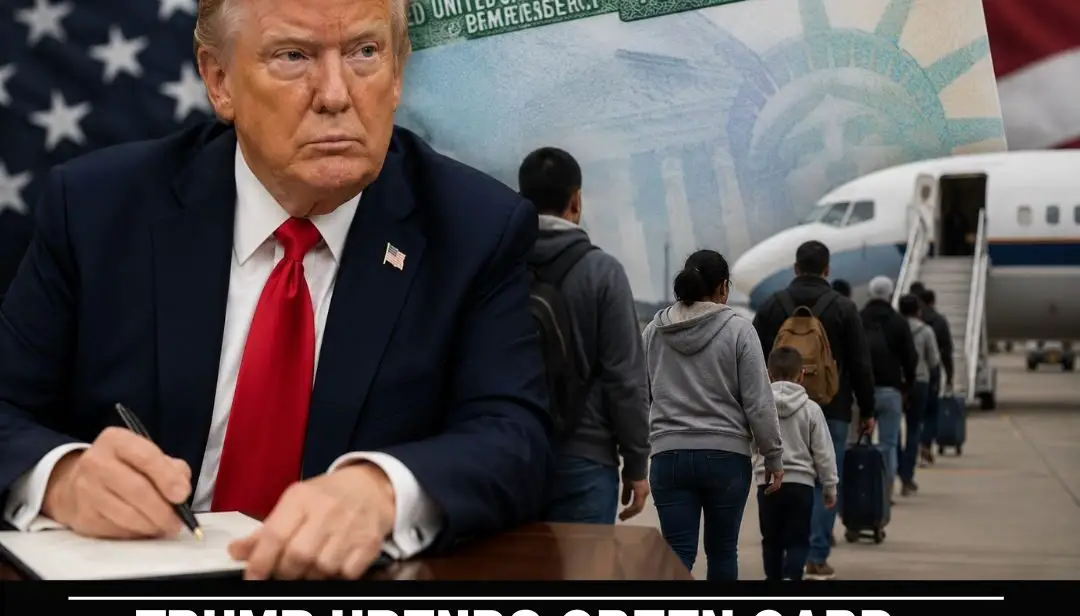
In a sweeping immigration policy move that has caught legal experts, immigrant communities, and lawmakers off guard, the Trump administration announced Friday a dramatic overhaul of the green card application process one that could force up to 600,000 people currently living and working in the United States to leave the country before their applications can be processed.
The rule, issued by U.S. Citizenship and Immigration Services (USCIS), reverses more than five decades of established immigration practice and marks one of the most aggressive expansions yet of the administration’s broader crackdown on both legal and illegal immigration.
What the New Rule Says
Under the new policy announced May 22, foreigners currently in the United States who wish to obtain lawful permanent residency a green card must now leave the country and apply from their home nation. For over 50 years, applicants with legal status, including spouses of U.S. citizens, holders of work and student visas, refugees, and asylum seekers, were permitted to complete the entire adjustment-of-status process without leaving American soil.
That process, known as “adjustment of status,” is now effectively being dismantled for most applicants. USCIS said limited exemptions would apply under “extraordinary circumstances” but declined to define what qualifies, when the rule takes effect, or whether it applies to applications already in progress.
The lack of clarity has sent immigration attorneys scrambling and left thousands of families in a state of deep uncertainty.
The Human Cost: Families, Jobs, and Catch-22s
The policy’s human impact is difficult to overstate. According to Doug Rand, a former senior adviser at USCIS during the Biden administration, approximately 600,000 people living in the United States apply for a green card domestically each year. Under the new rule, the majority of these applicants could face the prospect of uprooting their lives, leaving behind jobs, children in school, and in some cases, U.S. citizen spouses for an indefinite period abroad.
NPR reported that humanitarian organizations have raised the alarm about applicants who cannot safely return to their countries of origin. World Relief, a major humanitarian aid group, warned: “If immigrant visas are not being processed in the applicant’s country of origin, it’s a Catch-22. These policies will effectively create an indefinite separation of families.”
For some — citizens of countries with no functioning U.S. embassy, or those fleeing persecution “go home and apply” is not merely inconvenient. It is, in effect, a permanent bar.
Legal Community Pushes Back
Since the announcement, the rule has faced a wave of criticism from immigration attorneys and advocacy groups. Shev Dalal-Dheini, Senior Director of Government Relations at the American Immigration Lawyers Association, said flatly: “USCIS is trying to upend decades of processing of adjustment of status.”
The Washington Post noted that the rule is widely expected to face legal challenges, with critics arguing it conflicts with existing statute and congressional intent. PBS NewsHour reported that multiple attorneys and lawmakers have already condemned the move as legally dubious and administratively chaotic.
The Texas Tribune highlighted that the policy disproportionately impacts immigrant communities in border and southern states, where large populations of visa holders, including H-1B tech workers, agricultural laborers, and students, have been quietly building lives and careers for years in full compliance with U.S. immigration law.
Part of a Broader Pattern
The green card overhaul does not exist in isolation. It arrives amid a period of sweeping executive action on immigration policy running parallel to the administration’s posture on foreign policy, including the ongoing US-Iran war that has strained diplomatic resources, stretched embassy capacity globally, and complicated visa and consular processing in multiple countries across West Asia and beyond. As the Strait of Hormuz crisis continues to ripple through global economies, immigration processing in war-adjacent regions faces added disruption a factor USCIS has yet to acknowledge in its guidance.
U.S. News & World Report described the rule as part of the administration’s systematic effort to reshape legal immigration alongside its well-publicized crackdown on undocumented entry a two-track strategy of restriction targeting both ends of the immigration spectrum.
What Happens Next
USCIS has not provided an implementation date, transition period, or guidance for pending applications leaving immigration attorneys unable to advise clients on concrete next steps. Courts are expected to be the next battleground, with legal challenges likely to be filed in the coming days.
For the hundreds of thousands of people who came to the United States legally, built careers, raised families, and waited patiently in line for permanent status, the message from Friday’s announcement was jarring and unambiguous: the rules have changed again and without warning.

Oil & Energy Markets
A look at crude price swings, OPEC supply moves, and how energy markets react to geopolitical shocks.

Geopolitics & Conflict
Breaking down how wars, ceasefires, and diplomatic deals ripple through global trade and security.
US Foreign Policy
Coverage of Trump administration negotiations, sanctions, and strategic decisions shaping world events.
Economy & Inflation
Tracking how commodity prices, gas costs, and supply chains affect everyday consumers.