The order arrived without warning. Troops from Fort Hood, Texas were already boarding planes some had already landed in Poland when the Pentagon abruptly cancelled the deployment of more than 4,000 soldiers to one of America’s closest NATO allies. Inside the Pentagon, officials said they had “no idea it was coming.”
Defense Secretary Pete Hegseth’s last-minute cancellation of the 2nd Armored Brigade Combat Team, 1st Cavalry Division’s nine-month rotation to Poland sent immediate shockwaves through European capitals and Pentagon corridors alike on May 14, 2026. The affected soldiers had been preparing for a long-standing commitment under Operation Atlantic Resolve the rotational deployment programme that has underpinned the NATO deterrence posture on Europe’s eastern flank since Russia’s 2022 invasion of Ukraine. The cancellation was abrupt, uncoordinated, and according to multiple US officials entirely unannounced within the building Hegseth leads.
“No idea it was coming,” one Pentagon official told reporters. Troops and equipment had already started arriving in Poland when the order to halt came through.
The Iran War’s Shadow Over the Atlantic Alliance
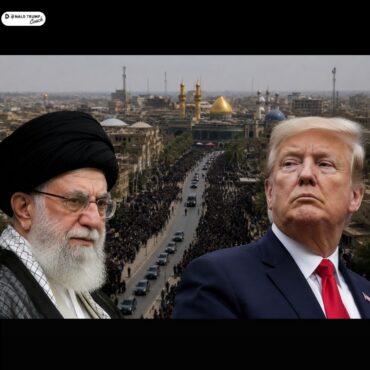
The Poland cancellation is not an isolated decision. It is the latest and most dramatic escalation in a deepening rift between Washington and its NATO allies a rift that has its roots directly in the US Iran war and European capitals’ refusal to support it.
The breakdown began in earnest when German Chancellor Friedrich Merz publicly stated that the US-Israeli war on Iran had “humiliated” the United States and questioned how Trump planned to end a conflict he called “ill-conceived.” Trump reacted with fury. Within days, the Pentagon announced it was withdrawing 5,000 troops from Germany and cancelling a Biden-era plan to deploy a missile-equipped artillery unit in Europe. Trump signalled publicly the cuts would go deeper: “We’re going to cut way down, and we’re cutting a lot further than 5,000.”
He followed through. Two weeks after the Germany announcement, Poland became the next casualty despite Trump having repeatedly called Poland a “model NATO ally” for its high defence spending. The fact that even Warsaw, which has met and exceeded NATO’s 2% of GDP defence spending target and welcomed US forces with open arms, was not spared from the cancellation underlined the indiscriminate nature of the drawdown.
Internal Pentagon emails, later leaked, revealed options being discussed to punish NATO allies that Washington believed had failed to support US operations in the Israel-Iran war including a proposal to suspend Spain from NATO entirely. Spain’s Prime Minister Pedro Sánchez had described the initial US-Israeli strikes on Iran as “illegal,” denied the US access to joint military bases to attack Iran, and closed Spanish airspace to US aircraft involved in the conflict. He later downplayed the suspension reports, but the very existence of such discussions marks a historic low in the transatlantic relationship.
A Continent Rattled and Reacting
The consequences for European security are severe and immediate. Poland sits on NATO’s eastern flank, bordering the Russian exclave of Kaliningrad and sharing a border with Ukraine. Its strategic importance to alliance deterrence is not theoretical it is the front line. The cancellation of 4,000 armoured troops from its soil sent “fresh waves of anxiety through European capitals and the Pentagon” about whether the move could be read in Moscow as an invitation.
Trump’s threats extend to Italy home to nearly 13,000 US active-duty personnel and Spain, where over 3,800 US troops are stationed. Trump confirmed cuts in both countries are “probable” over their opposition to the Iran war. The NATO alliance now faces the prospect of a United States president using military deployments as punitive tools against allies who publicly criticised his geopolitical decisions.
European governments are responding but the gap remains vast. Germany has increased military spending by 24% to $114 billion, while Spain’s defence budget surged 50% to $40.2 billion, crossing the 2% of GDP threshold for the first time since 1994. NATO Secretary-General Jens Stoltenberg acknowledged the US adjustments but insisted the cancellation of the Poland brigade would “not affect the alliance’s deterrence and defense plans” a statement widely read in European capitals as aspirational rather than factual.
The Munitions Problem Underneath
What makes the European drawdown particularly alarming to military planners is the context it sits within. The US Iran war has depleted roughly 45% of US Precision Strike Missiles, 50% of THAAD interceptors, and nearly half of Patriot air defence inventory. The Pentagon has acknowledged these depleted stockpiles create a “near-term risk” of insufficient ammunition in the event of a second simultaneous conflict precisely the scenario that a strengthened Russian posture in Europe could provoke.
Withdrawing 4,000 armoured troops from Poland’s border region while simultaneously running low on key air defence missiles at a moment when Russia is watching NATO’s internal fractures with undisguised interest is a combination that defence analysts on both sides of the Atlantic are calling dangerously miscalculated.
Poland’s Open Arms, Unanswered
Polish President Karol Nawrocki responded to the cancellation with diplomatic restraint but unmistakable frustration. “If President Trump decides to relocate American troops from Germany, Poland is ready,” he said an offer that now looks like it was extended in good faith to a White House that cancelled the deployment regardless.
For Europe’s NATO allies, the lesson of the Poland cancellation is clear: in Trump’s second term, no commitment is guaranteed, no allied contribution is sufficient insulation, and the US Iran war has become the litmus test by which Washington judges which allies deserve American protection and which do not.