Share This Article
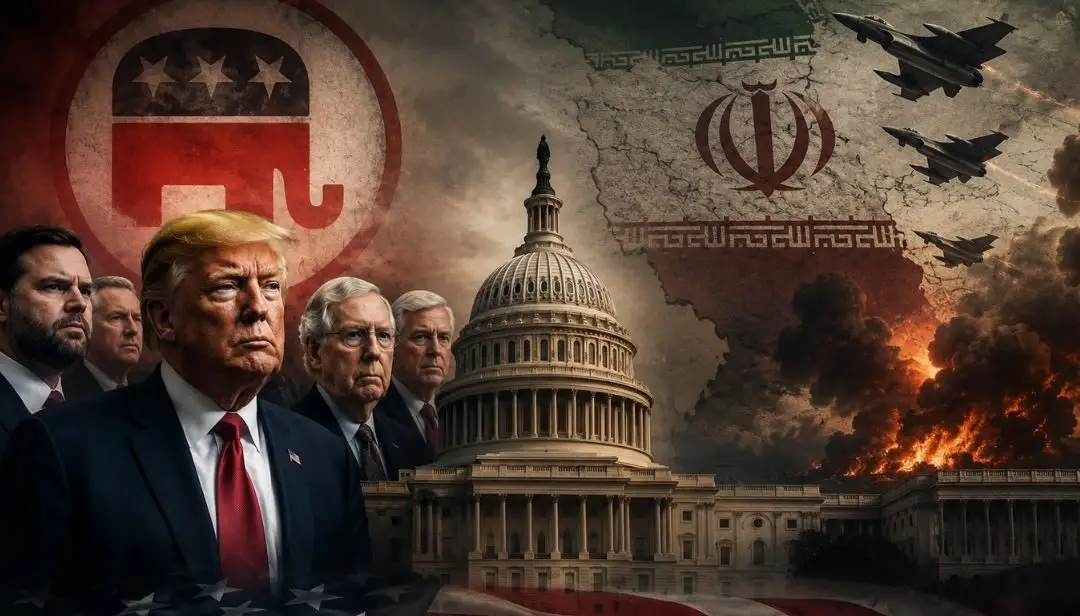
The Republicans Iran War dilemma has moved from a foreign policy footnote to the single biggest political liability facing the GOP heading into November. What started as a bold military campaign against Tehran has turned into a slow-burning headache for Republican strategists, vulnerable House members, and Senate incumbents who now find themselves tied to a war most American voters never asked for.
New reporting out this week captures just how nervous the party has become. As one Arizona-based Republican strategist put it, only one person in the country doesn’t have to worry about rising gas prices and unfortunately, that one person controls the fate of every other Republican on the ballot this fall. It’s a blunt admission of a problem GOP leaders have spent months trying to downplay: Donald Trump’s war with Iran is no longer just a national security story. It’s a midterm math problem.
This post breaks down the latest polling, the growing rift inside the Republican Party, and what it all means for control of Congress in 2026.
The Political Backdrop: A Thin Majority Meets an Unpopular War
Republicans Iran War are defending a razor-thin House majority and a Senate majority that isn’t much more comfortable. Every one of the 435 House seats and roughly a third of Senate seats are on the ballot this November, which means even small shifts in voter sentiment could flip control of Congress.
That’s what makes the timing of the US Iran conflict so dangerous for the GOP. Historically, the party holding the White House loses ground in midterm elections more often than not, and Republicans were already bracing for typical midterm headwinds before the war escalated. Now, with trump republicans publicly at odds over strategy, spending, and messaging, that headwind has turned into something closer to a storm.
Inside Congress, the cracks are visible. A handful of swing-district Republicans have broken ranks to support limits on the president’s war powers, while others are quietly pushing the White House for a faster resolution. In the Senate, GOP members have pushed back on emergency war-funding requests, demanding clearer answers from the Pentagon about strategy and reported equipment shortages.
Here are Some Related Blogs to Read
- Get the full picture on where this war is headed – more Trump-era geopolitical coverage at DonaldTrump.Coach.
- Tuesday’s missiles didn’t come out of nowhere, Iran has been digging out hidden missile stockpiles after rejecting Trump’s peace offer
- Not everyone in Trump’s own camp agrees on strategy, JD Vance claims Hegseth has been misleading Trump on the Iran war
- This isn’t the only recent flashpoint at sea, a US Navy destroyer just fired on and seized an Iranian cargo ship
- The strikes haven’t ended Iran’s nuclear ambitions either, US intel says recent strikes did only limited damage to Iran’s nuclear program
- That brief pause before Tuesday’s attack wasn’t random, Trump had deliberately paused Hormuz operations to force Iran into a deal
- The missiles are only half the story, Iran and Israel’s spy war is heating up amid claims of stolen F-15 secrets
- Trump’s fights aren’t confined to Tehran, he’s now clashing with his own SCOTUS picks back home
- Global supply chains are already bracing for impact, Goyal’s courting 50 US leaders in New York over exactly that.
- Stay ahead of the story track it live or get the full background on how the US-Iran war escalated to this point.
Iran War Polling Republicans Can’t Ignore
The numbers are the real source of GOP anxiety. Recent survey data shows:
- Roughly 7 in 10 voters disapprove of how the administration has handled the Iran conflict, according to recent Reuters/Ipsos polling.
- A large majority of Americans including a strong share of Republicans expect U.S. involvement in the region to stretch on far longer than initially promised.
- Independent voters, the bloc that typically decides close midterm races, oppose continued military action against Iran by a wide margin, according to Quinnipiac University polling.
- Even among self-identified Republicans, a notable share say the war contradicts the president’s original promise to keep America out of foreign entanglements.
This is the heart of the Iran war polling republicans story: it’s not just Democrats and independents souring on the war. A meaningful slice of the Republican base itself is uneasy, and that discomfort is exactly what strategists fear will show up at the ballot box.
Do Republicans support the Iran war?
Not uniformly and that is the point. At the leadership and candidate level, most Republicans Iran War continue to back the president’s decision, framing the war as a necessary move to stop the leading state sponsor of terror from obtaining a nuclear weapon. That national-security argument remains the party’s central public justification.
But support is neither total nor comfortable. With only about half of Republican voters saying the war has been worth it, and with the conflict now stretching far beyond the quick operation many in the party expected in the spring, some Republican lawmakers have begun to voice unease. One Republican senator described the war publicly as a mess and said the party needs to do a better job explaining it. Others report constituents growing tired of a conflict with no clear end.
So the honest answer to whether Republicans support the Iran war is: most still back it publicly, a shrinking share are enthusiastic about it, and a growing number are uneasy but few are willing to break with Trump outright.
Trump Approval Rating Among Republicans: Still High, But Cracks Are Showing
Here’s the nuance that matters most for 2026 strategy: the president’s trump approval rating among Republicans Iran War hasn’t collapsed. Within the party itself, he remains a dominant, largely popular figure. That’s precisely why so few Republican officials are willing to criticize him directly.
But “popular within the party” and “an asset in swing districts” are two very different things. Overall approval of the administration’s Iran strategy sits far below the president’s own party-loyalty numbers, which tells you the erosion is happening among independents and soft partisans, the exact voters that flip competitive House and Senate races.
The president has largely dismissed these economic concerns. He’s downplayed worries about pump prices, insisted he won’t apologize for taking military action, and has openly questioned why he needs to campaign this cycle since his own name isn’t on the ballot even while directing millions from his personal political action committee to help endangered GOP candidates.
That disconnect is a major part of the story. Vulnerable Republicans are the ones absorbing the political cost of a war they didn’t start and can’t control, while facing an electorate that’s feeling the war’s effects every time they fill up their gas tank.
The Democratic attack
Democrats have moved to make the war a central campaign theme. Vulnerable Democratic incumbents have gone on offense rather than defense, casting the president as distracted and the war as one he chose to start. The Democratic Congressional Campaign Committee has accused Republicans of following the president rather than representing their constituents, and has argued the issue will cost the GOP its majority.
Republicans counter that Democrats are offering no serious alternative beyond, in their framing, giving up and that voters will ultimately reward a party that acted on national security. Which argument lands better with the electorate is, at this point, an open question that the polling has not settled in either side’s favor.
What Republican Strategists Are Watching Next
Several factors will determine whether this becomes a defining midterm issue or fades into background noise by November:
- Oil and gas prices: If crude stays elevated or climbs further, the economic pain becomes impossible for any candidate to spin away.
- Conflict duration and scope: A short, decisive resolution helps Republicans move on. An open-ended or escalating conflict compounds the political damage with every passing month.
- Casualty reports and military setbacks: Any high-profile incident involving U.S. personnel dramatically raises the political stakes and media attention.
- Whether the president adjusts his public messaging: Continued dismissiveness toward voter concerns about costs could deepen the gap between his personal approval and his party’s electoral fortunes.
- Primary season dynamics: Watch whether more Republican candidates start distancing themselves from the war as their own primaries and general election matchups approach.
Key numbers at a glance
Original summary table verify and date each figure before publishing.
| Measure | Figure | Source / date |
| Trump overall approval | 33% approve, 64% disapprove | Reuters/Ipsos, 14–17 Aug |
| Republicans who say the war was worth it | About half | Reuters/Ipsos, 14–17 Aug |
| Americans expecting a prolonged war | ~80% (71% of Republicans) | Reuters/Ipsos, 14–17 Aug |
| Trump approval (earlier August) | 35% approve, 55% disapprove | FT/Focaldata, 7–10 Aug |
| Trump approval (mid-July) | 37% approve, 61% disapprove | Washington Post/Ipsos, 8–13 Jul |
| War duration so far | ~6 months (began 28 Feb 2026) | Multiple |
FAQs: Republicans, Trump, and the Iran War
1. Are Republicans against the Iran war?
Not uniformly. A hawkish faction supports the strikes as necessary and overdue, while a populist, anti-interventionist wing including some Trump-aligned voices has publicly criticized the war as a break from earlier promises to avoid new foreign conflicts.
2. What does Iran war polling show about Republicans?
Recent surveys show broad disapproval of how the conflict has been handled overall, and even a meaningful share of self-identified Republicans express discomfort with an open-ended commitment, particularly given its impact on gas and energy prices.
3. Do Republicans support the Iran war?
Support is split along ideological lines. Establishment and national-security-focused Republicans largely back the administration’s approach, while a smaller but vocal populist bloc opposes continued military involvement.
4. How is Trump’s Republican messaging handling the war heading into midterms?
Most Republican lawmakers are avoiding direct criticism of the president while quietly pressing for economic relief and a faster resolution, wary of alienating a base that remains largely loyal to him personally.
5. What is Trump’s approval rating among Republicans right now?
His approval within his own party remains comparatively strong, but overall public approval of his handling of the Iran conflict is notably lower, especially among independent voters who are critical to swing districts.
6. Why does Donald Trump’s Iran war matter for the 2026 midterms?
Because control of Congress hinges on a small number of competitive races, and rising gas prices tied to the conflict are becoming a central Democratic talking point against vulnerable Republican incumbents.
7. Where can I find Donald Trump’s Iran war news today?
Coverage is evolving daily as new polling, congressional votes, and statements from both parties emerge. Following major wire services and dedicated politics desks is the best way to track fast-moving developments.
References & Sources
- CNN Politics – ‘One person kind of controls our fate’: Republicans confront growing midterm peril due to Iran war
- Reuters – Top Republican in Congress shrugs off economic risks of Iran war ahead of U.S. midterms
- Associated Press – Trump’s Iran war leaves Republicans adrift ahead of midterms
- Quinnipiac University – National voter survey on U.S. military action against Iran
- Al Jazeera – The Iran strikes could become a midterm reckoning – for Trump and Israel
- New York Post –Republicans heading toward ‘disastrous’ midterms if war in Iran rages on, Sen. Rand Paul warns
- Forbes – summary of Trump’s second-term-low approval and Iran-war polling, 18 August 2026

Oil & Energy Markets
A look at crude price swings, OPEC supply moves, and how energy markets react to geopolitical shocks.

Geopolitics & Conflict
Breaking down how wars, ceasefires, and diplomatic deals ripple through global trade and security.
US Foreign Policy
Coverage of Trump administration negotiations, sanctions, and strategic decisions shaping world events.
Economy & Inflation
Tracking how commodity prices, gas costs, and supply chains affect everyday consumers.