By Staff Reporter | May 19, 2026
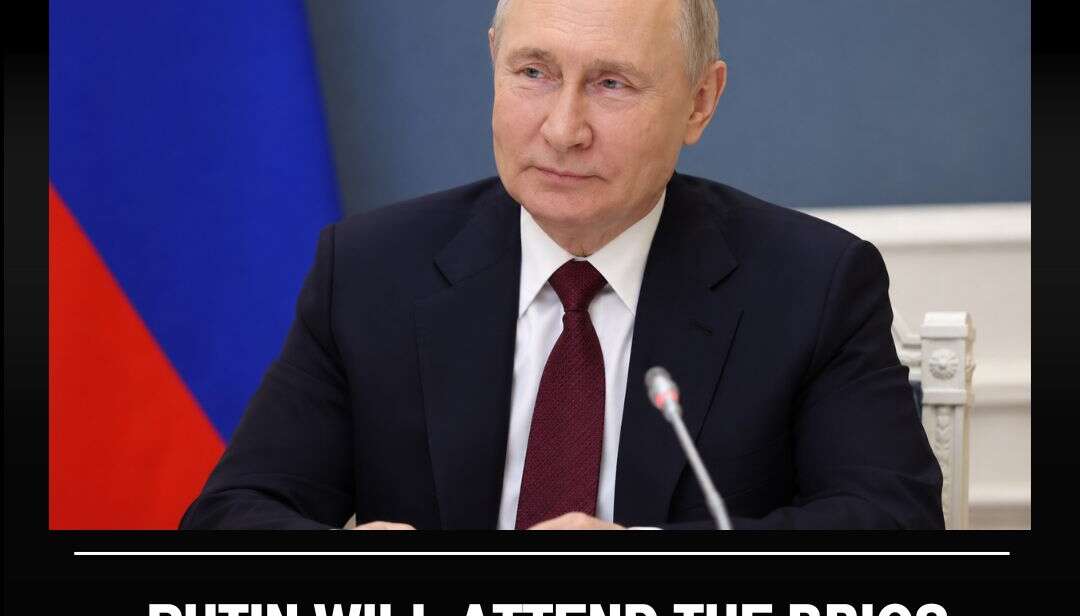
Russian President Vladimir Putin will travel to New Delhi for the 18th BRICS Summit on September 12–13, 2026, the Kremlin confirmed through international affairs aide Yury Ushakov — marking his second visit to India in under a year and signaling Moscow’s determination to project geopolitical normalcy despite sweeping Western sanctions, an active US-Iran war, and an outstanding ICC arrest warrant that kept Putin away from last year’s summit in Rio de Janeiro.
India’s chairship of BRICS in 2026, operating under the theme “Building for Resilience, Innovation, Cooperation, and Sustainability,” places New Delhi at the epicenter of a world in flux — and Putin’s confirmed attendance turns the September summit into one of the most consequential multilateral gatherings of the year.
Why India, Why Now
The legal arithmetic behind Putin’s New Delhi visit is straightforward: unlike Brazil, India is not a signatory to the ICC Rome Statute, the treaty that obliges member states to arrest individuals subject to ICC warrants. The warrant issued against Putin in March 2023 — alleging war crimes related to the unlawful deportation of Ukrainian children — forced his absence from the Rio summit in July 2025. India carries no such obligation, giving Moscow a politically viable venue.
Putin’s visit also builds on deepening bilateral momentum. His December 2025 trip to New Delhi for the 23rd India-Russia Annual Summit laid the groundwork, and Kremlin sources confirm that a bilateral meeting between Putin and Chinese President Xi Jinping is planned on the sidelines of the September gathering — a Putin-Xi encounter on Indian soil that will draw intense scrutiny from Washington.
The US-Iran War Casts a Long Shadow
No agenda item at the September BRICS conference will be more fraught than the US-Iran war. The conflict, triggered by a joint US-Israel military operation on February 28, 2026, has exposed structural fractures within the bloc that India has struggled to paper over.
Since the war began, BRICS has failed to issue a single joint statement under India’s chairship. The reason is brutal in its simplicity: Iran, a full BRICS member since 2024, has demanded language explicitly condemning US and Israeli aggression. The UAE, also a full member, has pushed for equal condemnation of Iranian strikes on Gulf states. Neither side will yield. The result is that New Delhi has been reduced to issuing Chair’s Statements rather than the unified declarations that give multilateral bodies their weight.
Iranian Deputy Foreign Minister Kazem Gharibabadi laid bare the tension publicly, stating: “One country is insisting on condemning Iran” — a remark that captured how completely the US-Iran war has fractured the bloc’s consensus machinery.
The Lowy Institute put it bluntly in a recent analysis: “BRICS promised a new world order. The Iran war shows it can’t deliver.” For more on the bloc’s internal divisions, see Al Jazeera’s coverage of why the Iran conflict is becoming a structural problem for BRICS
India’s Tightrope: Between Moscow, Beijing, and Washington
As BRICS chair, Prime Minister Modi’s government faces a balancing act of extraordinary delicacy. India’s foreign policy doctrine of “multi-alignment” — preserving ties with the US, Russia, and China simultaneously — is under its greatest stress test yet.
New Delhi is deepening defense and technology cooperation with Washington while maintaining military supply chains with Moscow and cautiously stabilizing a competitive relationship with Beijing. At the September BRICS conference, India will attempt to steer a grouping of 11 full members — representing nearly 50% of the world’s population — toward developmental cooperation rather than geopolitical confrontation, even as Putin and Xi use the summit’s margins for their own strategic coordination.
The China-India dimension adds an additional layer of friction. Both are nuclear-armed, both are demographic superpowers, and their competition for influence within BRICS is escalating alongside ongoing border tensions — a dynamic that complicates any projection of BRICS unity.
De-Dollarization and the New Financial Architecture
Beyond geopolitics, the New Delhi summit is expected to formalize BRICS Pay — an independent alternative to SWIFT — with full deployment targeted for September 2026. India’s Reserve Bank has proposed linking BRICS members’ central bank digital currencies, and a pilot digital trade settlement token backed 40% by gold and 60% by a basket of BRICS currencies is already undergoing trials.
India’s External Affairs Minister S. Jaishankar has been careful to frame these innovations not as an attack on the dollar but as practical diversification — a distinction that matters enormously to New Delhi’s relationship with Washington. De-dollarization was notably absent from last year’s official Rio declaration, and India is unlikely to change that calculus in September.
What September Will Reveal
Putin’s presence in New Delhi will be a moment of high symbolic weight: a leader under ICC indictment, leading a nation at war by proxy, attending a summit hosted by a country that has refused to choose sides in the world’s most volatile conflict. The BRICS conference will not resolve the US-Iran war, bridge the bloc’s internal divisions, or produce the unified global alternative order that BRICS rhetoric has long promised.
What it will do is reveal, with unusual clarity, exactly how the non-Western world is navigating a moment when the old rules no longer hold — and the new ones have not yet been written.