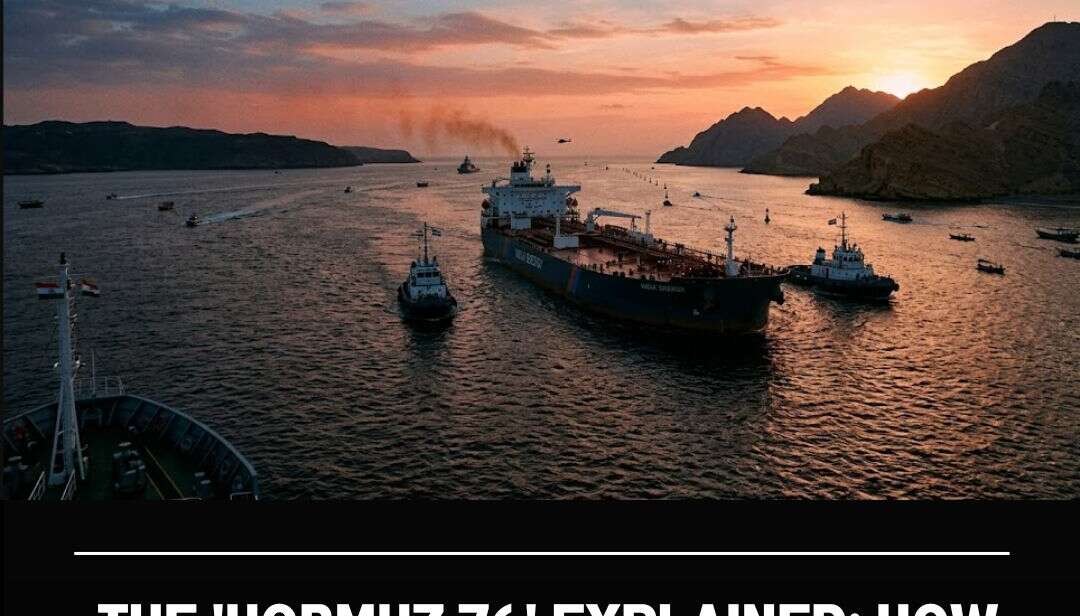
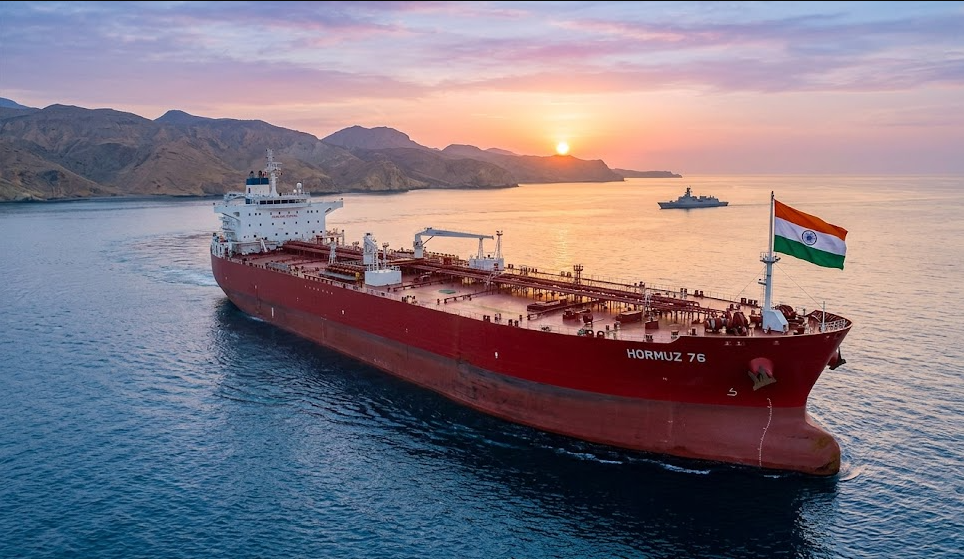
New Delhi / Gulf of Oman, May 19, 2026 — When India’s Shipping Ministry quietly reported that three Indian-flagged vessels carrying 76 Indian seafarers were stranded east of the Strait of Hormuz in the opening days of the iran crisis, it was a human detail buried inside a geopolitical catastrophe. The US-Iran War had begun
New Delhi / Gulf of Oman, May 19, 2026 — When India’s Shipping Ministry quietly reported that three Indian-flagged vessels carrying 76 Indian seafarers were stranded east of the Strait of Hormuz in the opening days of the iran crisis, it was a human detail buried inside a geopolitical catastrophe. The US-Iran War had begun on February 28. Iran had closed the Strait. The world’s most important oil chokepoint — through which flows 20 percent of globally traded crude, 20 percent of LNG, and the livelihoods of those 76 men — had become a battlefield.
That moment, which India’s maritime community quietly came to call the “Hormuz 76,” became the trigger for one of the most consequential strategic energy responses any emerging economy has mounted in the modern era.
Operation Urja Suraksha: The Naval Masterstroke
On March 25, the Indian Navy launched Operation Urja Suraksha — “Operation Energy Security” — deploying more than five frontline warships, including destroyers and frigates, into the Gulf of Oman. Their mission: escort Indian-flagged energy tankers through and around a strait that Iran had mined, blockaded, and intermittently fired upon.
The operation was conducted, as Maritime Executive reported, with “high caution and minimal publicity” — a deliberate posture that reflected India’s broader strategy of acting decisively without escalating. By March 26–27, the Navy had escorted LPG carriers Pine Gas and Jag Vasant — carrying a combined 92,000 tonnes of LPG critical for India’s 330 million LPG-dependent households — safely to Indian ports.
The operation was not bloodless in its risk. On April 18, two Indian-flagged vessels — Jag Arnav and Sanmar Herald — came under IRGC fire and were forced to abort passage despite prior Iranian assurances of safe conduct. The Navy adjusted. The escorts continued. The supplies reached Indian shores.
As Wikipedia’s Operation Urja Suraksha entry confirmed, the operation ultimately protected approximately 22 Indian-flagged vessels carrying more than 600 seafarers in the western Persian Gulf — a rolling national rescue that drew almost no international headlines but kept India’s energy supply lines alive through the most dangerous weeks of the iran crisis.
The Supply Pivot: Venezuela, Russia, Iran — All at Once
Simultaneously, India executed a supply diversification of breathtaking speed. As global oil prices surged from $69 per barrel in February to a peak of $157 for India’s crude basket in March — the rupee collapsed, OMCs bled losses, and the Middle East’s traditional supply lanes went dark.
India’s response was to turn every available dial at once.
Russian crude surged from 1.07 million barrels per day in February to 1.787 million barrels per day in March. Venezuela — a supplier India had abandoned years earlier — suddenly supplied 298,000 barrels per day in April, with 12.4 million barrels already in transit to Sikka port. Brazil entered India’s top five suppliers for the first time. And in the most politically significant reversal, India resumed oil and LNG purchases from Iran after a seven-year hiatus — the first such imports since 2019 — as CNBC confirmed, exploiting the very same bilateral relationship the US had pressured India to abandon.
The S&P Global analysis captured the logic precisely: India was not panicking. It was opportunistically assembling a crisis-proof supply portfolio from every geography the global market had overlooked.
The Diplomatic Layer: Coalition and Corridor
On April 2, India’s Foreign Secretary Vikram Misri joined a 40-nation coalition convened by British PM Keir Starmer in London to diplomatically and economically pressure Iran to reopen the Strait — a multilateral track India chose over joining Washington’s military coalition, preserving its negotiating leverage with Tehran, as The Researchers reported.
Longer-term, the government announced the Middle East-India Deep-Water Gas Pipeline (MEIDP) — a ₹40,000 crore ($4.8 billion) subsea pipeline stretching 2,000 kilometres from Oman to India’s Gujarat coast at depths of 3,450 metres. The pipeline, feasibility-studied through GAIL, Engineers India, and Indian Oil Corporation, would deliver 31 MMSCMD of gas directly from Gulf reserves — bypassing the Strait of Hormuz entirely once built, as Marine Insight detailed.
Simultaneously, Shipping Minister Sarbananda Sonowal announced India’s Atmanirbhar Shipping Initiative: 62 new vessels — crude carriers, LPG tankers, container ships — at a ₹51,383 crore investment, adding 2.85 million gross tonnes of sovereign Indian shipping capacity to end the strategic vulnerability of depending on foreign-flagged vessels through hostile straits, as DD News confirmed.
What the Masterstroke Actually Proves
India did not beat the global energy price surge — no single country can when Brent trades above $111 and the world’s most important strait is closed. But India managed it — through naval escorts, supply diversification across five continents, diplomatic multi-alignment, and infrastructure commitments that will make any future Hormuz 76 significantly less catastrophic.
The Indian crude basket peaked at $157 in March. By May, it had retraced to $111. The rupee hit 96.17 but held. State refiners kept the fuel flowing. The 76 seafarers stranded in March came home.
That is not victory. But in the language of the iran crisis, it is very close.
Market Analysis
A quick snapshot of market trends, customer behavior, and competitor movements.