
Share This Article
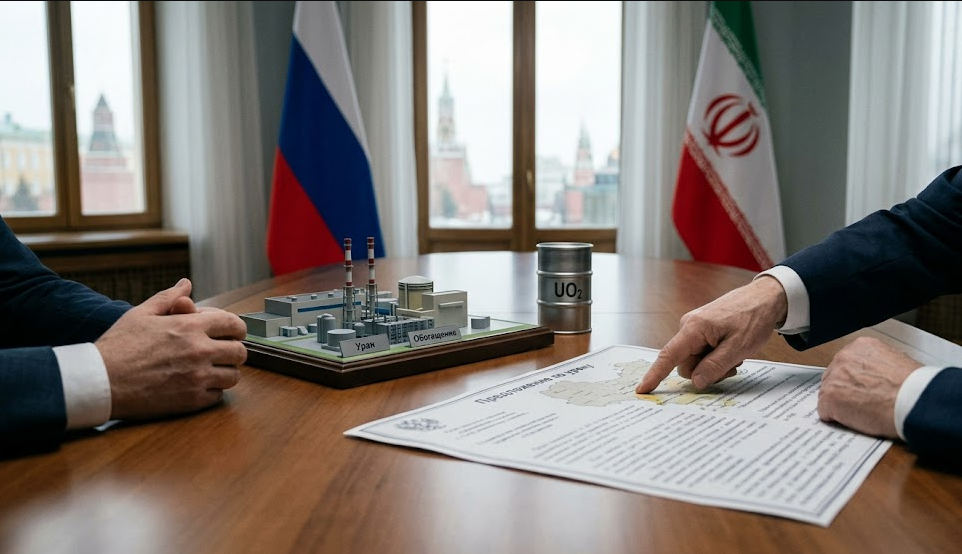
Moscow / Tehran / Washington – In a diplomatic move that is simultaneously bold, self-serving, and genuinely significant, Russian President Vladimir Putin has proposed that Russia take custody of Iran’s uranium as a confidence-building measure designed to alleviate dangerously escalating tensions between Tehran and Washington. The proposal framed publicly in the language of responsible great-power mediation has landed in the middle of the most volatile US-Iran war diplomatic moment in a generation, and has forced every capital with a stake in the outcome to rapidly reassess what Moscow is actually doing and why.
The answer, analysts across Washington, Brussels, and Tel Aviv agree, is almost certainly more complicated than the humanitarian framing Putin has chosen to present.
What Putin Actually Proposed
Speaking at a Kremlin press availability flanked by senior foreign ministry officials, Putin stated that Russia was prepared to receive and store Iranian enriched uranium on Russian territory under international monitoring arrangements effectively removing the material from Iran’s immediate control and eliminating, at least temporarily, the most acute proliferation concern driving American and Israeli threat assessments.
“Russia has always sought stability in the region,” Putin said. “We are prepared to assist in creating conditions where dialogue replaces confrontation. The transfer of uranium materials to Russian custody, under appropriate international guarantees, could be one such condition.”
Here are Some Related Blogs to Read
- NATO chief calls US strikes on Iran “absolutely necessary”
- Will gold rally as US-Iran tensions escalate
- Oil jumped but the market stayed calm
- 5 takeaways from Tuesday’s 2026 primaries
- US tariff system reset across 60 economies
- Trump tariffs Section 122 surcharge expires
- Trump had deliberately paused Hormuz operations to force Iran into a deal
- JD Vance claims Hegseth has been misleading Trump on the Iran war
- Iran has been digging out hidden missile stockpiles after rejecting Trump’s peace offer
The proposal directly echoes a similar Russian offer made during the 2009-2010 period of earlier Iran nuclear diplomacy a proposal that ultimately failed to gain Iranian acceptance but that established a precedent Moscow is now deliberately reviving in a far more urgent geopolitical context.
Crucially, Putin framed the offer not as a concession to Western pressure but as an independent Russian initiative positioning Moscow as an autonomous mediating power rather than a junior partner in either the American or Iranian camp.
Why Russia Is Making This Move Now
Understanding Putin’s uranium proposal requires understanding what Russia gains from making it because in the current geopolitical environment, Moscow rarely expends diplomatic capital without a clear return calculation.
First, the proposal repositions Russia as an indispensable mediating power at the precise moment when Moscow’s international standing has been most severely damaged by the Ukraine war. A Putin who brokers, or even meaningfully contributes to, a US-Iran de-escalation framework is a Putin who demonstrates continued global relevance and generates leverage he can deploy in parallel conversations about Ukraine, sanctions relief, and Western diplomatic isolation.
Second, accepting Iranian uranium on Russian soil gives Moscow extraordinary physical leverage over Tehran. Uranium in Russian custody is uranium that Iran cannot weaponise without Russian cooperation or a politically catastrophic demand for its return. That leverage fundamentally alters the power dynamic within the Russia-Iran relationship shifting it from a partnership of mutual convenience into something considerably more asymmetric and Moscow-favourable.
Third, the proposal allows Russia to insert itself structurally into any eventual US-Iran nuclear agreement ensuring that whatever framework emerges from current negotiations includes a Russian role that cannot be easily removed or circumvented. That structural presence serves Moscow’s long-term interest in preventing a US-Iran normalisation that might eventually draw Iran toward Western economic and political alignment.
Washington’s Reaction: Cautious and Calculating
The Biden-era diplomatic playbook would have reflexively viewed Russian involvement in Iran nuclear arrangements with deep suspicion. Trump’s team has responded with something more nuanced a public non-rejection that signals genuine consideration without endorsing Moscow’s framing.
A senior State Department official told reporters that the United States was “aware of President Putin’s statement” and would “evaluate any proposal that genuinely contributes to verifiable reduction of Iran’s nuclear threat.” The careful language “evaluate,” “genuinely,” “verifiable” reflects a team that sees potential utility in the Russian offer while remaining acutely aware of the geopolitical strings attached to it.
Within the National Security Council, the internal debate reportedly centres on a single critical question: can a Russian custody arrangement for Iranian uranium be structured in ways that deliver real non-proliferation value without legitimising Moscow’s mediating role to a degree that compromises American negotiating leverage in parallel conversations about Ukraine and European security?
Iran’s Calculation: Pride, Pragmatism, and Precedent
For Tehran, Putin’s proposal is a double-edged instrument that cuts across multiple internal fault lines simultaneously.
On the pragmatist side, accepting Russian custody of enriched uranium provides Iran with a face-saving mechanism to address the West’s most acute nuclear concern without formally capitulating to American demands. If uranium leaves Iran in response to a Russian proposal rather than an American ultimatum, Tehran can frame the move as a sovereign choice made in response to a friendly partner’s request rather than a concession extracted under military and economic duress.
The Super Revolutionary hardliner bloc, however, views any transfer of Iranian nuclear material to foreign custody including Russian custody as an unacceptable surrender of strategic sovereignty. Their argument is straightforward: enriched uranium in Russian hands is enriched uranium that serves Russian interests, not Iranian ones. And a Russia that holds Iran’s nuclear material as collateral is a Russia that has acquired veto power over Iran’s most sensitive security decisions.
The historical precedent they invoke is pointed: every time Iran has made nuclear concessions in response to external pressure temporary enrichment suspensions, IAEA access agreements, the JCPOA itself Washington has either demanded more or walked away from its own commitments. Why, the hardliners ask, would Russian custody be different?
The Israeli Dimension
Israel has responded to Putin’s proposal with the particular combination of public scepticism and private interest that characterises Jerusalem’s engagement with any initiative that touches Iranian nuclear material.
Publicly, Israeli officials have noted that Russian custody of Iranian uranium does nothing to address Iran’s ballistic missile program, its proxy network, or its capacity to rapidly re-enrich once any custody arrangement ends. These are legitimate concerns and ones that American negotiators share.
Privately, however, Israeli intelligence officials reportedly assess that physically removing a significant portion of Iran’s enriched uranium stockpile from Iranian territory even into Russian hands would meaningfully extend the timeline required for Iran to produce enough weapons-grade material for a nuclear device. That timeline extension, measured in months, is the difference between a window for diplomatic resolution and a window for military necessity.
What Happens Next
Putin’s uranium proposal has introduced a new variable into an already extraordinarily complex negotiation landscape one that neither simplifies the path to a US-Iran agreement nor makes it impossible, but that fundamentally changes who sits at the table and what leverage each party holds.
The critical sequence now is whether Iran’s leadership, navigating between its pragmatist and hardliner factions, can be persuaded to treat the Russian offer as a usable diplomatic instrument rather than a sovereignty threat. And whether Washington can find a way to incorporate Russian physical involvement in a nuclear custody arrangement without granting Moscow the geopolitical legitimisation prize that is almost certainly the real objective behind the offer.
Putin has placed his proposal on the table. In the architecture of the current US-Iran war diplomacy, it lands not as an act of altruism but as a masterstroke of self-interested statecraft one that every party involved will spend the coming days trying to turn to their own advantage.
The uranium, for now, remains in Iran. But the diplomatic landscape it sits within has just shifted significantly.

Oil & Energy Markets
A look at crude price swings, OPEC supply moves, and how energy markets react to geopolitical shocks.

Geopolitics & Conflict
Breaking down how wars, ceasefires, and diplomatic deals ripple through global trade and security.
US Foreign Policy
Coverage of Trump administration negotiations, sanctions, and strategic decisions shaping world events.
Economy & Inflation
Tracking how commodity prices, gas costs, and supply chains affect everyday consumers.