Share This Article
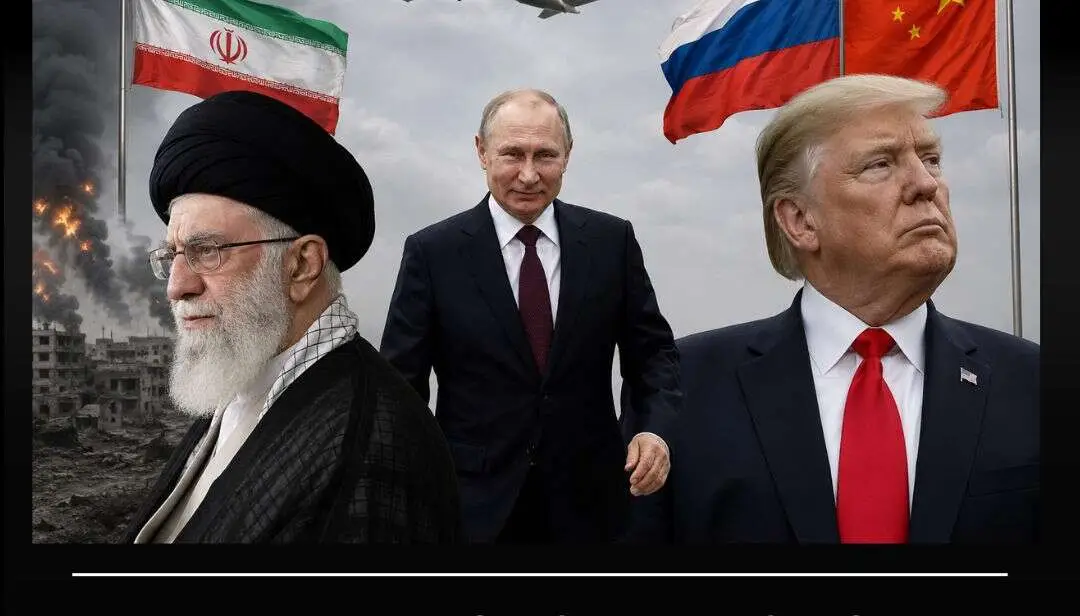
Just 48 hours after Donald Trump concluded his own summit in Beijing shaking hands over Boeing jets and tariff truces Vladimir Putin landed at the same airport, walked into the same Great Hall of the People, and reminded the world that Xi Jinping is not choosing sides. He is collecting leverage from all of them.
Putin’s May 19–20 state visit to Beijing his 25th trip to China was framed as a commemoration of the 2001 Treaty of Good-Neighborliness. In substance, it was something more consequential: a joint declaration by Russia and China that the US-Iran war has reshuffled the global order in ways that benefit both Moscow and Beijing, and that neither intends to let the opportunity pass unused.
Xi’s message to Putin was unambiguous. China-Russia ties, he declared, have reached “the highest level in history.”
The War Washington Is Fighting and the One It Is Losing
The Peterson Institute for International Economics published its assessment of the conflict’s strategic ledger with clinical precision: “How Russia and China are winning the war in Iran.” The arithmetic behind that headline is not complicated.
Russia’s windfall from the US-Iran war begins with oil. Brent crude surged toward $120 per barrel following the Strait of Hormuz blockade a price level that transformed Moscow’s budget from deficit to surplus. The KSE Institute projects Russia and China could see Moscow collect between $45 billion and $151 billion in additional budget revenues in 2026, depending on how long the conflict runs. Russia’s energy revenues, which had fallen below $10 billion in February, have since recovered dramatically. A Kremlin budget surplus exceeding $150 billion is now within reach all while Washington burns through Pentagon reserves at a rate its own comptroller pegged at $25 billion and counting.
Here are Some Related Blogs to Read
- Get the full picture on where this war is headed – more Trump-era geopolitical coverage at DonaldTrump.Coach.
- Tuesday’s missiles didn’t come out of nowhere, Iran has been digging out hidden missile stockpiles after rejecting Trump’s peace offer
- Not everyone in Trump’s own camp agrees on strategy, JD Vance claims Hegseth has been misleading Trump on the Iran war
- This isn’t the only recent flashpoint at sea, a US Navy destroyer just fired on and seized an Iranian cargo ship
- The strikes haven’t ended Iran’s nuclear ambitions either, US intel says recent strikes did only limited damage to Iran’s nuclear program
- That brief pause before Tuesday’s attack wasn’t random, Trump had deliberately paused Hormuz operations to force Iran into a deal
- The missiles are only half the story, Iran and Israel’s spy war is heating up amid claims of stolen F-15 secrets
- Trump’s fights aren’t confined to Tehran, he’s now clashing with his own SCOTUS picks back home
- Global supply chains are already bracing for impact, Goyal’s courting 50 US leaders in New York over exactly that.
- Stay ahead of the story track it live or get the full background on how the US-Iran war escalated to this point.
90% of Russia’s crude exports in Q1 2026 flowed to China and India discounted barrels eagerly absorbed by Asian refiners shut out of Gulf supplies. Every month the Strait of Hormuz stays blocked is a month that Moscow earns at elevated prices while spending at war-economy rates in Ukraine.
What 40 Agreements Look Like in Practice
The two leaders signed approximately 40 cooperation agreements in Beijing, covering energy, artificial intelligence, nuclear technology, education, transport, and industrial collaboration. Visa-free travel was extended through the end of 2027. The optics of the signing ceremony rows of officials, cameras, handshakes conveyed institutional permanence rather than improvised opportunism.
The one notable absence: a concrete timeline for the Power of Siberia 2 gas pipeline, the long-discussed artery that would carry Russian gas through Mongolia to China. Despite the US-Iran war providing, as CNBC noted, “fresh incentive to lock in Russian supply while Moscow needs the revenue,” both sides left Beijing without a signed deal on the pipeline’s schedule. The gap between declared partnership and operational commitment remains but it is narrowing.
China’s own energy calculus has been sharpened by the crisis. Beijing holds 1.3–1.4 billion barrels of combined strategic reserves, covering roughly four months of imports, built partly by absorbing discounted Russian crude while Gulf supplies were disrupted. Iran supplies 13% of China’s oil imports at below-market rates under a 25-year cooperation agreement. For Beijing, the US-Iran war is not a disaster it is a discount.
For the full strategic analysis of how both powers are benefiting, see the Peterson Institute’s assessment of Russia and China winning the Iran war.
The Strategy of Attrition
Analysts at the PRS Group have labeled Moscow and Beijing’s approach a “strategy of attrition” avoiding direct kinetic involvement in the Iran conflict while systematically draining US military, economic, and diplomatic resources. Russian satellite imagery of American warship positions flows to Tehran. Chinese dual-use technology missile components, fiber-optic drone cables, geospatial intelligence reaches Iranian defense contractors through supply chains that sanctions have failed to sever. Iran has made advance payments on 48 Sukhoi Su-35 multirole fighter jets, with 16 aircraft in production for delivery by 2027.
The Toda Peace Institute’s verdict on the strategic picture is stark: the US-Iran war is “unraveling US strategy and strengthening the Russia-China axis” reversing, in the words of analysts, “a half-century of American grand strategy” by accelerating precisely the alignment Washington has historically spent its diplomatic energy preventing. By tying down US forces in the Middle East, Moscow and Beijing have bought time and space across every other theater: Ukraine, Taiwan, the South China Sea.
Putin himself has signaled a shift on Ukraine, stating publicly that he believes the matter “is coming to an end” a confidence that reads differently when understood against the backdrop of a Washington consumed by a second simultaneous conflict and a Pentagon comptroller asking Congress for emergency supplemental funding.
The Multipolar Declaration
The summit’s closing document a “Multipolar World Declaration” signed by Putin and Xi was the ideological capstone of the visit. It positioned Russia and China not merely as bilateral partners but as co-architects of a global order built on alternatives to Western institutional dominance: alternatives to SWIFT, alternatives to dollar settlement, alternatives to UN Security Council vetoes they do not control.
Bilateral trade between the two countries reached nearly $240 billion in 2025, growing by 20% in the first four months of 2026 alone. The economic relationship has become the foundation on which the political partnership rests and the US-Iran war, whatever its ultimate outcome, has poured concrete into that foundation.
Washington launched Operation Epic Fury to end Iran’s nuclear program and reassert deterrence. What it may have achieved, as Putin’s Beijing handshake suggests, is something rather different: a more integrated, more confident, and more strategically coordinated Russia and China operating in the space that American distraction has opened up.

Oil & Energy Markets
A look at crude price swings, OPEC supply moves, and how energy markets react to geopolitical shocks.

Geopolitics & Conflict
Breaking down how wars, ceasefires, and diplomatic deals ripple through global trade and security.
US Foreign Policy
Coverage of Trump administration negotiations, sanctions, and strategic decisions shaping world events.
Economy & Inflation
Tracking how commodity prices, gas costs, and supply chains affect everyday consumers.