PM Modi Erupts: ‘Not an Iota of Truth’ He Flatly Denies Reports of Taxing International Travel Amid Iran War Fears
Theo Jorden
Share This Article
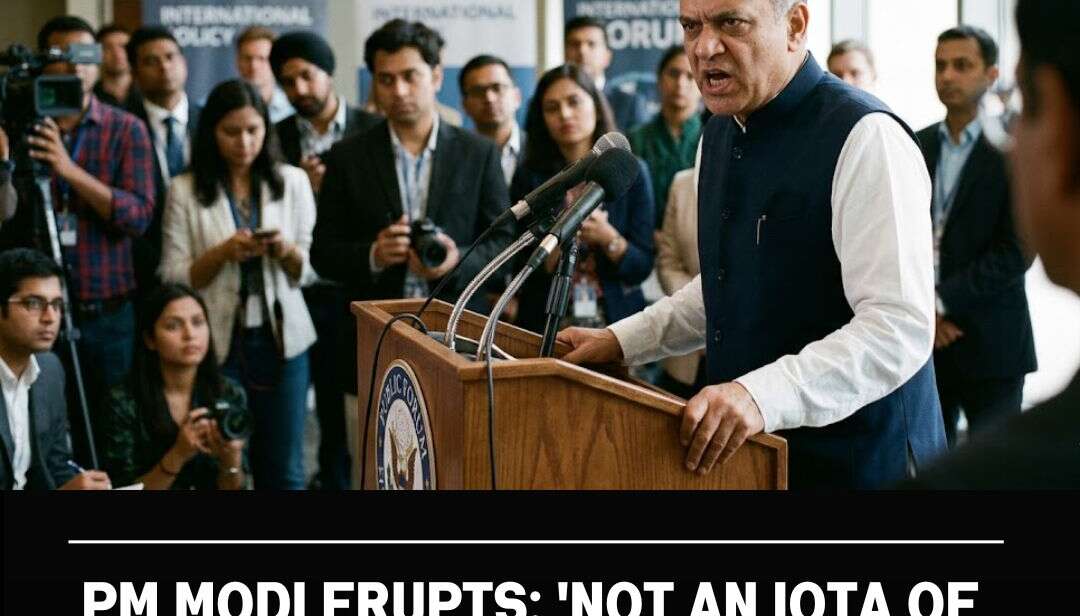
New Delhi, May 15, 2026 — It is rare for India’s Prime Minister to personally descend into the arena of individual media fact-checks. But the report was explosive enough and damaging enough that Narendra Modi moved with unusual speed. “This is totally false,” Modi declared in a direct public statement on May 15. “Not an
New Delhi, May 15, 2026 — It is rare for India’s Prime Minister to personally descend into the arena of individual media fact-checks. But the report was explosive enough and damaging enough that Narendra Modi moved with unusual speed.
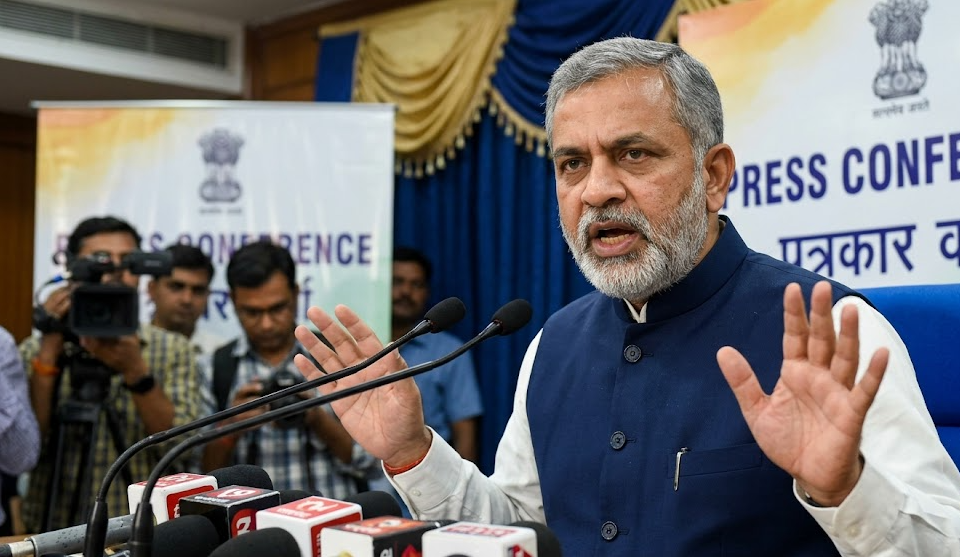
“This is totally false,” Modi declared in a direct public statement on May 15. “Not an iota of truth in this. There is no question of putting such restrictions on foreign travel.”
The trigger: a CNBC-TV18 report claiming that discussions were underway “at the highest levels” of the Indian government to impose a temporary one-year cess or surcharge on all international travel a measure reportedly floated to offset the catastrophic foreign exchange drain caused by the ongoing US-Iran War. Within hours of Modi’s rebuttal, the network issued a full public retraction: “Our story on government considering tax/cess on foreign travel is not accurate. We withdraw the story and regret the error.”
The speed of the denial and the network’s capitulation underlines just how volatile India’s economic mood has become as the US-Iran War, now in its 77th day, continues to reshape every assumption about fuel costs, aviation, and the rupee.
How the US-Iran War Made the Rumour Plausible
The fact that the travel tax story spread so rapidly before being debunked is itself the story. In ordinary times, a report about a new travel surcharge would be easy to dismiss. In May 2026, it was entirely believable because the economic conditions that might justify such a measure are devastatingly real.
India imports more than 85 percent of its domestic crude oil requirements. Before the war, approximately 50 percent of those imports transited through the Strait of Hormuz. When the US-Iran War began on February 28 with U.S.-Israeli strikes that killed Supreme Leader Ayatollah Ali Khamenei and closed the strait, Brent crude spiked from $72.87 a barrel to over $120 within days. Jet fuel costs nearly doubled from $99.40 per barrel at end-February to $195.19 for the week ending March 27, according to aviation industry data.
The weekly economic impact on Indian and international carriers has been calculated at Rs 875 crore (approximately $96 million). Air India has since cancelled or drastically reduced services to Chicago, Shanghai, Singapore, Male, and Dhaka. The Indian rupee hit a record low of ₹95.34 against the US dollar. Moody’s slashed India’s FY2026-27 GDP growth forecast to 6 percent from 6.8 percent. Goldman Sachs cut its calendar 2026 forecast to 5.9 percent down from 7 percent.
Against that backdrop, as Al Jazeera reported, Modi himself had already publicly urged Indians days earlier to reduce non-essential foreign travel, cut fuel consumption, pause gold purchases, and use public transport. The government’s own messaging had primed the rumour mill.
The Digital Lockdown on Misinformation and the Government’s Real Tools
Modi’s swift denial was partly damage control but also a signal about the government’s actual policy toolkit. Rather than taxing outbound travel, New Delhi has deployed a different set of instruments. India’s Union Budget 2026 had, in fact, moved in the opposite direction on travel costs, cutting the Tax Collected at Source on overseas tour packages from rates as high as 20 percent down to a flat 2 percent.
The government also directed a 25 percent reduction in landing and parking charges for domestic flights for three months, absorbing aviation sector pain without passing it directly to passengers. Air India added fuel surcharges of $50 to $85 per ticket a market mechanism, not a government tax while the state used the Essential Commodities Act to partially shield domestic petrol and diesel prices from full pass-through, at significant cost to tax revenue.
This is a government maintaining a digital lockdown on panic as much as on policy: controlling the narrative of economic sacrifice while refusing measures that could trigger a middle-class political backlash ahead of state elections.
The Beijing Bingo Dimension
The geopolitical backdrop to India’s economic pain is inseparable from the Beijing bingo summit. Trump’s May 13–15 state visit to Beijing which brought Elon Musk to Tim Cook and a trillion-dollar corporate delegation under full digital lockdown protocols has produced specific anxieties in New Delhi.
As CNBC’s Inside India newsletter noted, Indian strategic thinkers are watching the Trump-Xi rapprochement with “trepidation,” concerned about the revival of a G2 dynamic that marginalises mid-powers like India. For two decades, Washington positioned New Delhi as a counterweight to Beijing. Under Trump’s transactional foreign policy, that architecture has weakened.
Adding to New Delhi’s discomfort: the US sanctions waiver for India’s strategic Chabahar port investment in Iran expired on April 26, forcing a humiliating withdrawal from a decade-long, $120 million strategic project. As Al Jazeera reported, India-Iran bilateral ties are “steadily downgrading” a direct casualty of the US-Iran War forcing New Delhi to choose sides.
What Modi’s Denial Really Signals
The “not an iota of truth” statement is not merely a fact-check. It is a political declaration: that India will not punish its travelling middle class for a war it did not start, in a strait it does not control, triggered by decisions made in Washington and Tel Aviv.
India has rerouted 70 percent of its crude oil imports outside the Strait of Hormuz up from 55 percent before the conflict. It has diversified to over 40 supplier countries. It has held interest rates steady, absorbed fuel subsidy costs, and cut aviation charges. What it has not done and, Modi insists, will not do is make ordinary Indians pay a visible, named tax for the US-Iran War‘s collateral damage.
Whether that restraint holds as the war drags into its third month is the question every economist in New Delhi is quietly asking.
Oil & Energy Markets
A look at crude price swings, OPEC supply moves, and how energy markets react to geopolitical shocks.