
Geopolitics
Tuesday’s Vote Could Change the Iran War More Than Any Ceasefire Talk
WASHINGTON – Qatari mediators are shuttling proposals between Washington and Tehran, and President Donald Trump says the Iran war will be “wrapped up soon.” But the decision with the biggest effect on U.S. foreign policy this week may come from voters, not diplomats. On Tuesday, Nov. 3, Americans choose every House seat and about a…
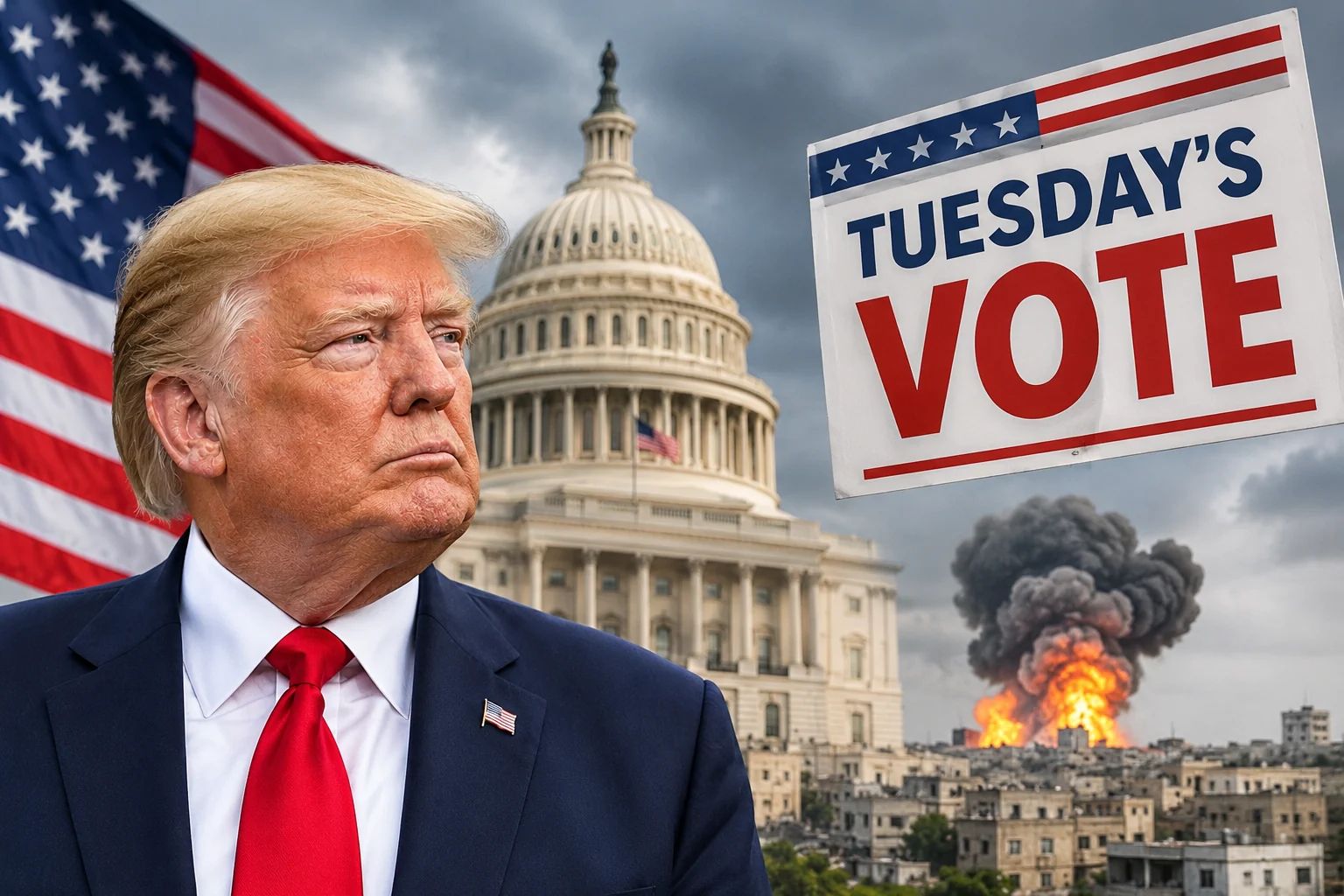
WASHINGTON – Qatari mediators are shuttling proposals between Washington and Tehran, and President Donald Trump says the Iran war will be “wrapped up soon.” But the decision with the biggest effect on U.S. foreign policy this week may come from voters, not diplomats.
On Tuesday, Nov. 3, Americans choose every House seat and about a third of the Senate. The midterms’ foreign policy impact comes down to one question: whether Trump keeps a Congress that has mostly let him run the Iran war, the Ukraine file, and the Pentagon on his own terms, or faces one that can subpoena, defund, and impeach.
Track the War’s Impact in Real Time
The Iran war shows up in prices before it shows up in votes. Follow both live:
Live Oil Price Tracker →
Brent and WTI in real time, the clearest read on whether the war is escalating or easing.
Live Trump Tariff Tracker →
Every tariff move as it lands, since trade pressure and the war are moving the same markets.
Where the Iran War Stands Heading into Election Day
The war started on Feb. 28, 2026, when the U.S. and Israel launched airstrikes on Iran. Tehran answered with missile and drone attacks on Israel and on U.S. bases, and it closed the Strait of Hormuz. A Pakistan-brokered ceasefire took effect in April. Since then, the two sides have kept trading low-level strikes, and the U.S. has kept a naval blockade in place.
As of Nov. 1, the Pentagon counts 23 U.S. service members dead since the war began: 11 killed by enemy fire and 12 in nonhostile incidents, according to CBS News. Attacks on shipping in and around Hormuz continue, including a strike on a Qatari LNG tanker last week. Iran says no meeting with U.S. officials is planned, and Secretary of State Marco Rubio says the White House would prefer a peaceful route but has not ruled out new strikes.
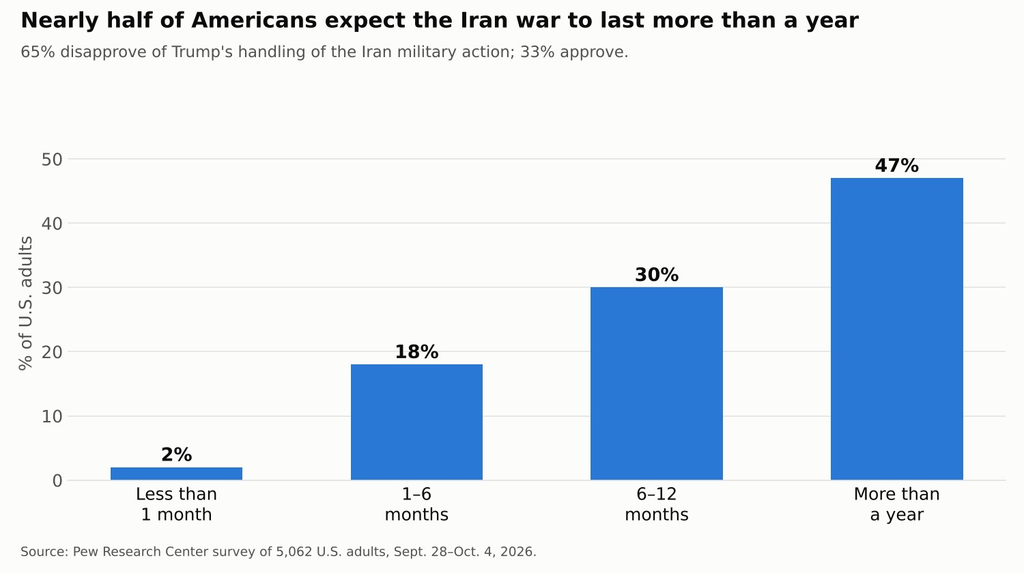
The public has soured on the war. A Pew Research Center survey taken Sept. 28 to Oct. 4 found 65% of Americans disapprove of Trump’s handling of the Iran military action and 33% approve. Nearly half (47%) expect the fighting to last more than a year.
The war has reshaped economies far from the battlefield. India’s central bank was forced into its first rate hike in 3.5 years by the oil shock, the Federal Reserve is holding rates high to fight war-driven inflation, and Israel’s economy has taken a very different path, as we covered in Israel’s war economy and the strong shekel.
Pew survey on how long Americans expect the Iran war to last
Can Congress end the Iran war? The war powers math
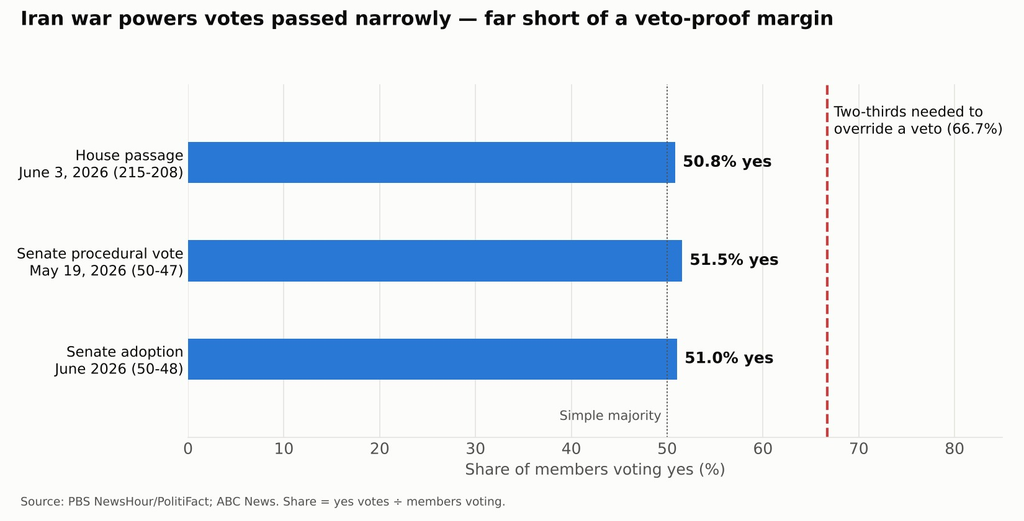
Congress has already tried. The House passed a war powers resolution 215-208 on June 3, with four Republicans joining Democrats, and passed another in July. The Senate adopted its version 50-48 in June after Republicans Susan Collins, Lisa Murkowski, Rand Paul, and Bill Cassidy crossed party lines.
Those votes did not change the war. The White House called the Senate vote meaningless and said hostilities “terminated with the ceasefire on April 7th.” Its argument is that the 1973 War Powers Resolution’s 60-day clock no longer applies.
The deeper problem is arithmetic. Every Iran war Congress vote this year has passed with about 51% support. Overriding a presidential veto takes two-thirds of both chambers.
Iran war powers votes compared to the two-thirds veto-override threshold
That means even a Democratic sweep would not let Congress order an end to the war on its own. What changes is who controls the committees, the floor schedule, and the spending bills:
- Power of the purse. A Democratic House could write appropriations that restrict money for offensive operations against Iran. Trump could veto those bills, but each one would set up a fight over a shutdown, which gives Democrats leverage they don’t have now.
- Floor control. A Democratic majority, not Speaker Mike Johnson, would decide which war powers measures get votes and when.
- Subpoenas. House committees could compel testimony and documents on how the war started, what the strikes cost, and where the talks stand.
So the honest answer to what happens to the Iran war if Democrats win is pressure, not a shutoff. It would also mean slower decision-making in the White House, because every escalation would be followed by hearings.
Senate dynamics matter here too. A handful of Republican defections can decide a vote, and Trump has not been shy about leaning on them personally, as we reported when he posted Sen. Tom Cotton’s phone number during the daylight saving time fight.
Ukraine Aid Vote: The Clearest Policy Swing
Ukraine is where a change in House control would show up fastest. According to Reuters analysis summarized by Euromaidan Press, Trump has largely stopped direct U.S. aid to Ukraine, waived Russian energy sanctions that Congress wrote into law, and agreed to a deal that brings Russian diesel back onto the market.
Rep. Jim Himes (D-Conn.) told allies at the Warsaw Security Forum that renewed Ukraine aid “will be a priority” if Democrats win, and that they would use a faster process. Rep. Gregory Meeks, expected to chair the House Foreign Affairs Committee if Democrats win, has introduced bipartisan legislation to block the Russian diesel plan.
Aid to Ukraine has had support from both parties in the past, so a Ukraine aid vote is the one foreign-policy measure that some analysts think could reach veto-proof margins. Breaking Defense warns that a divided Congress and unfinished spending bills could still push the timeline into 2027.
The same transactional approach shows up in Asia. Trump has tied major security decisions to his talks with Beijing, as we detailed in Taiwan fending for itself as Trump pivots toward China.
Hegseth Hearings and the Impeachment Question
Defense Secretary Pete Hegseth has had heated exchanges with Democrats, and with some Republicans, at hearings on the Iran war and the firing of senior military officials. Democrats say a new majority would bring tougher Hegseth hearings. Rep. Jason Crow (D-Colo.) has promised to use “all of the tools” of oversight. Rep. Pat Ryan (D-N.Y.) told Politico that Hegseth’s team should “lawyer up.”
The impeachment push is getting louder. House Minority Leader Hakeem Jeffries says Hegseth is “in deep trouble.” Republican Rep. Thomas Massie has vowed to force an impeachment vote after the election if Hegseth is still in office. Trump called the effort “terrible,” Johnson called it “a stunt,” and the Pentagon called Hegseth “a transformative leader.” The House can impeach with a simple majority, but removal from office requires 67 senators.
What a House or Senate Flip Would Actually Change
| Scenario | Iran war | Ukraine | Hegseth |
| GOP holds both chambers | Status quo; war powers votes stay symbolic | Aid remains largely frozen | Massie-led vote possible, unlikely to pass |
| Democrats flip the House only | Subpoenas, funding fights, more war powers votes | Aid bills reach the floor quickly | Impeachment likely gets a vote; Senate removal unlikely |
| Democrats flip both | Senate confirmations and NDAA leverage added | Best odds of passing aid with veto-proof support | Senate trial possible, but 67 votes is a high bar |
Forecasters lean toward Democrats taking the House. A roundup of academic models published Oct. 14 found all 12 House forecasts favor Democrats, while Senate predictions are split. One of the races that could decide the Senate is in Texas, where Ken Paxton and James Talarico are in a toss-up, as we explained in our Texas Senate race explainer.
The Other Side of the Argument
Republicans and the White House say Congress should not tie a president’s hands while negotiations are still underway. They argue that Iran’s nuclear program has been badly damaged (“We’ve knocked out their nuclear,” Trump said Oct. 31) and that pressure from the blockade is what brought Tehran to the table. Some GOP lawmakers also say new Ukraine spending should wait for a negotiated settlement. Several of the cases above also depend on a few lawmakers who could break with their party either way, so nothing is guaranteed.
The Bottom Line
No midterm result will end the Iran war overnight. But Tuesday decides whether the next phase of the war, Ukraine policy, and the Pentagon’s leadership are argued out in committee rooms and spending bills, or left to the White House alone.
The days after the vote could matter just as much. Trump has said he will accept the results only “if they’re honest elections”, which makes the aftermath a story to watch.
For more coverage of the midterms and Trump’s foreign policy, visit DonaldTrump.Coach.
Frequently Asked Questions
What happens to the Iran war if Democrats win the House?
The war would not end automatically. A Democratic House could hold more war powers votes, issue subpoenas, and attach limits to defense spending bills. Trump could veto those limits, and Democrats would not have the two-thirds needed to override.
Can Congress end the Iran war?
Yes in theory. It can pass a binding war powers resolution or cut off funding. Either one would need the president’s signature or a two-thirds override in both chambers. The 2026 votes have passed with only about 51% support.
What is the midterms’ foreign policy impact beyond Iran?
The largest likely change is in Ukraine. Democrats have pledged to restart aid and to challenge Trump’s waivers of Russian sanctions. Control of the House Foreign Affairs and Armed Services committees would also shift.
What is the midterms’ impact on Ukraine?
A Democratic House would likely bring a Ukraine aid vote to the floor early in 2027. Aid has had support from both parties before, which could put a veto-proof majority within reach. Budget fights could still slow it down.
Will there be Hegseth hearings or an impeachment?
Democrats have promised expanded oversight hearings, and many support impeachment. Rep. Thomas Massie (R-Ky.) has said he will force a vote. Removal would require a two-thirds Senate vote.
What is the War Powers Resolution?
It is a 1973 law that requires the president to notify Congress within 48 hours of sending forces into hostilities and to withdraw them within 60 days unless Congress authorizes the action. The White House says the April ceasefire stopped that clock.