
Economy
The Fed Made Its Last Big Call Before the Midterms. Here’s What It Means for You
WASHINGTON, Oct. 28, 2026 – The Federal Reserve held its benchmark interest rate steady on Wednesday, keeping the federal funds rate in a range of 3.75% to 4.00% in its final policy decision before Americans vote in the Nov. 3 midterm elections. The decision follows the Fed’s surprise turn in September, when officials raised rates…
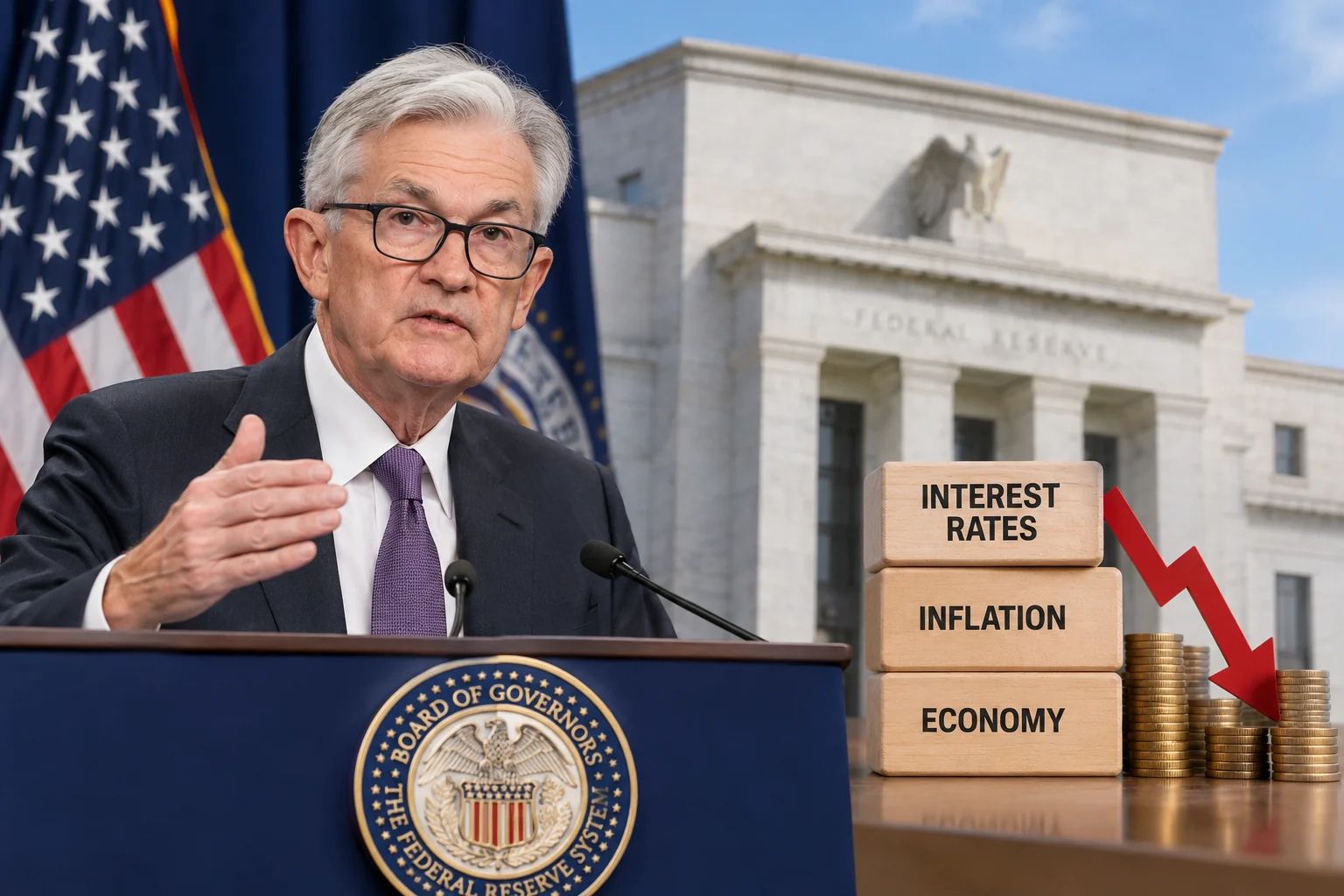
WASHINGTON, Oct. 28, 2026 – The Federal Reserve held its benchmark interest rate steady on Wednesday, keeping the federal funds rate in a range of 3.75% to 4.00% in its final policy decision before Americans vote in the Nov. 3 midterm elections.
The decision follows the Fed’s surprise turn in September, when officials raised rates by a quarter point for the first time since 2023. With inflation running at 3.7% and gasoline above $4 a gallon, the central bank signaled it is not finished fighting prices, and Wall Street now expects another increase in December.
Here is what the Fed decided, why it decided it, and what it means for your mortgage, your credit card, and the political fight over the economy.
Track the Prices Driving the Fed
The Fed is reacting to energy and trade costs. Follow both live:
Live Oil Price Tracker →
Brent and WTI in real time, the energy price behind the gasoline spike that is pushing inflation higher.
Live Trump Tariff Tracker →
Every tariff move as it lands, a key input in the inflation debate heading into December.
Did the Fed Raise Rates Today?
No. At the close of the two-day FOMC October meeting (Oct. 27–28), the Federal Open Market Committee left the target range unchanged at 3.75%–4.00%. [CONFIRM: vote count and dissents, e.g. “The vote was X–Y, with [names] dissenting in favor of a hike.”]
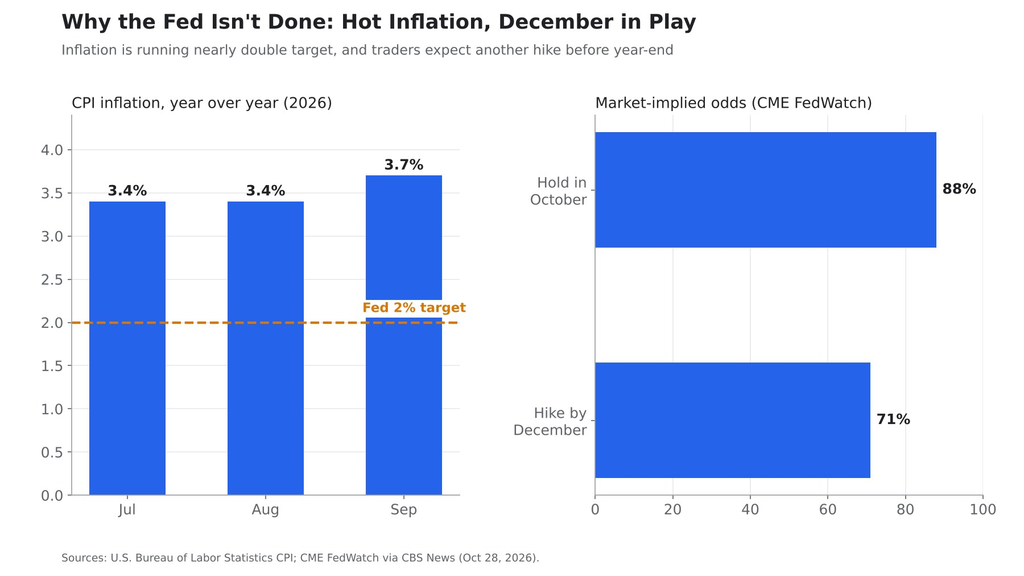
The hold was widely expected. Ahead of the announcement, traders placed roughly 88% to 91% odds on no change, according to CME Group’s FedWatch tool. A Reuters poll of 100 economists found 94 expected a hold this week, and all 100 expected a rate hike at the December meeting.
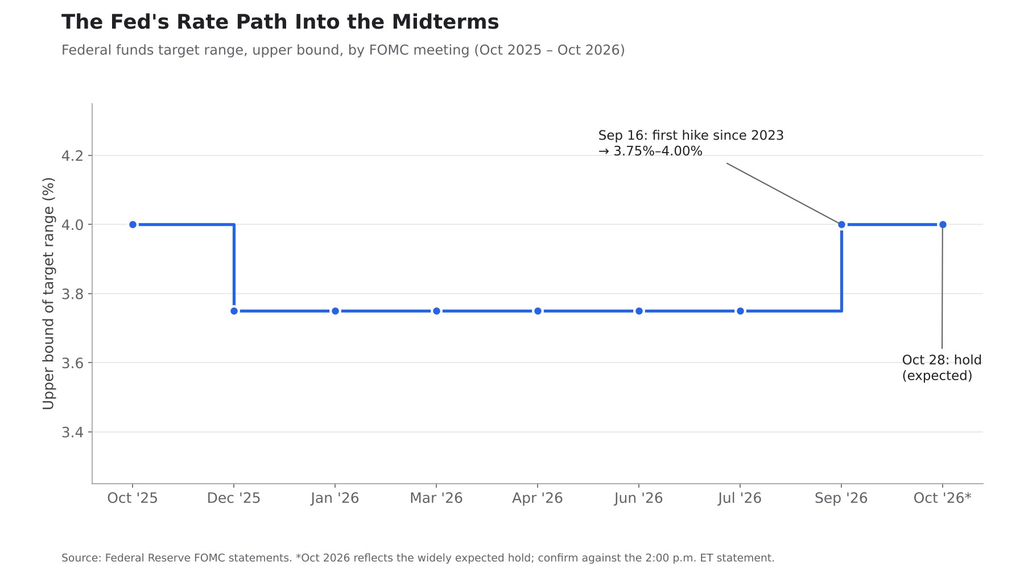
The Fed’s rate path into the midterms Federal funds rate upper bound, Oct. 2025 – Oct. 2026. Source: Federal Reserve.
How we got here
- Late 2025: The Fed cut rates three times, ending the year at 3.50%–3.75%.
- January–July 2026: Five straight holds as inflation stopped improving. In July, three regional presidents dissented in favor of a hike.
- Sept. 16, 2026: A unanimous 12–0 vote raised rates 25 basis points to 3.75%–4.00%, the first Fed rate hike in three years.
- Oct. 28, 2026: A pause, with December “live.”
Why the Fed Held Instead of Hiking Again
The short answer: the Fed is choosing a measured pace over shock therapy.
Inflation is hot, but the Fed just moved – The September Consumer Price Index showed annual inflation climbing to 3.7%, up from 3.4% in July and August, and nearly double the Fed’s 2% target. Surging oil prices tied to the U.S. conflict with Iran pushed energy costs higher, and gasoline accounted for more than half of September’s price increase. The war’s end date remains disputed, as we covered in Trump’s “right after the midterms” claim.
Financial markets already tightened on their own – The 10-year Treasury yield has hovered near 5%, and mortgage rates topped 7%. That does part of the Fed’s work for it, giving officials room to wait and gauge the impact of September’s hike.
An every-other-meeting rhythm – Goldman Sachs economists believe the Fed has settled into raising rates at alternating meetings. Under that read, October is a “skip” and December is the next step.
Politics was not the reason, according to the Fed – Chair Kevin Warsh was expected to face pointed questions about whether a hike six days before Election Day was politically untouchable. The Fed has long said it does not set policy around the election calendar. [CONFIRM: add Warsh’s press-conference response after 2:30 p.m. ET.]
In September, Warsh said the Fed must be confident that underlying inflation is falling toward target “clearly and at sufficient speed.” That standard has not been met, which is why markets read today’s hold as a “hawkish hold” rather than an end to tightening.
The Fed is not alone in this bind. India’s central bank was forced into its first rate hike in 3.5 years by the same oil shock, and the rupee’s slide to historic lows shows how a strong dollar and high rates ripple abroad.
What It Means for You
Mortgages: Will mortgage rates go up?
Mortgage rates do not follow the Fed’s rate directly. They track the 10-year Treasury yield, which reacts to inflation and expectations for future Fed moves.
That is why mortgage rates have already jumped this year. Freddie Mac’s 30-year fixed average fell to a 2026 low of 5.98% in February, crossed 7% in late September, peaked at 7.40% in mid-October, and eased to 7.32% as of Oct. 22.
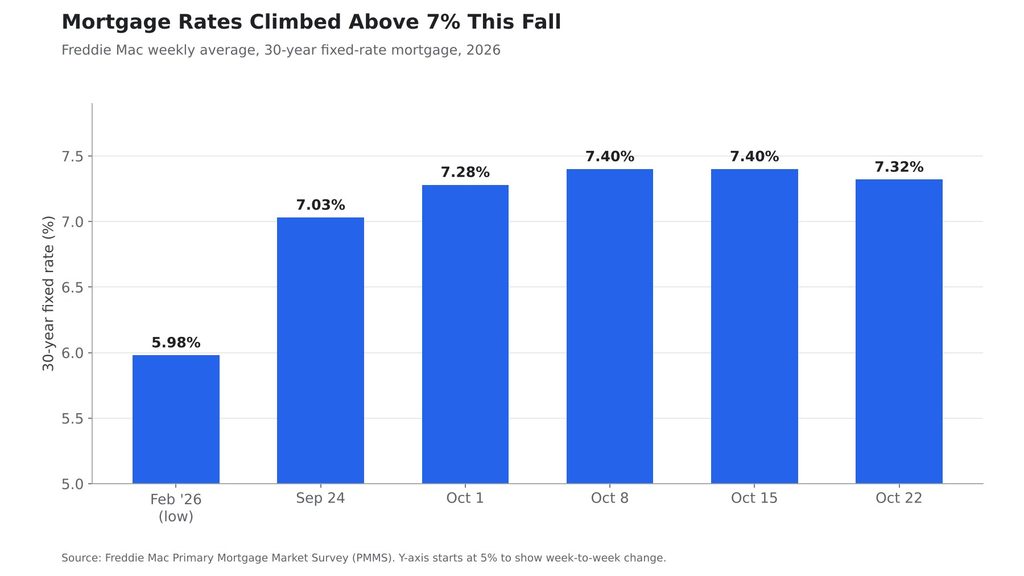
What to watch: If Warsh signals a December hike strongly, bond yields could rise and push mortgage rates back toward recent highs. If he sounds cautious, rates could drift lower. Homebuyers close to a deal may want to talk to a lender about locking a rate.
Credit cards and HELOCs
Most credit cards and home equity lines of credit carry variable rates tied to the prime rate, which moves with the Fed. Today’s hold means no immediate change. A December hike would likely add roughly 0.25 percentage point to card APRs within one or two billing cycles. Paying down variable-rate balances now is the most direct protection.
Auto loans
New auto loan rates are fixed but priced off market rates. Expect them to stay elevated through the year-end.
Savings accounts and CDs
The upside: high-yield savings accounts and CDs continue to pay some of the best returns in years. If you expect another hike, shorter-term CDs keep your options open.
What It Means for Voters and Trump’s Message
The timing puts the economy front and center in the midterm campaign. It is the backdrop for the tour we mapped in why Trump is rallying in red states.
President Donald Trump, who nominated Warsh to lead the Fed, has long pushed for lower interest rates. Instead, voters head to the polls with the Fed in tightening mode, inflation near 3.7%, and mortgage rates above 7%.
For the White House, a hold avoids the headline of a rate hike in the final week of the campaign. For critics, the September hike and the expected December increase are evidence that inflation has not been tamed. Both sides will likely use today’s decision to argue their case on affordability, and voters will judge it at the gas pump and the closing table. Rising power bills are part of that fight too, as in the Ohio Senate race where data centers and electricity costs are on the ballot.
Supporters of the administration argue that energy shocks from the Middle East, not domestic policy, are driving the latest price spike. Critics counter that tariffs and spending have kept inflation stubborn, a debate that includes the trade deals covered in what India got at the G20 trade talks in Milwaukee. Economists remain divided on how much each factor matters.
Markets, meanwhile, have often looked past political noise, a pattern we explained in the TACO trade. Whether they keep doing so against a hiking Fed is the open question.
What Happens Next
- Nov. 3: Midterm elections.
- Nov. 10: October CPI inflation report.
- Nov. 18: Minutes from this week’s FOMC meeting.
- Dec. 8–9: Final FOMC meeting of 2026, with updated economic projections and a widely expected rate hike.
The bottom line: The Fed hit pause, not stop. If inflation stays near 3.7%, borrowing costs are more likely to rise than fall before the end of the year.
For more coverage of the economy and the midterms, visit DonaldTrump.Coach.
Frequently Asked Questions
Did the Fed raise rates today?
No. On Oct. 28, 2026, the Fed held the federal funds rate at 3.75%–4.00% after raising it by a quarter point in September.
What did the Fed decide at the FOMC October meeting?
The FOMC voted to keep interest rates unchanged at its Oct. 27–28 meeting, its last decision before the Nov. 3 midterm elections, while keeping the door open to more hikes.
What is the current federal funds rate?
The target range is 3.75% to 4.00%, set at the Sept. 16, 2026 meeting.
Will mortgage rates go up after the Fed decision?
Not directly from today’s hold. Mortgage rates follow the 10-year Treasury yield. They could rise if the Fed signals a December hike or if inflation data comes in hot. The 30-year average was 7.32% as of Oct. 22.
Is a Fed rate hike coming in December?
Markets put the odds near 71%, and every economist in a recent Reuters poll expects a December hike. The Dec. 8–9 meeting will decide it.
Why did the Fed raise interest rates in 2026?
Inflation reaccelerated to 3.4%–3.7% this year, driven in part by higher energy prices. The Fed raised rates in September to bring inflation back toward its 2% goal.
Does the Fed consider elections when setting interest rates?
The Fed says it does not. It sets policy on economic data and its dual mandate of maximum employment and stable prices, regardless of the political calendar.
How do interest rates affect my credit card?
Most credit card APRs are variable and track the prime rate, which moves with the Fed’s benchmark. A hold means no change; a hike usually raises card rates within a billing cycle or two.
References & Sources
- Federal Reserve – FOMC Meeting Calendars and Statements
- Federal Reserve – FOMC Statement, Jan. 28, 2026
- CBS News – Federal Reserve to announce its latest interest rate today
- CNBC – Federal Reserve is likely to hold interest rates steady in October
- CNN – Fed set to hold rates steady in final move before midterms
- Yahoo Finance – Fed meeting live updates, October 2026
- KPMG – October 2026 Fed Primer: Fed paces itself
- FinanceFeeds – Reuters poll: 94 of 100 economists see a hold
- Freddie Mac PMMS via The Mortgage Reports – Mortgage rates, Oct. 23, 2026
- Trading Economics – US 30-Year Mortgage Rate
- Admiral Markets – FOMC Minutes October 2026
- CoinDesk – 3 things to watch at the Fed meeting
- PBS NewsHour – Fed chair Warsh press briefing