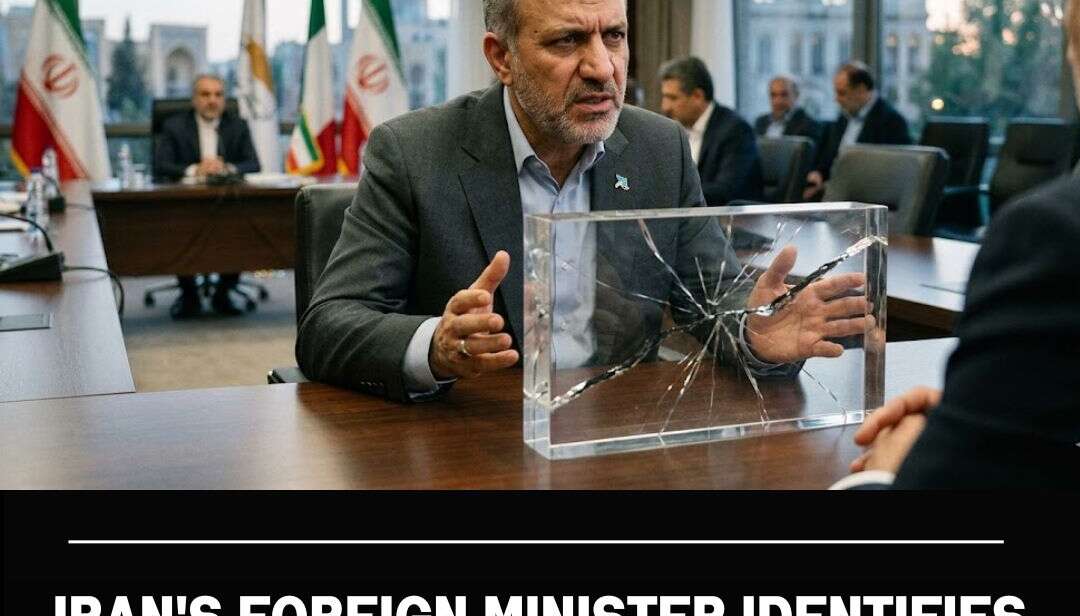
New Delhi / Tehran / Washington, May 15, 2026 — The ceasefire in the US-Iran War is technically alive. The diplomatic channel is technically open. And yet, standing before the world’s press at the BRICS Foreign Ministers’ Meeting in New Delhi, Iran’s Foreign Minister Abbas Araghchi reached for a word that no negotiating framework, no mediator’s shuttle, and no back-channel message can easily manufacture.
Trust.
“Contradictory messages from the US have made us reluctant about the real intentions of Americans,” Araghchi said. “We are in doubt about their seriousness.”
It was a diagnosis delivered with precision and a warning that the path from ceasefire to durable peace in the US negotiations with Tehran runs directly through a credibility deficit that decades of broken diplomacy have made nearly structural.
The Specific Wound: A History Written in Broken Promises
To understand why Iran’s Foreign Minister frames trust not nuclear physics, not sanctions arithmetic as the central obstacle, the timeline must be read in full.
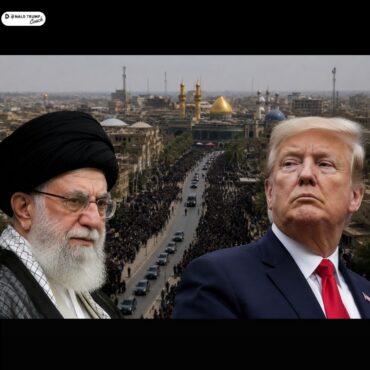
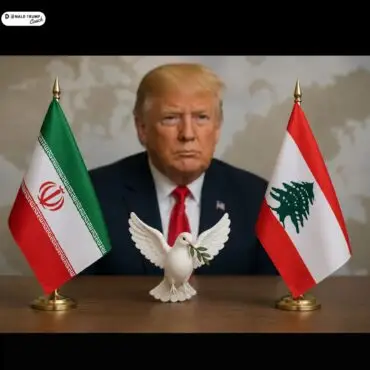
In 2015, Iran signed the JCPOA and complied with its terms. In 2018, Trump withdrew. The economic relief Iran was promised never fully materialised; Europe failed to insulate Iran from American secondary sanctions. In June 2025, as preliminary diplomatic contacts between Washington and Tehran were quietly underway, US and Israeli forces struck Iran’s nuclear facilities. In September 2025, France, Germany, and the United Kingdom invoked the JCPOA’s snapback mechanism, reimposing international sanctions. The ceasefire brokered by Pakistan on April 8, 2026 which Trump almost immediately clarified did not include Lebanon added another layer to a pattern Tehran knows intimately: agreements announced, commitments diluted, terms reinterpreted.
As the Carnegie Endowment’s obituary for the JCPOA documented, the deal did not die in a single moment. It was dismantled incrementally, by multiple actors, over years. That dismantling is what Araghchi is pointing to when he says Iran doubts US “seriousness” in the current US negotiations.
What the Islamabad Talks Revealed
The most direct test of the trust question came on April 11–12, 2026, at the Islamabad Talks the closest the two sides have come to a formal negotiating table since the US-Iran War began. Pakistan assembled a remarkable architecture: Prime Minister Shehbaz Sharif, Field Marshal Asim Munir, and Deputy PM Ishaq Dar as mediators; a 300-member US delegation led by Vice President JD Vance, Steve Witkoff, and Jared Kushner; a 70-member Iranian delegation led by Parliamentary Speaker Mohammad Bagher Ghalibaf and Araghchi himself.
Twenty-one hours of talks. Three rounds one indirect, two direct. No agreement.
TIME magazine’s investigation of why the talks collapsed cited a concern voiced by multiple former diplomats: that Kushner and Witkoff, despite their proximity to Trump, lacked the technical expertise and institutional knowledge that serious nuclear negotiations demand. Iran came with a sovereign government’s red lines and a foreign minister who has spent years inside the JCPOA architecture. The US came with dealmakers.
That mismatch of preparation, of institutional depth, of signalling discipline is precisely the kind of asymmetry that compounds distrust. Araghchi told reporters in New Delhi that Tehran had received messages from the Trump administration indicating openness to new talks. But messages are not commitments. Openness is not a framework.
The 14-Point Proposal and Trump’s “Totally Unacceptable”
Iran’s attempt to move beyond posturing came in early May, when Tehran submitted a 14-point peace proposal to Washington via Pakistani mediators. The plan, detailed by Al Jazeera, called for ending the US-Iran War within 30 days through a phased approach: a permanent ceasefire, guarantees against future attacks, withdrawal of US forces from positions surrounding Iran, release of frozen Iranian assets, comprehensive sanctions relief, war reparations, and a new mechanism for managing the Strait of Hormuz.
Trump’s response on May 11, posted on Truth Social, was three words of capital letters: “TOTALLY UNACCEPTABLE.”
The rejection came without detailed counter-proposals. Al Jazeera’s analysis observed that “every issue Iran raised touches a point the US refuses to yield on” nuclear capability, the Hormuz blockade, sanctions sequencing. Araghchi, in Delhi, described the US proposal as “garbage.” The ceasefire, already described by Trump as on “massive life support,” absorbed another blow.
Meanwhile, Axios reported that Rubio and Witkoff met Qatar’s Prime Minister in Miami on May 9 to advance the diplomacy a signal that back-channel pressure continues even as the public exchange hardens. The Times of Israel noted that Iranian intelligence operatives have separately signalled openness to CIA-level contacts to end the war a quiet track that suggests Tehran’s distrust of Trump’s negotiating team does not preclude institutional engagement at a different level.
The Architecture of Distrust and Whether It Can Be Dismantled
The Washington Post’s analysis of Araghchi’s Delhi statement framed the core paradox: “Iran’s top diplomat says a lack of trust is impeding talks to end war with the US.” But trust is not a deliverable. It cannot be written into a clause or verified by inspectors. It is built through consistency and the US negotiations with Iran have been defined, across multiple administrations, by exactly the opposite.
Vance warned Tehran not to “play” the US before departing for the Islamabad Talks. Tehran watched the ceasefire exclude Lebanon within hours of being announced. Iran’s Foreign Minister is now telling the world, in New Delhi, at the BRICS table, in front of the cameras: we have heard this before.
The Council on Foreign Relations analysis of Pakistan’s mediation role noted that Islamabad achieved “rare credibility” with both sides precisely because it had not broken promises to either. That credibility is what makes Pakistan’s continued role indispensable. It is also, implicitly, the most precise measure of how little of that credibility Washington currently holds in Tehran.
Araghchi said Iran remains “committed to the path of diplomacy.” He also said Iran is in doubt about US seriousness. Both things are true simultaneously. That is what a trust deficit looks like in practice not a closed door, but a door that opens only partway, and only slowly, and only when the other side can prove, across time, that this occasion will be different from every occasion before it.