Thousands of US troops on high alert, Kharg Island seizure plans on the table, Iran threatening to shut the entire Gulf — and a framework deal that Axios says is now within reach. The next five days decide everything. On Wednesday morning, Donald Trump told the world the Iran war was “very close to over.”
Thousands of US troops on high alert, Kharg Island seizure plans on the table, Iran threatening to shut the entire Gulf — and a framework deal that Axios says is now within reach. The next five days decide everything.
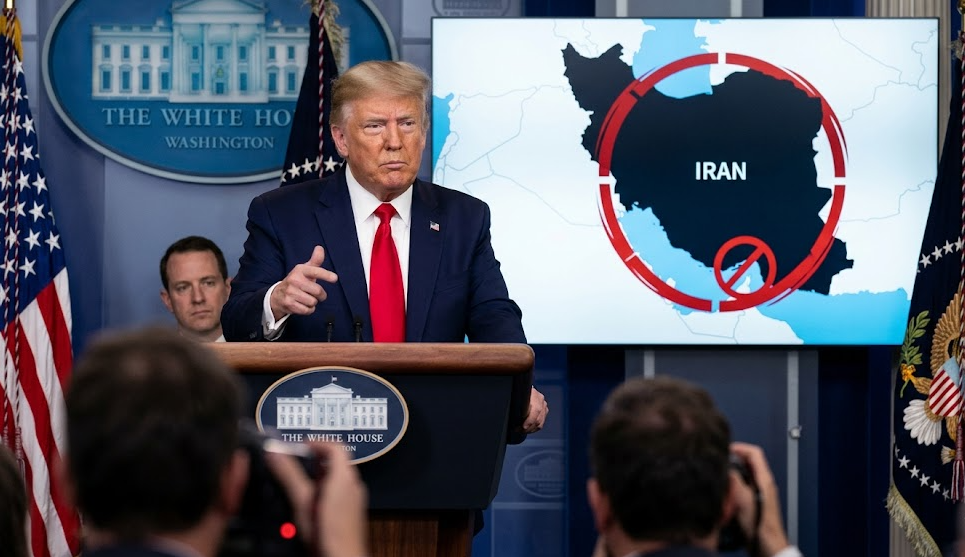
On Wednesday morning, Donald Trump told the world the Iran war was “very close to over.” At the same moment, thousands of American service members in the Middle East were being placed on high alert for a potential new round of combat. Both statements were simultaneously true — and that tension captures precisely where this conflict stands as it enters its most consequential week.
The US naval blockade of Iranian ports, now in its third day, has become the fulcrum on which the entire conflict balances. It is Trump’s most powerful remaining pressure tool. It is also, in the wrong sequence of events over the next five days, the most likely trigger for an escalation that neither side has said it wants but neither has fully ruled out.
The ceasefire expires April 21. Five days. The blockade is either the move that breaks the diplomatic deadlock — or the move that breaks the ceasefire itself.
What the Blockade Has Already Achieved
US Central Command reported Wednesday that the blockade had been “completely” implemented, cutting off Iranian international sea trade. Six merchant vessels were directed to turn around on the first day of operations. The economic vice is tightening: Iran’s oil revenues — estimated at $30 billion annually before the war — are being squeezed toward zero. Iranian inflation, already running at 44 percent, will climb further as import supply chains constrict.
Chairman of the Joint Chiefs of Staff Dan Caine delivered a pointed signal from the Pentagon: “Let us be clear — a ceasefire is a pause, and the joint force remains ready, if ordered or called upon, to resume combat operations with the same speed and precision.” That is not ambient military language. It is a deliberate message to Tehran that the blockade’s naval posture is not the ceiling of American military options.
The Escalation Scenarios No One Wants to Name
Behind closed doors, the Trump administration has been war-gaming options that go well beyond a naval cordon. TIME Magazine reported this week that thousands of US forces across the region are on high alert as the blockade raises “the specter of a new round of combat.”
Axios reported that Trump has discussed — and not dismissed — a ground operation to seize Kharg Island, the strategic Persian Gulf hub that handles approximately 90 percent of Iran’s oil exports. Iranian intelligence apparently tracked the planning: CNN reported that Tehran has been laying traps and reinforcing military defenses on Kharg in anticipation of exactly such a move.
Trump also reportedly requested an audacious contingency plan for an aerial assault deep inside Iran to excavate buried enriched uranium from under bombed rubble and airlift it out of the country — a plan military planners described as extraordinary in its ambition and operational risk.
Iran’s counter-threats are equally severe. The IRGC warned it would not merely defend the strait — it would block all marine traffic in the Persian Gulf, the Sea of Oman, and the Red Sea if the blockade continues. More starkly, the IRGC stated it would “act against American infrastructure and its partners in a way that will deprive Americans and its allies of regional oil and gas for years” — and that “all such precautions have been removed” from its retaliatory targeting decisions.
The IEA has already called this the worst energy shock in living memory. A full IRGC retaliation against Gulf infrastructure would be categorically worse.
The Diplomatic Track Running in Parallel
And yet — against this backdrop of escalating military posture — the diplomatic signals on Wednesday were unmistakably positive.
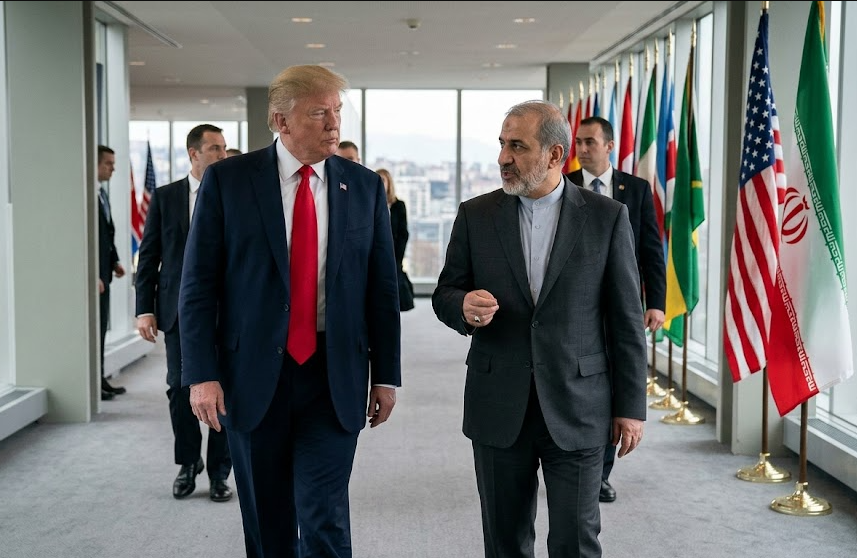
Axios reported that US and Iranian negotiators had made concrete progress toward a framework agreement to end the war, with two US officials confirming movement since the failed Islamabad talks. The White House told reporters it “feels good about prospects of a deal.” Pakistan’s Army Commander Field Marshal Asim Munir — the key intermediary who brokered the original ceasefire — arrived personally in Tehran on Wednesday and met with Iranian Foreign Minister Araghchi, a significant escalation of diplomatic engagement.
CNBC reported that a second round of direct in-person talks is likely to take place “in the coming days” before the ceasefire expires — with Pakistan once again the probable venue. The White House stated it had not formally requested a ceasefire extension, but confirmed that if a framework agreement were reached, an extension would be necessary to negotiate the comprehensive deal.
The in-principle architecture of that framework, per multiple sources: a time-limited enrichment moratorium of sufficient length that both sides can claim a win, phased sanctions relief tied to compliance benchmarks, and an immediate Hormuz reopening that ends both the Iranian toll regime and the US naval cordon simultaneously.
The Five-Day Window
Fortune’s analysis put the current moment in its starkest form: Trump says the war is “very close to over” despite “no deal, a live blockade, and threats mounting.” Stock market futures moved upward on his comments — a reminder that financial markets are pricing in resolution, not escalation.
That market signal matters. The blockade is also punishing American consumers through oil prices near $105 per barrel. Trump’s political coalition can absorb economic pain caused by foreign adversaries, but not economic pain caused by a self-imposed naval siege with no visible exit ramp.
The blockade was designed to be a pressure tool, not a permanent posture. Its logic only works if it produces a deal. Every day it runs without a deal, the list of things that can go wrong — an IRGC vessel testing the cordon, a Chinese tanker incident, an Iranian mine — grows longer.
Field Marshal Munir is in Tehran. The White House says it feels good. Trump says it’s almost over. The joint force is on high alert. All of these things are true at the same time.
Five days.
Market Analysis
A quick snapshot of market trends, customer behavior, and competitor movements.