Two countries blocking each other’s exports, oil near $105 a barrel, Iran’s inflation at 44% and climbing — and a ceasefire that expires in six days. The economic stakes have never been higher. When Iran’s Parliament Speaker Mohammad Bagher Ghalibaf taunted Donald Trump on social media Sunday — “Enjoy the current pump figures. With the
Two countries blocking each other’s exports, oil near $105 a barrel, Iran’s inflation at 44% and climbing — and a ceasefire that expires in six days. The economic stakes have never been higher.
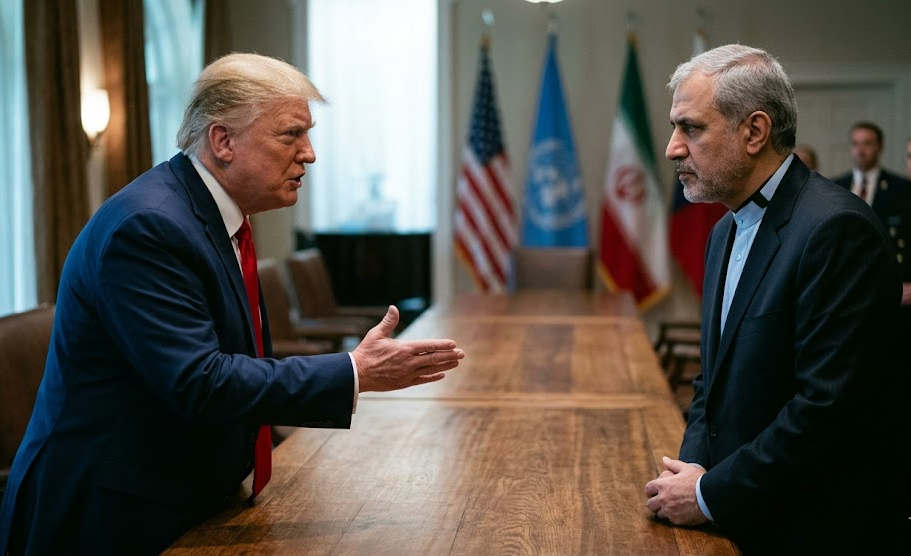
When Iran’s Parliament Speaker Mohammad Bagher Ghalibaf taunted Donald Trump on social media Sunday — “Enjoy the current pump figures. With the so-called ‘blockade,’ soon you’ll be nostalgic for $4–$5 gas” — it was not empty rhetoric. It was a negotiating position dressed as a taunt. And it contained a kernel of economic truth that both sides are now betting their futures on.
The US-Iran conflict has entered a new and distinctly dangerous phase — not primarily a military one, but an economic one. Both countries are now actively blockading each other’s ability to export oil. The global economy is absorbing the collateral damage. And the central question animating every diplomatic channel from Islamabad to Geneva is simple: who runs out of economic runway first?
Two Blockades, One Strait
The architecture of the current standoff is almost symmetrical in its mutual destructiveness. Iran closed the Strait of Hormuz to most commercial shipping weeks ago, collecting toll payments from vessels it permitted to pass — earning an estimated $5 billion in oil export revenue in the preceding month despite the war. The United States responded by launching a full naval blockade of all Iranian ports on April 14, intercepting vessels of any flag attempting to enter or exit Iranian waters.
The result is two overlapping economic sieges operating in the same body of water. NPR’s headline captured the absurdity precisely: “U.S. and Iran block oil exports as rest of the world takes the economic hit.”
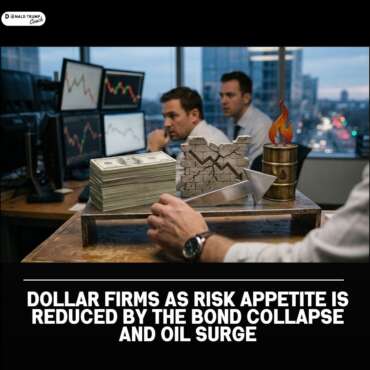
Brent crude has surged to $102–$104 a barrel — up more than 40 percent since the conflict began. Fatih Birol, Executive Director of the International Energy Agency, delivered an assessment that stopped markets cold: this is “the worst energy shock the world has ever seen — more severe than the oil crises of the 1970s and the Ukraine war combined.” Twenty percent of the world’s oil and natural gas normally transits the Strait of Hormuz. Right now, almost none of it is moving normally.
Iran’s Economy Is Already Crumbling
On paper, Iran appears to be the more economically fragile party in this standoff — and the numbers support that read.
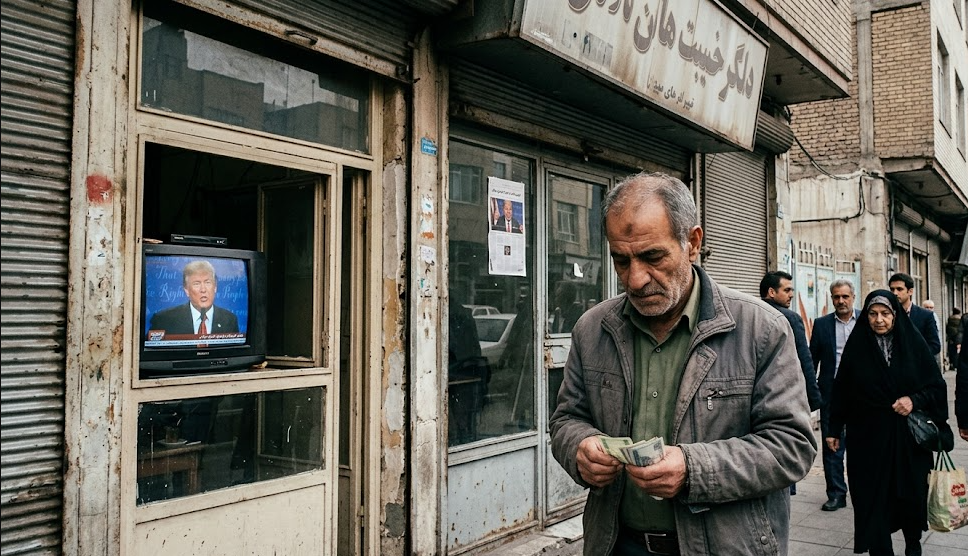
Prices inside Iran have risen approximately 40 percent since the war began six weeks ago. Annual inflation is running at 44–45 percent. The Iranian rial, already devastated by years of sanctions, has fallen from roughly 42,000 to over 1.1 million per US dollar, gutting the purchasing power of ordinary Iranians. The government’s own budget proposed only a 20 percent salary increase for public employees — less than half the inflation rate — leaving a regime already struggling to make government payroll.
Fortune’s financial analysts were unsparing: Iran’s crumbling economy is the regime’s “greatest weakness” — and the naval blockade, if sustained, threatens to trigger a “currency devaluation spiral and hyperinflation” that could end the war more quickly than any military action. Oil exports worth at least $30 billion annually have now been choked off by the blockade. For a government with no functioning access to international capital markets, that is not an abstraction. It is an existential fiscal crisis.
China: Iran’s Escape Hatch — and America’s Problem
There is, however, a variable that complicates the simple “squeeze Iran until it breaks” calculus: China.
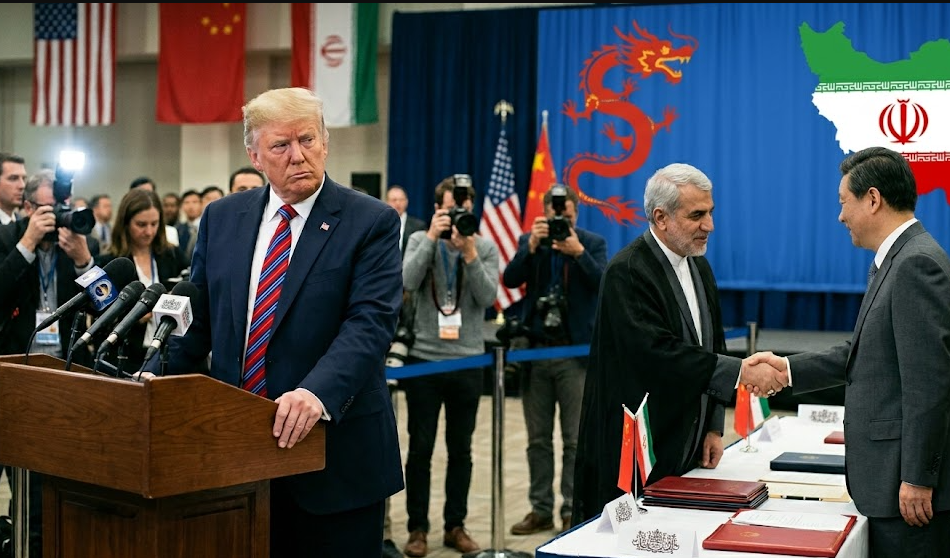
Before the war began, Beijing was purchasing 95 percent of all Iranian crude — routed through a network of sanctioned tankers, shadow traders, and opaque financial channels that largely bypassed Western enforcement. On the first full day of the US blockade, a sanctioned Chinese-owned tanker — the Rich Starry — became one of the first vessels to exit the Gulf despite the naval cordon. Beijing officially called the blockade “dangerous and irresponsible” and signaled it would not instruct its operators to comply.
Bloomberg’s analysis put the subtext plainly: “The Hormuz Blockade Is as Much About China as Iran.” If Beijing continues routing its shadow fleet through the blockade, Iran retains a partial economic lifeline — and the blockade’s leverage diminishes proportionally. China also has a railway alternative through Central Asia — Kazakhstan, Uzbekistan, Turkmenistan — that provides a land-based corridor for Iranian goods, partially insulating Tehran from a sea-lane shutdown.
The Council on Foreign Relations warned in a piece titled “Coercing Iran: Why Trump’s Hormuz Blockade Has a Short Fuse” that the window for economic pressure to produce results is narrow. Iran can endure a great deal of economic pain before political collapse. The US blockade, meanwhile, is pushing oil prices toward levels that damage the American consumer — an irony the administration has not yet found a clean answer for.
Who Blinks First?
The economic game of chicken has a clock attached to it: the ceasefire expires April 21. Six days. Trump has signaled talks could resume within 48 hours. Iran has rejected the US nuclear proposal but not the framework of negotiation. Pakistan is holding the phone lines open.
The economic pressure is real on both sides. Iran’s inflation is regime-threatening. American gas prices are climbing toward levels that historically damage incumbent presidents. The IEA is calling it the worst energy shock in living memory. Neither side can sustain this indefinitely.
The Washington Post framed the deeper strategic paradox: “China and Iran weaponized the global economy to beat the US at its own game.” The sanctions architecture the United States spent decades building was designed to pressure Iran into compliance. What no one fully modeled was the scenario in which Iran absorbed the pain long enough for China to route around it — leaving the world’s most powerful navy blockading a strait while global oil prices punished everyone, including the country running the blockade.
The next six days will determine whether one side swerves. Or whether neither does.
Market Analysis
A quick snapshot of market trends, customer behavior, and competitor movements.