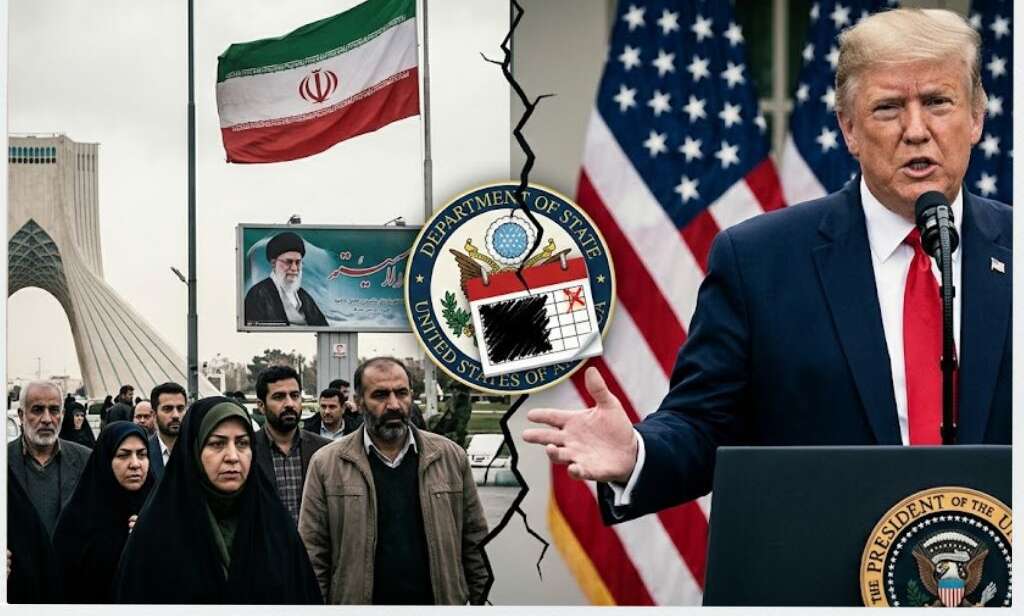
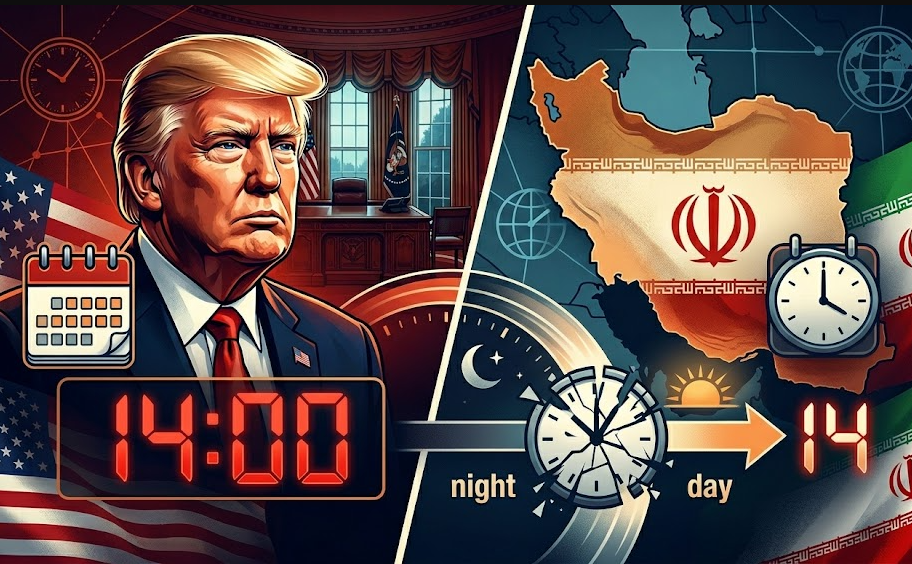
Thirty-eight days of war. 1,497 dead. Oil at $144. The Strait of Hormuz closed for the first time in history. Then one Truth Social post — and it was gone. Not resolved. Not won. Just paused. And the clock is already running on the most consequential 14 days in modern Middle East history. ISLAMABAD /
Thirty-eight days of war. 1,497 dead. Oil at $144. The Strait of Hormuz closed for the first time in history. Then one Truth Social post — and it was gone. Not resolved. Not won. Just paused. And the clock is already running on the most consequential 14 days in modern Middle East history.
ISLAMABAD / WASHINGTON / TEHRAN — April 9, 2026
Thirty-eight days. That is how long the world burned before the ceasefire. Thirty-eight days that killed 1,497 people, closed the most critical oil chokepoint on earth, sent crude to a physical peak of $144.42 per barrel, triggered the largest global energy supply disruption in recorded history, and pushed the world economy to the edge of a recession that the IMF had already begun quietly modeling.
On the night of April 7, one Truth Social post paused all of it. Not ended. Not resolved. Paused. And the pause expires in 14 days.
What 38 Days Actually Cost
To understand the weight of what those 14 days must carry, you have to account for what the 38 days produced.
It began February 28, 2026 at 9:45 a.m. when US and Israeli forces launched nearly 900 strikes in 12 hours — the largest single-day military operation in the Middle East since the 2003 Iraq invasion. Supreme Leader Ali Khamenei was killed. Six senior Iranian security commanders were eliminated. Iran’s nuclear facilities at Natanz, Fordow, and Isfahan were heavily damaged. Iran’s air defense architecture was systematically dismantled.
Iran responded the only way it had left: it closed the Strait of Hormuz — 21 miles of water carrying 20 million barrels of oil per day, 20% of the world’s entire petroleum supply. The first enforced closure in modern history. Oil surged from $73 per barrel to a Dated Brent physical peak of $144.42. A 97% war premium built in five weeks. The Dallas Federal Reserve called it “the greatest global energy security challenge in history.”
By the time Pakistan brokered the April 7 ceasefire, the economic damage was already structural. Shipping insurance premiums in the Gulf had risen by an estimated 300%. Eight hundred vessels were stranded in the region. Asian economies — which source 84% of all Hormuz crude exports — were facing supply shocks their central banks had no playbook for. Iran’s own economy, already running at 43% inflation with a rial above 1 million to the dollar, was in freefall.
Thirty-eight days did all of that. The ceasefire paused it. It did not undo it.
What 14 Days Must Deliver
The talks formally opened April 10 in Islamabad. The US delegation — VP JD Vance, Special Envoy Steve Witkoff, Jared Kushner — arrived facing a negotiating gap that killed six prior rounds of talks in 2025 and has never been bridged.
Iran’s 10-point framework demands the complete lifting of all US, UN, and IAEA sanctions, the return of all frozen Iranian assets, full compensation for war damages, and — critically — the right to domestic uranium enrichment. Tehran entered these talks having already enriched uranium to 60% purity with a stockpile of 460 kilograms — enough for approximately 11 nuclear devices according to Witkoff himself.
The US 15-point counter-proposal demands Iran dismantle its enrichment facilities at Natanz, Fordow, and Isfahan entirely, transfer all highly enriched uranium to a third country, end support for Hezbollah and the Houthis, and accept strict IAEA verification with no guaranteed timeline for sanctions relief.
These are not positions that are close. They are positions that are structurally incompatible on their central axis. Iran will not voluntarily dismantle the nuclear program it spent decades building and 38 days of war defending. The US will not sign a deal that leaves enrichment capacity intact. Every diplomat in Islamabad knows this. And they have 14 days to find a formula that papers over the contradiction well enough to hold.
The Cracks Are Already Showing
The ceasefire is not even 48 hours old and the violations are already being counted.
Israel launched “Operation Eternal Darkness” on Lebanon within hours of the announcement — 100 airstrikes in ten minutes. Lebanon was explicitly excluded from ceasefire terms. Iran called it a US breach. The IRGC reportedly halted Hormuz shipping again on April 8. Iran’s Lavan Island oil refinery was struck. By April 9 — one day after the historic oil crash and global stock rally — CNBC’s headline read: “Oil prices resume gains after Iran accuses US of breaching ceasefire deal.”
Physical oil markets, which price barrels rather than announcements, never fell below $120. Futures crashed on hope. Reality held at $120.
Ed Yardeni of Yardeni Research warned “financial markets will remain sensitive to any breakdown.” BCA Research’s Matt Gertken predicted fighting would “ignite later this year, if not later this month.” VP Vance called it a “fragile truce.” Secretary of State Rubio went further: “I’m not sure you can reach a deal with these guys.”
The Mathematics of the Moment
The arithmetic of these 14 days is brutal. – Thirty-eight days of war produced casualties, infrastructure destruction, economic collapse, and a geopolitical rupture that will take years to fully map. Fourteen days of diplomacy in Islamabad must produce an agreement that resolves nuclear enrichment rights, sanctions architecture, proxy group disarmament, ballistic missile programs, war compensation, and a verification framework — issues that four US administrations and twelve years of negotiations have never fully resolved.
If the talks collapse on April 23 — if no extension is agreed, no framework is signed, no credible path forward is established — the ceasefire expires and the legal and political basis for resumed conflict returns. Oil spikes. The strait closes. The 38 days begin again.
If the talks hold — even imperfectly, even with ambiguous language and deferred hard decisions — the pause becomes a process. The process becomes, over time, a new equilibrium in the Persian Gulf. Thirty-eight days erased in one night. Fourteen days left to decide whether they come back.
Market Analysis
A quick snapshot of market trends, customer behavior, and competitor movements.