Share This Article
The US-Iran Agreement may have ended the fighting. But the bill for Operation Epic Fury is only now becoming clear and it is staggering.
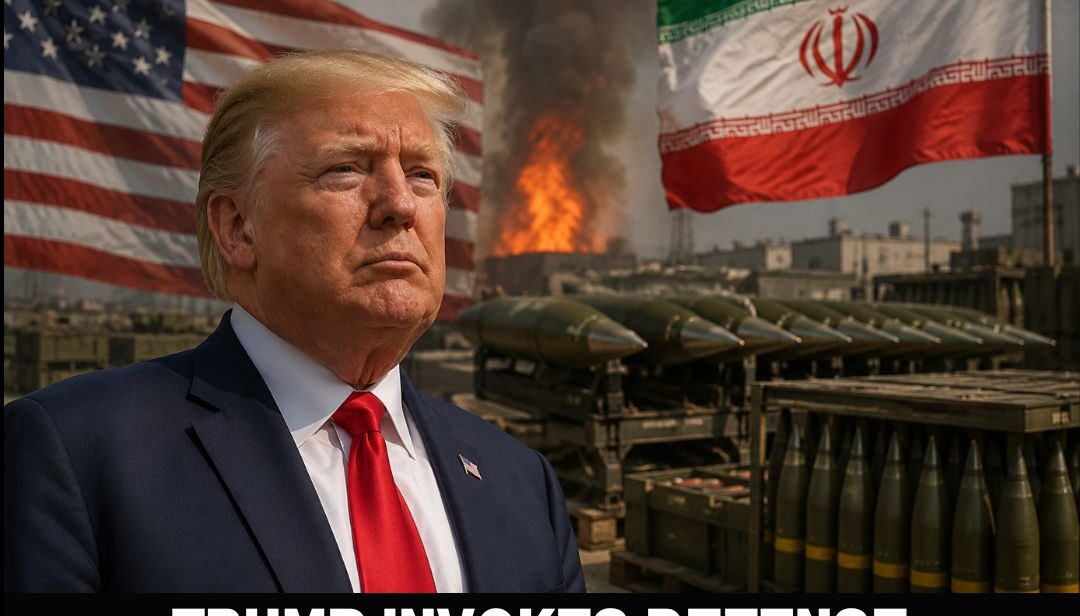
On June 11, 2026, President Trump signed a presidential memo invoking the Defense Production Act (DPA), directing Defense Secretary Pete Hegseth to establish emergency voluntary production agreements with America’s top defence contractors. The stated reason, written directly into the memo, was damning: “systemic constraints in the munitions industrial base, including limited production capacity, fragile supply chains, long-lead dependencies, and related production bottlenecks” that “may impair the ability of the United States to produce, sustain, and expand the availability of munitions, missiles, and equipment required for the national defense.”
Three days later, Hegseth told CBS News there was “not a crisis with US weapons stockpiles.” The contradiction between the signed order and the public messaging captured Washington’s attention and underscored just how politically sensitive the post-war stockpile reckoning has become.
What the Iran War Actually Consumed
The numbers compiled by the Center for Strategic and International Studies (CSIS) tell the story with brutal clarity.
Operation Epic Fury began on February 28, 2026, with nearly 900 strikes in the first 12 hours targeting Iranian air defences, missile sites, military infrastructure, and ultimately Supreme Leader Khamenei himself. In the first 72 hours, over 1,700 targets were struck. By Day 10, the total exceeded 5,000 targets across Iran. In the first 100 hours alone, the US expended over 2,000 munitions.
The Patriot interceptor burn rate was the most alarming single data point of the war. In just the first four days, as Iran retaliated with more than 500 ballistic missiles and 2,000 drones, the US fired 943 Patriot PAC-3 interceptors — equivalent to 18 months of combined Lockheed Martin and Boeing factory production, consumed in 96 hours.
By the time the US-Iran ceasefire was reached, CSIS estimated that approximately 50% of the US Patriot PAC-3 interceptor stockpile had been expended, alongside roughly 50% of THAAD interceptors (approximately 290 fired), 30% of Tomahawk cruise missiles (over 1,000 of a pre-war inventory of approximately 3,100), and more than 45% of Precision Strike Missiles — the most heavily depleted next-generation system in the arsenal.
Replacing those inventories will not be quick. CSIS estimates Patriot replenishment will wrap up in mid-2029. THAAD: end of 2029. Tomahawk production was running below 200 per year before the war. Raytheon is now targeting 1,000 per year — but even at that pace, the math takes years to close.
The GBU-57 and the Nuclear Sites
Among the war’s most consequential weapons expenditures were the 14 GBU-57 Massive Ordnance Penetrator bunker-buster bombs dropped by seven B-2 Spirit stealth bombers on Iran’s hardened nuclear facilities 12 on Fordow and 2 on Natanz in the opening strikes of the campaign. Additional MOPs were used against the Taleghan 2 facility at Parchin.
The GBU-57 is produced in very small quantities and only the B-2 can carry it. The Air Force has now begun rebuilding those stocks. STRATCOM commander testified before the Senate Armed Services Committee in March 2026 that “Operations Midnight Hammer and Epic Fury eliminated the threat of a nuclear-armed Iran permanently” though arms control analysts at the Arms Control Association published dissenting analysis warning that outcome remains fragile pending the nuclear talks embedded in the US-Iran Agreement.
The US nuclear stockpile itself was never at risk STRATCOM maintained full strategic deterrence posture throughout the conflict — but the conventional munitions crisis created what multiple analysts have described as a “window of vulnerability” for a potential Western Pacific contingency, particularly over Taiwan, that will persist until at least 2029.
Industry Racing to Respond
Trump convened CEOs of Boeing, Lockheed Martin, Northrop Grumman, Raytheon, and Honeywell in March 2026 with a goal to quadruple production of “exquisite class” weaponry. Several factories had already begun expansions before that meeting.
The contract awards followed quickly. Lockheed Martin received a $4.76 billion award in April 2026 for PAC-3 Missile Segment Enhancement production. Raytheon secured a $905 million contract for LTAMDS the Patriot radar replacement on April 16. The DPA invocation now enables these competitors to coordinate production planning without antitrust liability, pooling subcontractors and raw material sourcing.
The total war cost through May 2026 stood at $29 billion, of which approximately $24 billion is attributed to munitions expenditure, repair, and replacement. The Pentagon’s FY2027 budget request seeks a 387% increase in munitions procurement $22 billion versus $4.5 billion enacted in FY2026 — with an $80 to $100 billion supplemental request in preparation.
Congress, Ukraine, and the Cascading Consequences
Senate Armed Services Committee Chairman Roger Wicker (R-MS) has been the most prominent congressional voice on the stockpile crisis, stating at a March 2026 hearing that “our defense industrial base has struggled to keep pace.” A bipartisan group of senators Rosen, Ernst, Lankford, and Booker introduced legislation on June 4 to mandate a Middle East Air and Missile Defence Acquisition Strategy to prevent future stockpile shocks.
The Strait of Hormuz crisis created cascading effects for Ukraine as well. The State Department warned allies that Patriot deliveries to Kyiv “may face disruptions” as the Pentagon prioritised the Middle East a diversion that Ukraine warned about publicly and that Russia appeared to exploit in its June 15 mass attack of 681 missiles and drones on Ukrainian cities.
In a darkly ironic turn, Ukrainian officials watching the US scramble for interceptors began offering deals for US-Ukraine co-production of drones and drone interceptors, positioning Kyiv as a potential supplier rather than purely a recipient.
The DPA was invoked for PPE during COVID, for semiconductor production under the CHIPS Act, and for Ukraine aid in 2022. Its 2026 invocation is the first primarily driven by conventional missile stockpile depletion at this scale since the Korean War a measure of both how hard Operation Epic Fury hit, and how long the road back will be.

Oil & Energy Markets
A look at crude price swings, OPEC supply moves, and how energy markets react to geopolitical shocks.

Geopolitics & Conflict
Breaking down how wars, ceasefires, and diplomatic deals ripple through global trade and security.
US Foreign Policy
Coverage of Trump administration negotiations, sanctions, and strategic decisions shaping world events.
Economy & Inflation
Tracking how commodity prices, gas costs, and supply chains affect everyday consumers.