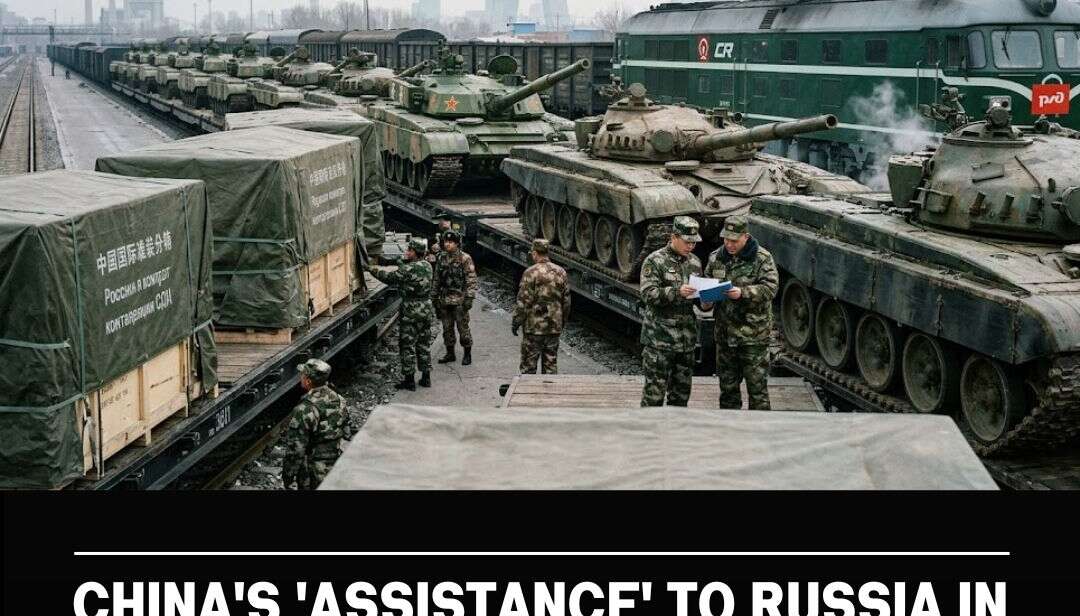
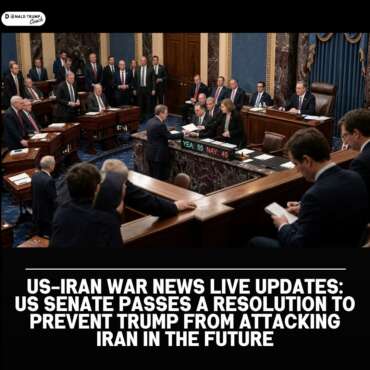
Days before Russian President Vladimir Putin arrived in Beijing for a two-day state visit with President Xi Jinping, a cascade of intelligence disclosures, European sanctions filings, and investigative reports laid bare the most detailed picture yet of how China has quietly sustained Russia and Ukraine war machine — even while presenting itself to Washington as a neutral peace broker navigating the US-Iran war and anchoring a fragile US tariff ceasefire.
The timing was diplomatically combustible. The Putin-Xi meeting — commemorating the 25th anniversary of the Treaty of Good-Neighborliness and signing over 40 new cooperation agreements — unfolded against a backdrop of growing Western fury at exactly the kind of partnership those agreements formalize.
The Training Camps That Were Never Supposed to Be Known
The most explosive disclosure: Chinese armed forces secretly trained approximately 200 Russian military personnel in late 2025 across multiple PLA facilities, including the Ground Forces Army Infantry Academy in Shijiazhuang, military sites in Beijing and Nanjing, and the PLA Training Centre for Military Aviation in Yibin.
A dual-language Russian-Chinese military cooperation agreement — signed by senior officers in Beijing on July 2, 2025 — formally outlined the training program. Course reports from December 2025, confirmed by three European intelligence agencies, documented combined arms training for 50 Russian personnel involving 82mm mortars and UAV operations, electronic warfare instruction, and first-person-view drone flight simulator sessions. The trained personnel, according to Ukrainian Foreign Intelligence, have since returned to the front lines in Ukraine.
Ukrainian Foreign Intelligence Agency official Oleh Alexandrov stated China was also providing Russia with satellite reconnaissance imagery to improve missile targeting accuracy against Ukrainian assets — an allegation corroborated by reports of Chinese reconnaissance activity over western Ukrainian locations subsequently struck by Russian forces.
For the full breakdown of the covert training program, see the Detroit News investigation into Chinese military personnel training Russians for Ukraine combat.
The Supply Chain No One Can Ignore
Beyond training, the technology pipeline tells its own story. Over 90% of Russia’s imports of sanctioned technology used in weapons production now flow through China — up from 80% in 2025. Chinese drone component exports have surged since the summer of 2025, and 80% of critical electronic components inside Russian drones are now of Chinese origin.
Specific manufacturers have been named. Components from Yangzhou Yangjie Electronic Technology were identified inside Russian weapons guidance systems and Kinzhal hypersonic warheads. Russia imported over $100 million worth of drones from China this year — 30 times more than Ukraine received from the same supplier base. Chinese chemicals, gunpowder, and electronics have been traced to 20 identified Russian military-industrial manufacturing facilities.
The European Union’s 20th sanctions package against Russia, released in April 2026, named Chinese entities directly for providing dual-use goods and weapons systems to Russia’s military-industrial complex. The US Senate’s bipartisan “STOP China and Russia Act of 2025” has sought to force the Trump administration to impose economic penalties on Beijing — though the administration, consumed by the US-Iran war and the US tariff ceasefire negotiations with Beijing, has moved cautiously on enforcement.
The Putin-Xi Meeting: Partnership at Its “Highest Level”
Against this backdrop, the Putin-Xi meeting in Beijing on May 19–20 proceeded with choreographed confidence. Xi declared that China-Russia ties had reached “the highest level in history.” Putin, on his 25th visit to China, stood beside Xi at the Great Hall of the People as both leaders signed the treaty extension and issued joint statements targeting Washington — including coordinated criticism of Trump’s planned $175 billion “Golden Dome” missile defense expansion in the Midwest.
Energy was framed as the “driving force of economic cooperation,” with Russia supplying China discounted hydrocarbons that Beijing’s sanctions-restricted economy increasingly depends on. The optics were unmistakable: two leaders under Western pressure, drawing closer rather than apart.
The meeting arrived just days after Trump’s own Beijing summit with Xi — a juxtaposition that underscored China’s studied ambiguity. Xi received Trump with trade deals and Boeing orders, then received Putin with treaty renewals and joint declarations. In the language of Chinese diplomacy, this is multi-polarity in practice — and it infuriates Washington precisely because it cannot be easily countered.
A Triangle That Complicates Everything
The China-Russia and Ukraine relationship cannot be read in isolation from Tehran. In January 2026, Iran, China, and Russia formally signed a comprehensive strategic pact. Russian satellite data on US naval positions was reportedly shared with Iran during Operation Epic Fury. US intelligence in April 2026 indicated China was preparing man-portable air-defense system shipments to Iran via third-country routes — prompting Trump to warn publicly that China would face “big problems” if the transfers proceeded.
This triangle — China enabling Russia in Ukraine, Russia sharing intelligence with Iran, and China providing Iran with missile components — represents the most complex multilateral challenge the US-Iran war has generated. Washington is simultaneously negotiating a US tariff ceasefire extension with Beijing, pressuring China to restrain Moscow and Tehran, and watching Xi host Putin days after their own summit.
Pentagon analysis, delivered in its 2025 Annual Report to Congress, assessed that Beijing and Moscow have “deepened their strategic relationship, almost certainly driven by shared interest in countering the United States” — while stopping short of a formal defense alliance. The distinction, for the countries on the receiving end of that relationship, is increasingly difficult to feel.