Share This Article
From Liberation Day to SCOTUS reversals, the most volatile trade policy in American history has paralyzed investment, shattered supply chains, and left CFOs unable to plan a quarter ahead.
When the White House announced sweeping new tariffs on April 2, 2025 a date the administration branded “Liberation Day” American businesses braced for disruption. What they didn’t anticipate was that the disruption would come not just from the tariffs themselves, but from an endless cycle of announcements, reversals, exemptions, extensions, and legal challenges that has made coherent business planning nearly impossible for more than a year.
The numbers tell the story. According to the Tax Foundation, the average effective U.S. tariff rate surged from 2.5% before Trump’s second term to 47% at peak the highest level in over a century. More than 330,000 businesses have been subject to new import duties. An estimated $166 billion in tariff revenue has been collected, with that entire sum now potentially subject to refund following a landmark Supreme Court ruling. And through it all, corporate strategists have had to operate in what economists are calling a state of “permanent impermanence.”
Liberation Day and the Immediate Reversal
Executive Order 14257, signed on April 2, 2025, imposed sweeping reciprocal tariffs on virtually all U.S. trading partners. Markets responded with immediate panic. The S&P 500 shed hundreds of billions in value within days. Just seven days later on April 9 the White House announced a 90-day pause on most of the tariffs, citing the need for negotiations.
Wall Street traders, already exhausted by months of policy whiplash, gave the dynamic a name: TACO, short for “Trump Always Chickens Out.” The acronym spread quickly through trading desks as a shorthand for the emerging pattern aggressive tariff threats followed by rapid retreat when markets pushed back hard enough.
The 90-day pause was extended to August 1. Then came deal announcements: trade frameworks with the UK, Vietnam, the Philippines, Indonesia, Japan, South Korea, the EU, and a partial China truce. Each produced fresh uncertainty, as businesses tried to determine which products were covered, which exemptions applied, and whether the terms would survive the next news cycle.
The Business Cost of Uncertainty
The economic damage has not come only from the tariffs themselves it has come from the inability to plan around them.
A Penn Wharton Budget Model analysis found that business investment fell 4.4% directly attributable to tariff uncertainty. An American Manufacturers survey found that 88% of U.S. manufacturing firms cited tariffs as a significant concern not just the rates, but the unpredictability of the rates. General Motors reported a $3.1 billion loss in 2025 linked directly to trade policy disruption. Supply chain layoffs doubled compared to the prior year, as companies restructured logistics around a moving target.
The US isn’t just leaning on the Gulf for backup, Trump’s turned the Quad into an active strategic hub to counterbalance the region.
“The problem isn’t just the cost it’s that we don’t know what the cost will be next quarter,” one mid-sized electronics importer told industry publication Supply Chain Dive. Some small businesses faced over $90,000 in unexpected tariff costs, with no mechanism to recover them if policy reversed again.
Internationally, the damage was equally visible. A German Chamber of Commerce survey found that 50% of German companies with significant U.S. operations planned to reduce or postpone American investment. Colorado State Treasurer Dave Young warned publicly that tariff “whiplash” was “wrecking business planning” across his state’s manufacturing base.
SCOTUS Steps In Then Gets Sidestepped
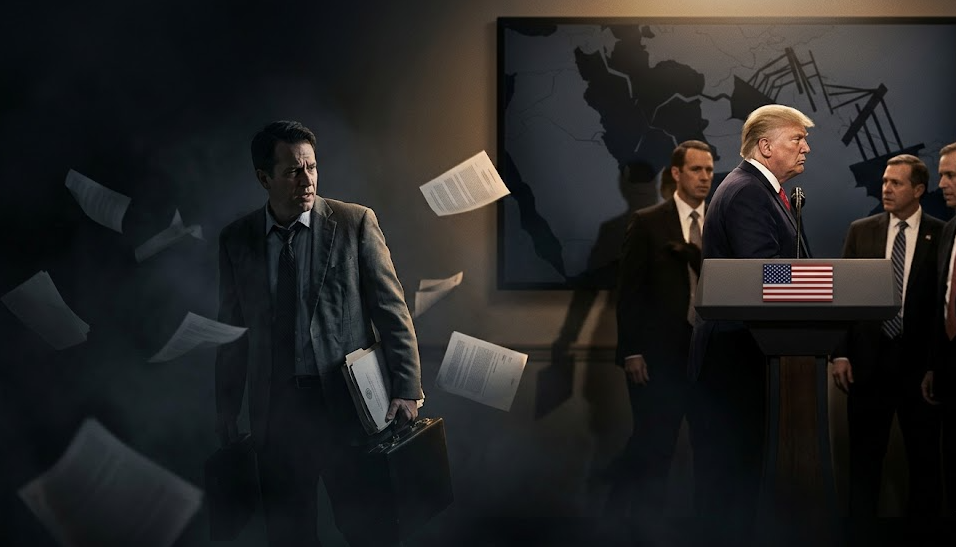
In February 2026, the Supreme Court handed the administration a 6-3 defeat, ruling that tariffs imposed under the International Emergency Economic Powers Act (IEEPA) were unconstitutional overreach. The ruling theoretically invalidated the mechanism behind Liberation Day’s most sweeping measures.
Within days, the White House had deployed a workaround: the Trade Act of 1974, a separate statutory authority that had been used more narrowly in prior administrations. Legal challenges followed immediately. Businesses that had already restructured supply chains around the IEEPA tariffs now faced the prospect of restructuring again around a new legal framework or waiting to see if the courts would strike that down too.
The Council on Foreign Relations noted that the episode illustrated a deeper structural problem: “Trade policy has become a tool of transactional diplomacy, not durable economic framework.”
This missile exchange lands right in the middle of a bigger fight, Trump and Senate Republicans are already clashing over war powers in Iran.
No End in Sight – As of spring 2026, the tariff landscape remains in flux. Eight partial trade agreements are in various stages of negotiation. The IEEPA refund process for $166 billion in collected duties has no clear timeline. And the Trade Act litigation is working its way through federal courts.
For American businesses, the lesson of the past year has been a hard one: in the current environment, there is no such thing as a stable planning assumption on trade. The question is no longer whether policy will change it’s how soon, and in which direction.

Oil & Energy Markets
A look at crude price swings, OPEC supply moves, and how energy markets react to geopolitical shocks.

Geopolitics & Conflict
Breaking down how wars, ceasefires, and diplomatic deals ripple through global trade and security.
US Foreign Policy
Coverage of Trump administration negotiations, sanctions, and strategic decisions shaping world events.
Economy & Inflation
Tracking how commodity prices, gas costs, and supply chains affect everyday consumers.