By Staff Reporter | May 20, 2026
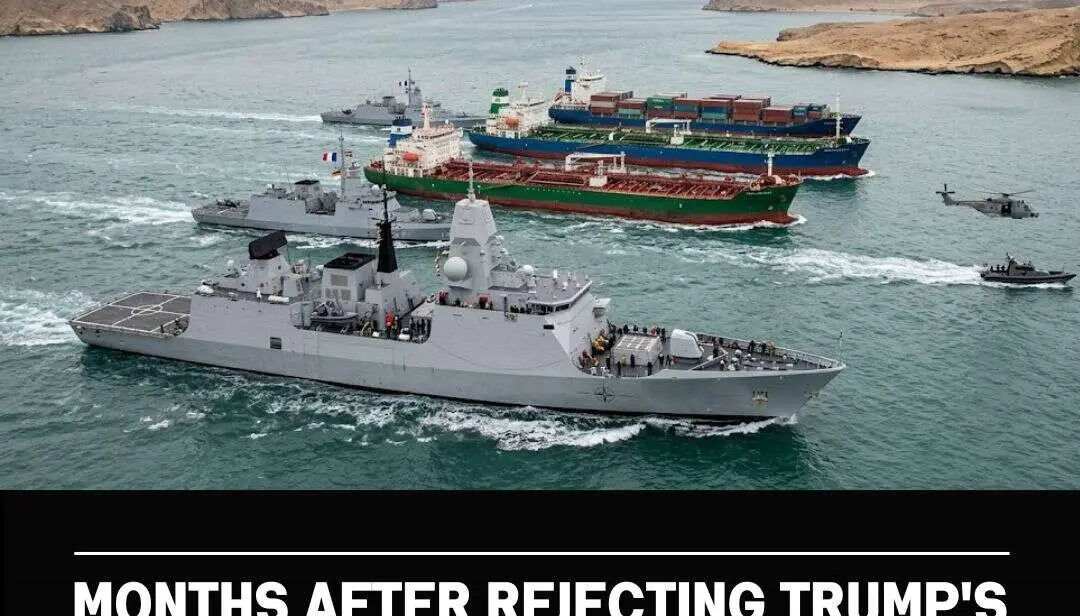
When Operation Epic Fury launched in the early hours of February 28, 2026, NATO’s European allies were neither consulted nor informed until US and Israeli warplanes were already in Iranian airspace. The alliance that had defined Western collective security for seven decades watched from the sidelines as Donald Trump reshaped the Middle East without them. Now, three months later, NATO finds itself edging toward the very conflict it refused to enter — not through the front door of combat operations, but through the back door of a Hormuz operation to protect global shipping lanes.
The shift is as significant diplomatically as it is militarily — and it reveals the limits of standing aside when a war reshapes the world economy around you.
What NATO Rejected — and Why
Operation Epic Fury was the largest US military campaign since the 2003 Iraq invasion. Launched jointly with Israel’s Operation Roaring Lion, it struck over 5,000 targets in its opening hours — Iran’s nuclear facilities at Fordow, Natanz, and Isfahan, its ballistic missile arsenals, naval forces, and proxy networks across the region. Supreme Leader Ali Khamenei was killed in the initial strikes. By May 5, 2026, Trump declared the operation concluded.
European NATO members were appalled — not only by the scale, but by the process. They had been excluded from the decision entirely. France, Germany, and the majority of the alliance drew a hard line: they would not participate in combat operations launched without consultation, and they would not legitimize a war their governments had not authorized. Spain went further, becoming the only NATO member to publicly deny the US military access to its bases and airspace for Iran-related operations, with Defense Minister Margarita Robles announcing a complete refusal.
Trump’s response was volcanic. He called NATO a “paper tiger,” threatened to withdraw the United States from the alliance entirely, announced the withdrawal of 5,000 troops from Germany, and declared European allies needed to “build some delayed courage.” Defense Secretary Hegseth refused to reaffirm the US commitment to NATO’s Article 5 collective defense clause — a statement that sent tremors through European capitals. For a detailed timeline, see USNI News’s comprehensive account of Operation Epic Fury’s launch.
The Hormuz Blockade Changed the Calculation
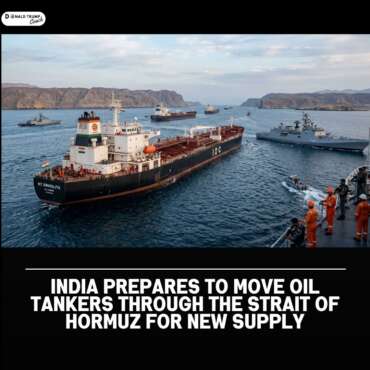
What changed Europe’s strategic calculus was not American anger — it was economic pain. On March 4, 2026, Iran closed the Strait of Hormuz, cutting off roughly one-fifth of the world’s daily oil and LNG supply. Brent crude surged 55% in weeks, hitting nearly $120 per barrel. European economies dependent on Gulf energy imports faced the sharpest inflationary shock since the 1970s. The US tariff ceasefire with China, established in part to stabilize trade flows through the same region, became inczreasingly fragile as shipping costs soared and supply chains buckled.
Europe was suffering the economic consequences of a war it had refused to fight — and its leaders began to recalculate.
NATO’s New Posture: Defensive, Careful, but Moving
By May 2026, the alliance’s posture had shifted from refusal to cautious preparation. NATO Secretary General Mark Rutte, speaking at the B9 Summit in Bucharest on May 13, stated that European allies were “pre-positioning forces and being ready when the moment comes” for a possible Hormuz operation. A multinational coalition — ultimately drawing in 49 countries and co-chaired by UK Defense Secretary John Healey and French Defense Minister — convened a virtual summit of 40-plus defense ministers to coordinate assets.
The contributions have been concrete. The United Kingdom committed autonomous mine-hunting equipment, counter-drone systems, Typhoon fighter jets, and HMS Dragon — a Type 45 air defense destroyer — backed by £115 million in new funding. France moved its Charles de Gaulle carrier strike group toward the Red Sea. Germany deployed the minehunter Fulda and replenishment ship Mosel to the Mediterranean. Italy committed two Gaeta MLU-class minehunters alongside patrol and logistics vessels.
The mission has been carefully framed as “strictly defensive” — focused on mine clearance and escort operations to restore commercial shipping confidence, not combat engagement with Iranian forces. UK Defense Secretary Healey described it as designed to “restore confidence for commercial shipping” through one of the world’s most critical energy chokepoints.
The July Decision Point
NATO Supreme Allied Commander General Alexus Grynkewich was characteristically precise on May 20, stating: “The conditions under which NATO would consider operating in the Strait of Hormuz are ultimately a political decision” — and that the alliance is “not drawing up any plans” until that political decision is formally made.
That decision is expected at the Ankara NATO Summit on July 7–8, 2026, now the most consequential alliance gathering since Russia’s invasion of Ukraine. NATO has already invited Qatar, UAE, Bahrain, and Kuwait to attend — a signal that the Hormuz operation is being framed as a regional and global stability mission, not a Western intervention.
Any formal authorization requires unanimous approval from all 32 NATO members — and several, led by Spain, remain opposed. The alliance that declined to fire a shot in Operation Epic Fury may yet find itself patrolling the waters that war left behind. Whether it can agree to do so — and whether Tehran will allow it — are the questions July will answer.