Share This Article
For the first time in nearly a decade, an American president walked down the steps of Air Force One in Beijing and the weight of everything the world needs from this meeting arrived with him.
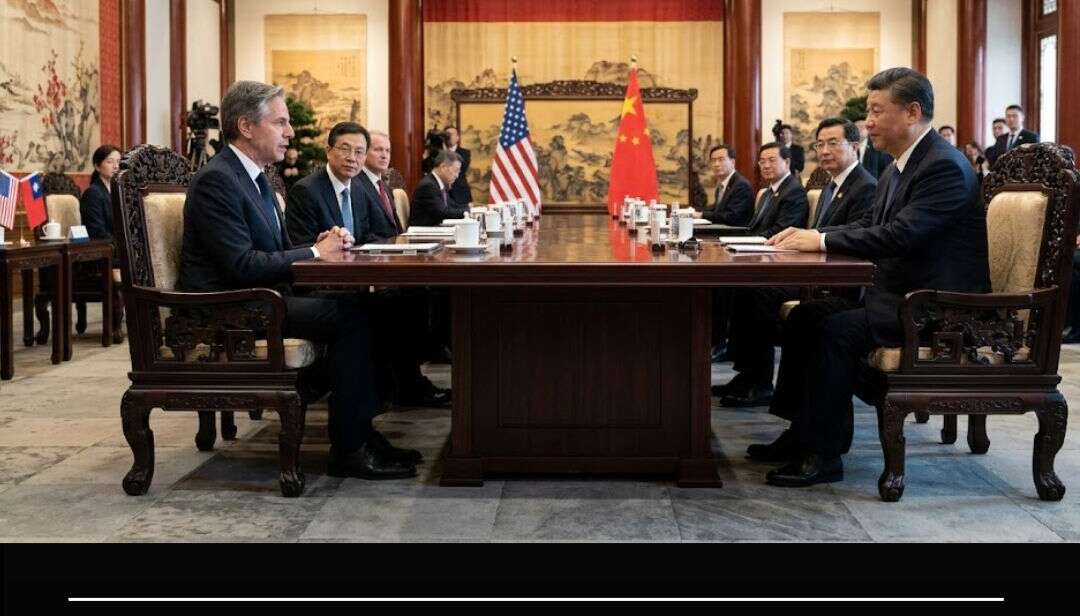
Donald Trump landed in the Chinese capital on May 13, 2026, greeted by Chinese officials and a protocol ceremony befitting a relationship that is simultaneously the most important and most combustible on earth. By the morning of May 14, Trump and Chinese President Xi Jinping were seated at the summit table in the Great Hall of the People with Taiwan, trade, taxes, the US Iran war, and the fate of the Strait of Hormuz all competing for space in a two-day agenda that analysts have called the most consequential US-China encounter since Nixon’s 1972 opening.
Alongside Trump sat Secretary of State Marco Rubio and a delegation that read like a roll call of American corporate power: Elon Musk (Tesla), Tim Cook (Apple), Jensen Huang (Nvidia), and Larry Fink (BlackRock). Xi arrived with the confidence of a host who knows his guest needs this meeting more than he does.
Taiwan: Xi’s Sharpest Warning
Xi wasted no time establishing his priorities. In his opening remarks, the Chinese president delivered the summit’s most stark message one aimed as much at Taipei, Tokyo, and Washington’s Indo-Pacific allies as at Trump himself.
Taiwan, Xi said, is “the most important issue in China-US relations.” The full Chinese readout left nothing to interpretation: “If it is handled properly, the bilateral relationship will enjoy overall stability. Otherwise, the two countries will have clashes and even conflicts, putting the entire relationship in great jeopardy.”
The word “conflicts” landed like a stone in still water. Taiwan’s government monitored every syllable from Taipei. Japan and South Korea whose security frameworks depend on America’s credibility as a Pacific power watched with deep unease for any indication that Trump might quietly trade away Taiwan commitments in exchange for concessions elsewhere on the agenda.
Xi also posed a philosophical challenge to the summit’s entire premise, asking Trump whether the two nations could avoid the “Thucydides Trap” the ancient Greek concept that describes how a dominant power and a rising challenger inevitably slide toward war. It was the kind of opening move that reframes a transactional negotiation as an existential choice.
Here are Some Related Blogs to Read
- NATO chief calls US strikes on Iran “absolutely necessary”
- Will gold rally as US-Iran tensions escalate
- Oil jumped but the market stayed calm
- 5 takeaways from Tuesday’s 2026 primaries
- US tariff system reset across 60 economies
- Trump tariffs Section 122 surcharge expires
- Trump had deliberately paused Hormuz operations to force Iran into a deal
- JD Vance claims Hegseth has been misleading Trump on the Iran war
- Iran has been digging out hidden missile stockpiles after rejecting Trump’s peace offer
- US Navy destroyer just fired on and seized an Iranian cargo ship
- Iran and Israel’s spy war is heating up amid claims of stolen F-15 secrets
- he’s now clashing with his own SCOTUS picks back home
Trade and Taxes: The Economic Architecture
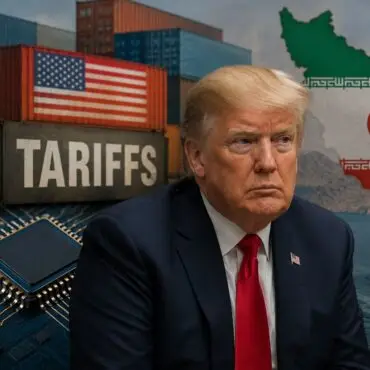
Beyond geopolitics, the summit carried enormous practical weight for the global trading system and for the American households who have been paying an inflation premium since Trump’s tariff campaigns reshaped supply chains in 2025.
Aides from both sides have been clear that no comprehensive trade deal is on the table. What is being negotiated is more targeted: a proposed US-China Board of Trade that would formalise and institutionalise bilateral trade flows rather than managing them through ad hoc tariff escalations. Sector-specific agreements are on the agenda covering aerospace with a potential Chinese purchase of hundreds of Boeing aircraft agriculture, and energy, including expanded Chinese purchases of American oil that would simultaneously reduce Beijing’s dependence on Iranian crude routed through the Strait of Hormuz.
On rare earths the critical minerals that underpin semiconductors, electric vehicles, and advanced defence systems China has previously used export controls as leverage, disrupting US automotive and aerospace supply chains. The summit’s technology delegates, led by Nvidia’s Jensen Huang and other Silicon Valley executives, came to Beijing seeking relief. Both sides signalled openness to a suspension of the most disruptive controls, contingent on broader trade and tariff concessions.
On fentanyl a domestic political priority for Trump discussions centred on Chinese enforcement measures targeting precursor chemical flows into North America, a point of rare bipartisan agreement in Washington.
The Iran War: The Shadow Over Everything
The Israel-Iran war that began on February 28, 2026 was never officially the summit’s headline item, but it was the silent force shaping every calculation. Trump is trying to end a conflict that has sent US gas prices above $4.50 per gallon, driven inflation to 3.8%, and pushed his approval rating to a second-term low of 34%. He needs China’s leverage over Tehran.
Both sides reached a visible public agreement on one principle: the Strait of Hormuz must remain open for the free flow of global energy. Xi also signalled interest in purchasing more American oil a move that would ease China’s reliance on sanctioned Iranian crude and align Beijing’s economic interests with a peaceful resolution to the blockade. Crucially, both leaders agreed that Iran can never have a nuclear weapon a statement of shared principle that, while not a peace deal, represents meaningful public alignment between the world’s two largest powers on the war’s core demand.
Whether China will translate that alignment into direct pressure on Tehran the step that could unlock the 14-point memorandum of understanding currently stalled in Iranian review remains the unanswered question heading into the summit’s second day.
The World Watching
From Singapore to Brussels, governments tracked every communiqué and every staged photograph for signals of where the world is heading. Europe fears a “G2” bilateral framework that excludes its interests. Indo-Pacific allies fear Taiwan concessions traded quietly for Iranian peace. Emerging markets fear a trade architecture designed in Beijing and Washington that leaves them no seat at the table.
Elon Musk emerged from day one saying “many good things” had been achieved. The formal joint statement will come at the summit’s conclusion. But on the three issues that define the visit Taiwan’s future, the tariff architecture of global trade, and whether China will help end the Iran Israel war the answers are still being negotiated behind closed doors, one careful sentence at a time.

Oil & Energy Markets
A look at crude price swings, OPEC supply moves, and how energy markets react to geopolitical shocks.

Geopolitics & Conflict
Breaking down how wars, ceasefires, and diplomatic deals ripple through global trade and security.
US Foreign Policy
Coverage of Trump administration negotiations, sanctions, and strategic decisions shaping world events.
Economy & Inflation
Tracking how commodity prices, gas costs, and supply chains affect everyday consumers.