Share This Article
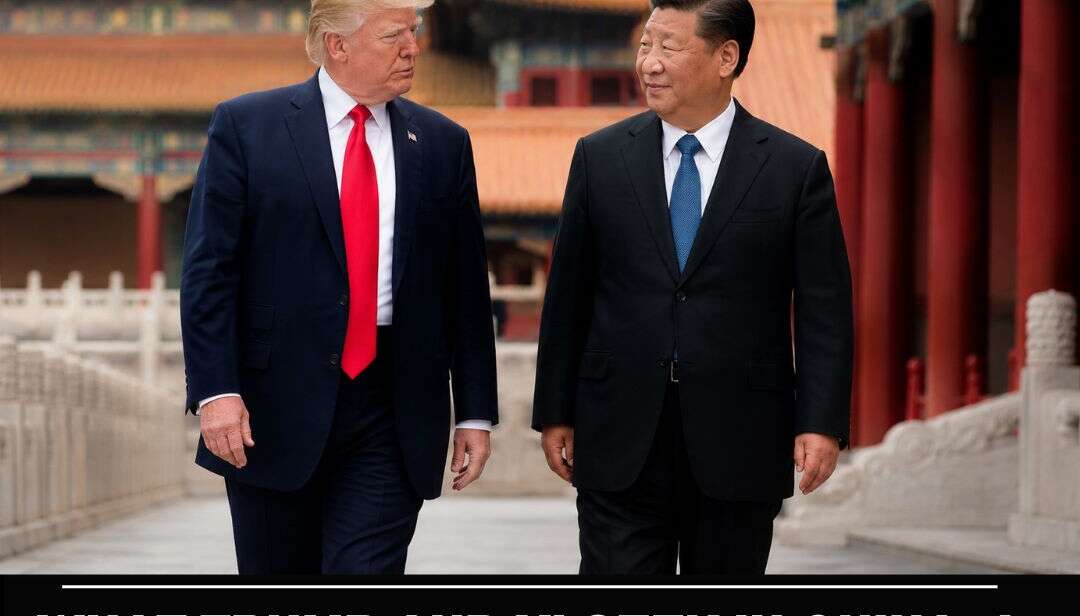
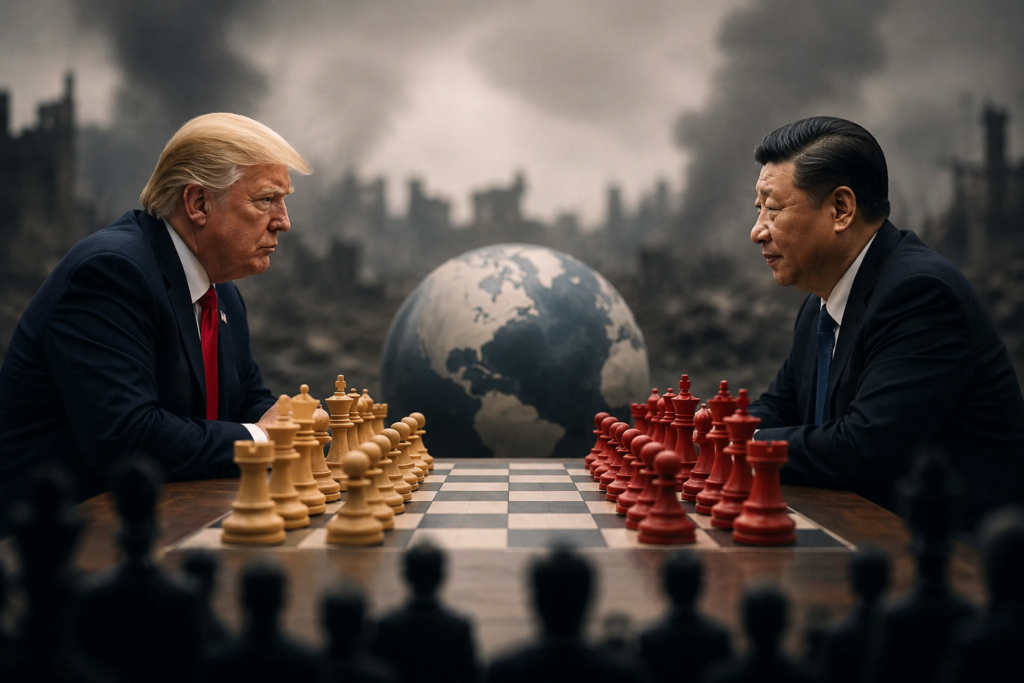
Washington / Beijing / Geneva – There is a particular quality to the silence that precedes a meeting between the leaders of the world’s two most powerful nations a held-breath quality that diplomats, markets, and governments across every continent recognise and respond to with the same mixture of hope and dread. As President Donald Trump and President Xi Jinping prepare to face off in what may be the most consequential bilateral summit of the decade, a war-weary world is watching with an intensity that reflects a single shared understanding: whatever these two men decide in the room will shape the trajectory of global order, global trade, and global security in ways that no other bilateral encounter currently can.
The US Iran war grinds on. Iran-linked network operations continue to draw US and UK coordinated responses across multiple theatres. Ukraine bleeds. The South China Sea simmers. And into all of this, Trump and Xi are walking toward each other each carrying a list of demands, a set of red lines, and a domestic audience that will judge them not on the sophistication of their diplomacy but on the hardness of the deal they bring home.
What Trump Is Walking In With
Trump’s objectives for the China summit have been characterised by his team in maximalist terms that reflect both genuine strategic ambition and the rhetorical architecture of a negotiator who always opens higher than he expects to close.
Here are Some Related Blogs to Read
- Tuesday’s missiles didn’t come out of nowhere, Iran has been digging out hidden missile stockpiles after rejecting Trump’s peace offer
- Not everyone in Trump’s own camp agrees on strategy, JD Vance claims Hegseth has been misleading Trump on the Iran war
- This isn’t the only recent flashpoint at sea, a US Navy destroyer just fired on and seized an Iranian cargo ship
- The strikes haven’t ended Iran’s nuclear ambitions either, US intel says recent strikes did only limited damage to Iran’s nuclear program
- That brief pause before Tuesday’s attack wasn’t random, Trump had deliberately paused Hormuz operations to force Iran into a deal
- The missiles are only half the story, Iran and Israel’s spy war is heating up amid claims of stolen F-15 secrets
- Trump’s fights aren’t confined to Tehran, he’s now clashing with his own SCOTUS picks back home
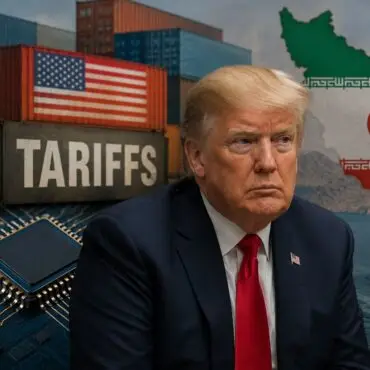
On trade, Trump wants a restructured framework that reduces the bilateral goods trade deficit, expands Chinese purchases of American agricultural and energy products, and creates enforcement mechanisms with real teeth not the aspirational purchase commitments of the Phase One agreement that both sides ultimately failed to honour in full.
On fentanyl, Trump wants concrete, verifiable Chinese action against the manufacturers and chemical suppliers whose precursor exports sustain the opioid crisis that kills tens of thousands of Americans annually. This is the issue with the most direct domestic political resonance and the one where Trump’s team believes Chinese action is most achievable because Beijing has clear incentives to provide it.
On technology, Trump wants movement on the Chinese practices forced technology transfer, intellectual property appropriation, state subsidy of competing domestic champions that American business has complained about for decades without securing meaningful remediation.
And hovering above all of these specific objectives is the Taiwan question not a negotiating item, exactly, but a permanent atmospheric pressure system that shapes every other conversation and that Trump’s team must manage without either abandoning American commitments or provoking the crisis that neither side wants.
What Xi Is Walking In With
Xi Jinping’s summit objectives are, in their own way, equally ambitious and equally shaped by domestic political constraints that leave less room for genuine flexibility than Beijing’s confident public posture suggests.
Xi wants tariff relief not immediately, not completely, but a credible pathway toward the reduction of the tariff architecture that has inflicted genuine pain on Chinese export industries and generated economic pressure that Xi’s domestic management of expectations has struggled to absorb.
He wants technology access specifically, a modification of the semiconductor export control regime that has cut Chinese firms off from the advanced chip architectures necessary for the AI development programs that Xi has made a centrepiece of China’s national modernisation strategy.
He wants Taiwan stability a reaffirmation of the one-China framework in language strong enough to push back against the legislative and diplomatic drift toward Taiwanese recognition that Beijing views as an existential provocation.
And he wants strategic respect the acknowledgment, implicit or explicit, that China is a peer power whose core interests carry the same weight in bilateral negotiations as American interests do. This is not merely psychological. It is the precondition for the kind of durable framework both sides nominally seek, because agreements between powers that one side views as fundamentally unequal do not hold.
The US Iran War’s Shadow Over the Summit
A summit between Washington and Beijing does not occur in a vacuum. It occurs in the specific geopolitical context that both sides have spent months navigating and that context is currently dominated, more than any other single factor, by the US Iran war and its cascading implications.
For Trump, the Iran crisis has been simultaneously a demonstration of American military seriousness and a drain on diplomatic and strategic bandwidth that creates genuine incentive to stabilise the China relationship. A President managing an active conflict with Iran, a restive relationship with Israel, Hormuz energy security concerns, and the downstream economic effects of Gulf instability cannot simultaneously prosecute a full-spectrum confrontation with China without strategic overextension that adversaries across multiple theatres would exploit.
For Xi, the US Iran war has been an object lesson in the costs of miscalculation and a quiet validation of China’s strategic patience. Beijing has watched Washington expend enormous political capital, military credibility, and alliance management energy on a conflict that could have been avoided with earlier and more consistent diplomacy. Xi has drawn his own conclusions about the value of stability-signalling at moments of American strategic overextension.
The Iran-linked network disruptions that US and UK sanctions have been targeting across Europe and the Middle East have also created a specific China dimension. Netanyahu’s public accusation that China assisted Iran’s ballistic missile program denied by Beijing but not fully rebutted sits on the summit’s agenda as an unresolved tension that American negotiators will need to address without allowing it to collapse the broader framework both sides are trying to build.
What the World Is Actually Watching For
Beyond the specific deliverables that diplomatic scorecards will tally, the world watching this summit is looking for something more fundamental: evidence that the two most powerful nations on earth retain the capacity to manage their rivalry without allowing it to generate the catastrophic conflict that the rivalry’s internal logic, left unmanaged, tends toward.
The US and UK coordination on Iran sanctions, the NATO alliance’s management of the Ukraine war, and the multilateral frameworks sustaining global trade all depend, at some foundational level, on a US-China relationship that is competitive but not apocalyptic one in which both sides maintain enough communication, enough mutual interest in system stability, and enough mutual deterrence to prevent the miscalculations that turn rivalry into war.
That is what a war-weary world is watching for in China. Not a perfect deal. Not a solved relationship. Just two adversaries who understand, clearly enough, what the alternative to managed competition looks like and who choose, for now, to step back from it.
Whether Trump and Xi find that understanding in the room is the question that everything else is waiting on.
The Stakes Beyond the Summit
If the summit succeeds even partially, even conditionally it changes the global atmosphere in ways that extend far beyond the bilateral relationship. Markets stabilise. Allied governments exhale. The multilateral institutions that have been straining under great-power tension find renewed operational space.
If it fails if Trump walks out, if Xi refuses to move on core demands, if a Taiwan incident or a technology confrontation derails the agenda before it begins the consequences radiate outward with a speed and force that a world already exhausted by the US Iran war, the Ukraine conflict, and the fracturing of the post-Cold War order is poorly positioned to absorb.
A war-weary world is watching Trump and Xi prepare to face off. What it is hoping for is not a victory for either side. It is the particular, fragile, desperately necessary outcome that great-power summits occasionally produce when both leaders remember what losing actually costs.

Oil & Energy Markets
A look at crude price swings, OPEC supply moves, and how energy markets react to geopolitical shocks.

Geopolitics & Conflict
Breaking down how wars, ceasefires, and diplomatic deals ripple through global trade and security.
US Foreign Policy
Coverage of Trump administration negotiations, sanctions, and strategic decisions shaping world events.
Economy & Inflation
Tracking how commodity prices, gas costs, and supply chains affect everyday consumers.