US and UK Sanctions Target an Iran-linked Network Accused of Preparing Strikes and Transferring Funds
Theo Jorden
Share This Article
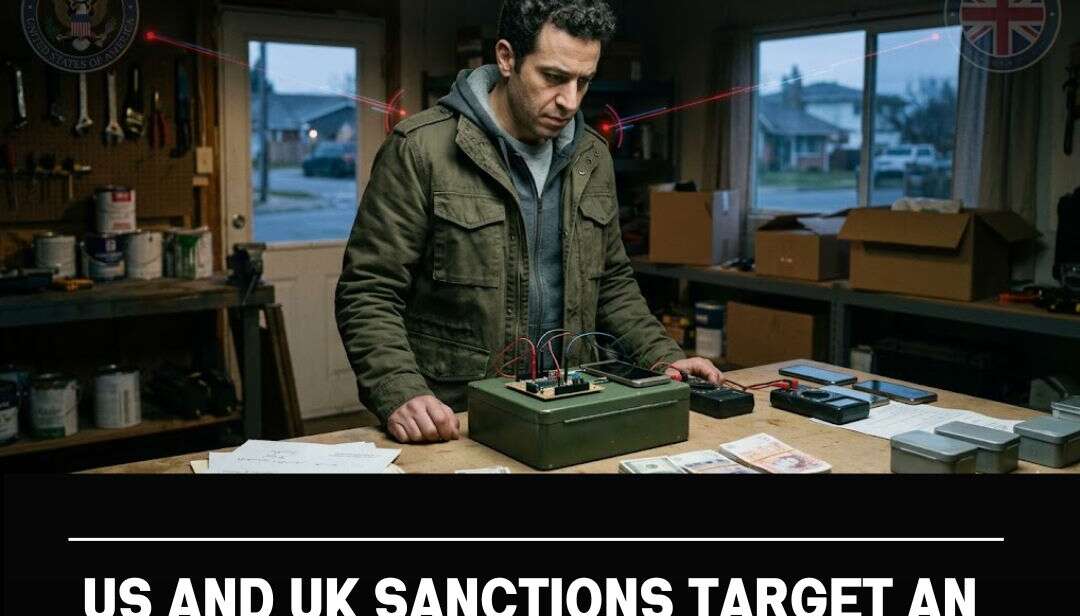
Washington / London / Tehran — In one of the most significant displays of transatlantic security coordination in recent months, the United States and United Kingdom have jointly imposed sweeping sanctions on an Iran-linked network accused of actively planning kinetic strikes against Western targets and orchestrating the covert transfer of funds across multiple jurisdictions to
Washington / London / Tehran — In one of the most significant displays of transatlantic security coordination in recent months, the United States and United Kingdom have jointly imposed sweeping sanctions on an Iran-linked network accused of actively planning kinetic strikes against Western targets and orchestrating the covert transfer of funds across multiple jurisdictions to sustain those operational capabilities. The coordinated action announced simultaneously by the U.S. Treasury Department’s Office of Foreign Assets Control and His Majesty’s Treasury in London represents both a concrete counter-terrorism achievement and a deliberate geopolitical signal: that despite the turbulence currently surrounding US and British relations on trade and diplomatic alignment, the two nations’ security partnership remains the most operationally effective bilateral intelligence alliance in the world.
What the Sanctions Actually Target
The designated network, spanning multiple countries across the Middle East, Europe, and Central Asia, is described in the joint Treasury filings as an IRGC-affiliated operational infrastructure that has been active in two distinct but interconnected functions: attack planning and financial facilitation.
On the attack planning side, U.S. and UK intelligence assessments identify the network as having conducted surveillance operations against diplomatic, military, and commercial targets in at least four Western countries. The operational methodology described mirrors the pattern of IRGC external operations that have previously resulted in foiled assassination plots against Iranian dissidents, Israeli diplomats, and American officials across Europe a campaign that European security services have been tracking with intensifying alarm since 2022.
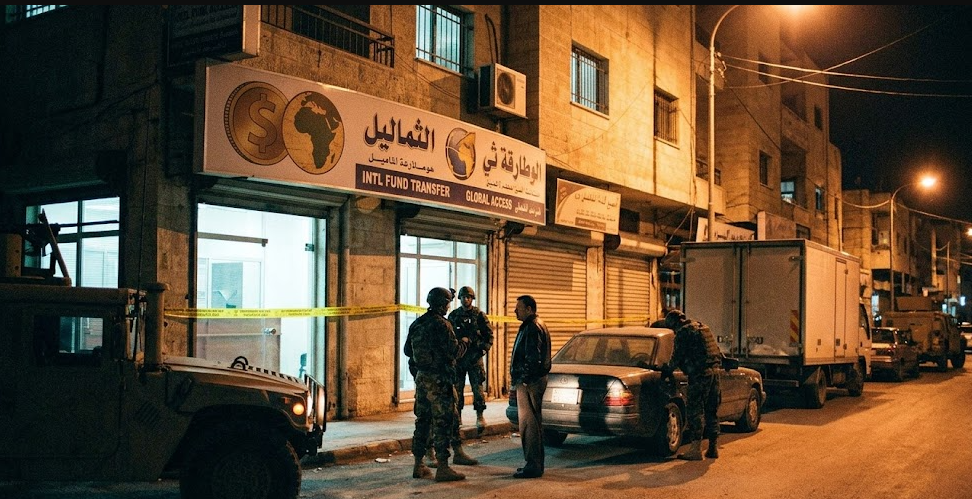
On the financial side, the network is accused of operating a sophisticated multi-layered money movement system designed to transfer funds from Iranian state sources primarily IRGC financial institutions already under existing sanctions through a series of front companies, cryptocurrency exchanges, and informal hawala networks to operational cells in Europe and the Middle East. The financial architecture, described by one Treasury official as “deliberately fragmented to resist tracing,” involved entities registered in jurisdictions including the UAE, Turkey, Georgia, and several European Union member states.
The designated individuals include six IRGC-linked operatives, four financial facilitators, and three corporate entities whose banking relationships span multiple continents. Asset freezes and travel bans have been applied simultaneously under both American and British legal frameworks.
The Intelligence Behind the Action
Joint sanctions of this operational specificity do not emerge from open-source analysis. They reflect the output of sustained, deep intelligence cooperation between the CIA, MI6, and their partner agencies — the kind of granular, identity-level intelligence about individual operatives, financial flows, and operational timelines that requires embedded human sources, signals intelligence collection, and the sustained analytical synthesis that only the most capable intelligence services can produce.
British and American officials have declined to characterise the specific intelligence methods underlying the designations standard operational security practice but the level of detail in the public filings, including specific financial transaction amounts, dates, and routing paths, signals a surveillance penetration of the network that goes well beyond peripheral monitoring.
European security services, particularly Germany’s BfV domestic intelligence agency and France’s DGSI, are understood to have contributed intelligence to the joint assessment reflecting the broadening of what began as a bilateral US-UK operation into a wider Western intelligence coordination effort that Tehran will find deeply concerning.
US and British Relations: Security Unity Amid Trade Friction
The timing of the joint sanctions action carries a significance that extends beyond its immediate counter-terrorism purpose. US and British relations have been navigating a period of visible friction over trade and economic alignment friction that has generated public commentary about the health of the Special Relationship and Britain’s strategic positioning between Washington and its European partners in the post-Brexit landscape.
The us and uk trade deal negotiation long anticipated as the economic centre piece of a reinvigorated post-Brexit bilateral relationship has moved more slowly than either government’s public optimism suggested it would. Disputes over agricultural standards, pharmaceutical pricing, and digital services taxation have created sticking points that negotiating teams have found consistently difficult to resolve, generating frustration on both sides of the Atlantic and providing critics of both governments with ammunition to question the depth of the bilateral commitment.
Against that backdrop, the joint sanctions action sends a deliberate counter-narrative: that whatever friction exists in the economic and diplomatic dimensions of US and British relations, the security and intelligence foundation of the partnership remains unshaken, operationally effective, and capable of producing coordinated action against shared threats with a speed and precision that no other bilateral relationship can match.
Senior officials in both capitals have been explicit about this framing. “The United States and United Kingdom stand together against Iranian aggression,” said a joint statement from the two governments. “Today’s action reflects our shared commitment to disrupting the networks that threaten our citizens and our allies.”
Iran’s Response: Denial and Counter-Accusation
Tehran’s reaction followed the predictable template that Iranian official communication deploys when confronted with specific sanctions designations: categorical denial of the network’s existence as characterised, counter-accusations of Western fabrication for political purposes, and a formal protest through diplomatic channels citing violations of international law.
Iranian Foreign Ministry spokesman Nasser Kanaani described the joint sanctions as “another example of American and British political theatre designed to maintain pressure on Iran during sensitive diplomatic negotiations” a framing that acknowledges the diplomatic context without conceding the operational reality the designations describe.
IRGC-affiliated media outlets went further, publishing commentary that characterised the sanctions action as evidence of Anglo-American desperation in the face of Iran’s “resistance axis” and as a deliberate attempt to sabotage the ongoing US-Iran diplomatic process.
The counter-accusation narrative serves multiple internal Iranian purposes. It allows the regime to present the sanctions as political persecution rather than counter-terrorism, maintaining domestic legitimacy. It provides hardline factions with evidence that Western powers cannot be trusted as negotiating partners. And it gives the IRGC’s operational leadership political cover to continue activities by framing international accountability measures as illegitimate interference.
The Diplomatic Tension: Sanctioning While Negotiating
The joint US and UK sanctions action creates a specific and acknowledged tension with the simultaneous American diplomatic engagement seeking a war-ending framework with Tehran. Sanctioning an IRGC-linked network while pursuing a diplomatic agreement with the Iranian government that IRGC institutional interests significantly shape is not a contradiction Washington has fully resolved and Iranian negotiators are acutely aware of the political dynamics it creates.
American officials have consistently argued that counter-terrorism sanctions and diplomatic engagement are not mutually exclusive that maintaining pressure on Iran’s most destabilising operational activities is precisely what gives Washington the leverage to pursue a meaningful diplomatic outcome. The sanctions are the stick; the diplomatic proposal is the carrot; both are necessary components of a coherent Iran strategy.
British officials have echoed this framing while adding their own dimension: that London’s participation in the joint sanctions action reflects a deliberate choice to remain a central player in the Iran security framework at a moment when its post-Brexit positioning has made some European partners uncertain about Britain’s role in multilateral diplomatic processes.
What Comes Next
The immediate practical effect of the joint sanctions is disruption financial institutions processing transactions for the designated entities will freeze accounts, correspondent banking relationships will terminate, and the operational funding flows the network has relied upon will face significant interruption.
The longer-term strategic effect depends on whether the disruption forces the IRGC to restructure its external operations architecture a costly and time-consuming process or whether Tehran simply routes around the designated entities through new proxies, a capacity it has demonstrated repeatedly in previous sanctions cycles.
What the action unambiguously demonstrates, regardless of its operational impact on Iranian capabilities, is that US and British relations retain their deepest and most durable foundation a security partnership built over eight decades of shared intelligence, shared sacrifice, and shared assessment of the threats that most directly menace Western interests.
On that foundation, whatever the state of the us and uk trade deal negotiations, the Special Relationship continues to function as its architects intended: as the world’s most capable bilateral response to shared security threats, deployed with speed, coordination, and operational precision that adversaries have consistently failed to anticipate or neutralise.
Oil & Energy Markets
A look at crude price swings, OPEC supply moves, and how energy markets react to geopolitical shocks.