
Share This Article
Caracas / Washington / Georgetown – In a defiant rejection that carries echoes of the broader global confrontation between American power and the axis of nations aligned against it, Venezuela’s acting president has flatly refused President Donald Trump’s extraordinary request framed in terms that blurred the line between diplomatic pressure and territorial annexation that Venezuela consider a formal statehood arrangement with the United States amid an escalating territorial conflict that has brought South America to one of its most dangerous flashpoints in decades. The refusal, delivered with the theatrical indignation that Caracas has perfected across years of confrontation with Washington, lands in a global moment already defined by the US Iran war, Iran-linked network disruptions across three continents, and a fracturing international order in which the rules governing territorial sovereignty are being rewritten by force and audacity in real time.
What Trump Actually Requested and How Caracas Heard It
The precise nature of Trump’s “statehood request” has been characterised differently by the two governments, as is almost always the case when Washington and Caracas communicate about anything. American officials described the overture as a proposal for a “special administrative relationship” that would provide Venezuela with U.S. economic integration, debt restructuring support, and security guarantees in exchange for significant political reforms, free elections, and closer alignment with American strategic interests in the hemisphere.
Here are Some Related Blogs to Read
- NATO chief calls US strikes on Iran “absolutely necessary”
- Will gold rally as US-Iran tensions escalate
- Oil jumped but the market stayed calm
- 5 takeaways from Tuesday’s 2026 primaries
- US tariff system reset across 60 economies
- Trump tariffs Section 122 surcharge expires
- Trump had deliberately paused Hormuz operations to force Iran into a deal
- JD Vance claims Hegseth has been misleading Trump on the Iran war
- Iran has been digging out hidden missile stockpiles after rejecting Trump’s peace offer
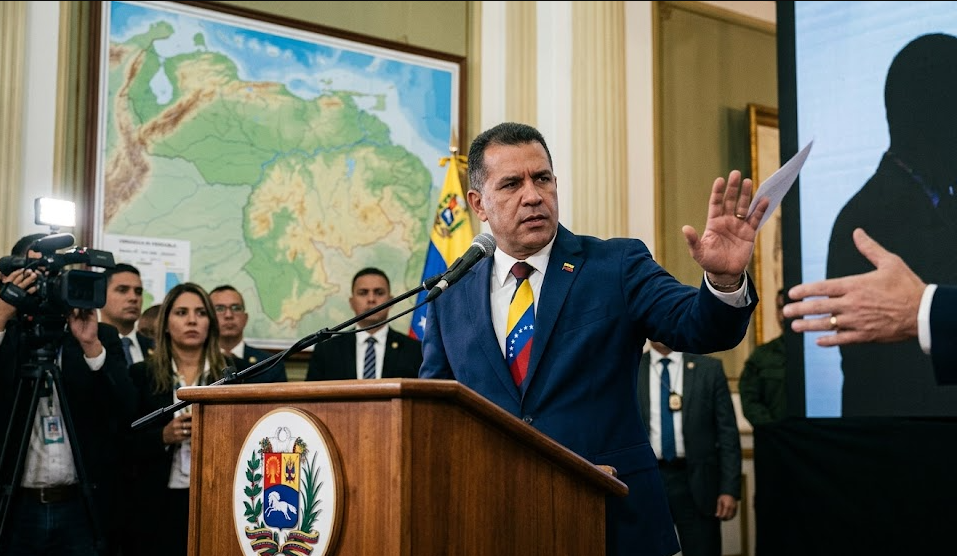
Caracas heard something categorically different. Acting President Diosdado Cabello who assumed the role amid the ongoing political turbulence surrounding Nicolás Maduro’s contested grip on power characterised Trump’s proposal as “a colonial ultimatum disguised in the language of partnership” and a direct assault on Venezuelan sovereignty that his government “rejects in its entirety, with the full force of the Bolivarian Revolution behind that rejection.”
The gap between those two characterisations is not merely rhetorical. It reflects a fundamental divergence in how the two governments understand the nature of sovereignty, power, and the legitimate scope of American hemispheric influence a divergence that has been deepening for two decades and that the current territorial crisis has pushed to a breaking point.
The Territorial Conflict: What Is Actually at Stake
The immediate trigger for the elevated US-Venezuela confrontation is the Essequibo dispute Venezuela’s long-standing territorial claim over approximately 160,000 square kilometres of Guyana’s western territory, a region that has acquired urgent new strategic significance following the discovery of massive offshore oil reserves that have transformed Guyana into one of the world’s fastest-growing energy producers.
Venezuela’s claim to the Essequibo region predates its independence and has been a consistent element of Venezuelan nationalist politics across ideological lines neither a Chavista invention nor a Maduro fabrication, but a genuine historical grievance rooted in 19th century colonial boundary disputes that Venezuelan governments of every stripe have maintained.
What has changed is the stakes. The oil reserves discovered in Guyana’s offshore Stabroek block operated primarily by ExxonMobil, with American strategic and economic interests directly embedded in their continued development have transformed the Essequibo dispute from a historical footnote into a live conflict with immediate implications for U.S. energy security strategy and corporate interests.
Trump’s intervention, framed as a defence of Guyanese sovereignty and the rule of international law, is simultaneously a defence of American oil industry interests in one of the hemisphere’s most valuable new energy provinces. Caracas knows this. And Caracas’s rejection of Trump’s proposal is calibrated accordingly.
The Iran Connection: A Global Pattern of Resistance
Venezuela’s defiant rejection of American pressure does not exist in isolation. It is part of a broader pattern of coordinated resistance to U.S. coercive diplomacy that connects Caracas to Tehran in ways that American intelligence services have been documenting with increasing concern.
The US Iran war and the Iran-linked network that US and UK sanctions recently targeted represent one dimension of this alignment. Venezuela and Iran have maintained a strategic partnership built around shared adversarial positioning toward Washington, oil trade conducted outside dollar-denominated systems, and security cooperation that American officials characterise as deeply troubling since the Chávez era. That partnership has intensified rather than diminished under Maduro and his successors, sustained by the logic that nations facing American maximum pressure have mutual interest in each other’s survival.
Iranian technical assistance to Venezuelan oil infrastructure deployed to help Caracas maintain production capacity under American sanctions is well-documented. Less publicly discussed but equally significant is the reported presence of Iranian security advisers embedded within Venezuelan intelligence structures, a relationship that mirrors the Cuban security model and that American officials assess as part of a broader Iranian strategy to establish operational infrastructure throughout the Western Hemisphere.
The US and UK sanctioned network, portions of which are assessed to have financial tentacles reaching into Venezuelan-controlled entities, represents the operational manifestation of that Iran-Venezuela alignment a shadow financial architecture that sustains both regimes’ ability to operate outside the international financial system that American and British sanctions are designed to control.
Cabello’s Calculation: Defiance as Domestic Politics
Diosdado Cabello’s rejection of Trump’s statehood proposal is not simply a foreign policy position. It is domestic political performance of the highest order in a country where anti-American nationalism remains the most reliable source of regime legitimacy when economic performance, democratic credibility, and basic governance have all failed to provide it.
Cabello, widely considered the most powerful figure in Venezuela’s security and intelligence apparatus, understands that accepting any American proposal regardless of its actual terms would hand the opposition a narrative of capitulation that could fracture the coalition of military, intelligence, and political loyalists whose continued support is the only thing sustaining the regime’s hold on power.
Rejection, by contrast, is costless domestically and serves multiple strategic purposes simultaneously. It rallies the nationalist base. It signals to Cuba, Iran, Russia, and China that Venezuela remains a reliable partner in the coalition of American adversaries. And it demonstrates to the Venezuelan military the regime’s ultimate guarantor that its leadership is not negotiating away the sovereignty that justifies their institutional privilege.
Washington’s Next Move: Limited Options, High Stakes
The Trump administration’s Venezuela options are genuinely constrained in ways that its public posture does not always reflect. Military intervention in Venezuela a country of 30 million people with a mountainous geography, an armed and ideologically motivated military, and the active support of Cuba’s intelligence services and Russia’s Wagner-successor security networks carries costs that American strategic planners assess as prohibitive relative to achievable gains.
Economic sanctions, already extensive, have demonstrably failed to produce the political transformation they were designed to compel a failure that mirrors the Iran sanctions experience and that reflects the same fundamental dynamic: regimes willing to impose extraordinary economic suffering on their own populations can absorb sanction pressure longer than democratic governments can sustain the political will to maintain it.
The Essequibo territorial conflict provides Washington with a more targeted pressure point military support for Guyana, accelerated development of Guyanese oil infrastructure, and the deployment of American naval assets to signal commitment to Georgetown’s sovereignty all impose costs on Venezuela without requiring direct confrontation.
But Venezuela’s rejection of Trump’s statehood proposal signals clearly that Caracas has concluded correctly, in its own assessment that the costs of defiance remain lower than the costs of accommodation. In a global moment defined by the US Iran war’s unresolved tension, the Iran-linked network’s demonstrated operational reach, and a fracturing international order in which the US and UK coordination represents Washington’s most reliable partnership, Venezuela’s acting president has chosen the path that leaders of adversarial regimes have consistently chosen when faced with American ultimatums: rejection, defiance, and the bet that American attention will eventually turn elsewhere.
It is a bet that has worked before. Whether it works again depends on how much of Washington’s strategic bandwidth Venezuela can claim in a world already full of crises demanding American focus.

Oil & Energy Markets
A look at crude price swings, OPEC supply moves, and how energy markets react to geopolitical shocks.

Geopolitics & Conflict
Breaking down how wars, ceasefires, and diplomatic deals ripple through global trade and security.
US Foreign Policy
Coverage of Trump administration negotiations, sanctions, and strategic decisions shaping world events.
Economy & Inflation
Tracking how commodity prices, gas costs, and supply chains affect everyday consumers.