Share This Article
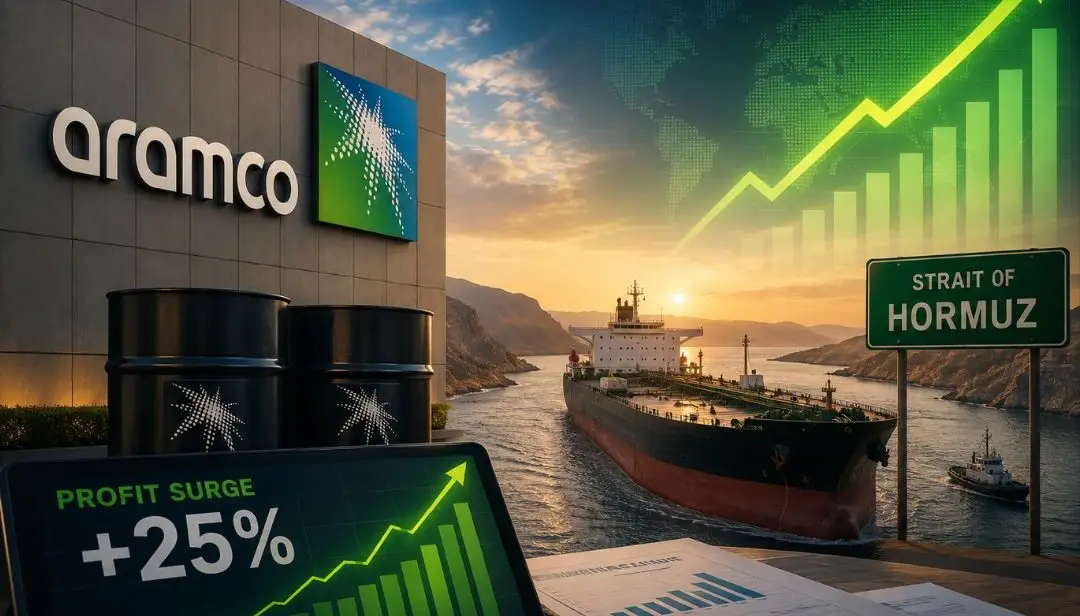
While the world watches the Strait of Hormuz blockaded, mined, and fought over Saudi Arabia’s state oil giant has been quietly routing around it. And the numbers tell the story: Aramco has posted a 25% surge in first-quarter profits, turning one of the most disruptive energy crises in modern history into a record-breaking earnings report.
Saudi Aramco, the world’s most profitable oil company, reported a net income of $32.5 billion for the first quarter ending March 31, 2026 a 25.6% jump year-on-year, beating analyst estimates of $31 billion and confirming the company’s status as the singular corporate beneficiary of a conflict that has devastated rivals, destabilised global energy markets, and stranded 20,000 sailors across the Persian Gulf.
Adjusted net income came in even higher at $33.6 billion, up 26.3% year-on-year. The board approved a base dividend of $21.9 billion for the quarter a 3.5% increase from the prior year underscoring the financial confidence of a company operating at full tilt through a geopolitical storm.
The East-West Pipeline: Aramco’s Secret Weapon
The engine behind the profit surge is a 1,200-kilometre infrastructure asset that most of the world had never heard of until this war made it essential: Saudi Arabia’s East-West Pipeline, also known as the Petroline.
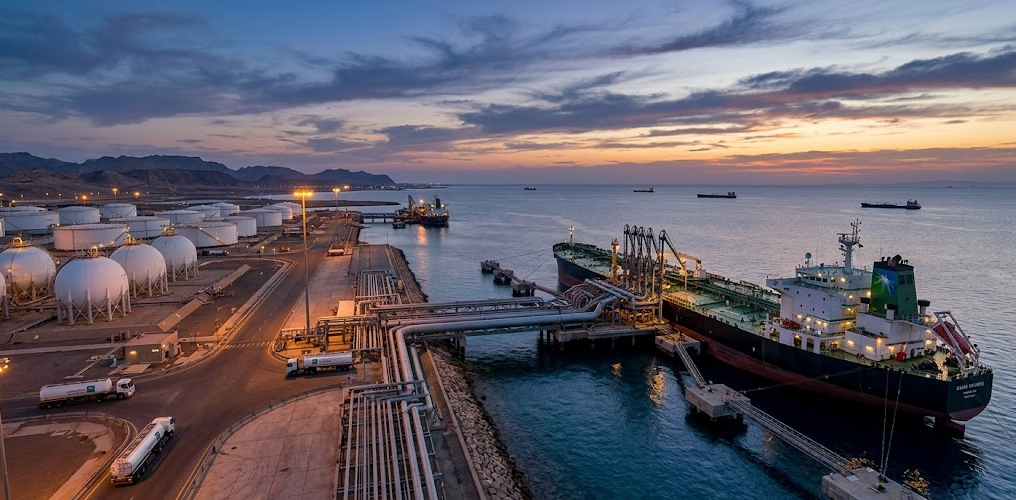
Running from the Abqaiq oil processing complex in Saudi Arabia’s Eastern Province to the Yanbu export terminal on the Red Sea coast, the pipeline allows Saudi crude to bypass the Strait of Hormuz entirely flowing west to the Red Sea and out through the Bab-el-Mandeb Strait to global markets, completely circumventing Iranian control of the Gulf exit.
Here are Some Related Blogs to Read
- NATO chief calls US strikes on Iran “absolutely necessary”
- Will gold rally as US-Iran tensions escalate
- Oil jumped but the market stayed calm
- 5 takeaways from Tuesday’s 2026 primaries
- US tariff system reset across 60 economies
- Trump tariffs Section 122 surcharge expires
- Trump had deliberately paused Hormuz operations to force Iran into a deal
- JD Vance claims Hegseth has been misleading Trump on the Iran war
- Iran has been digging out hidden missile stockpiles after rejecting Trump’s peace offer
When the Strait of Hormuz effectively closed to non-Iranian vessels in early March 2026, Aramco moved fast. By March 11, the East-West Pipeline had been converted to operate at maximum capacity. By the end of Q1, it was running at its full 7 million barrels per day (mb/d) ceiling a figure achieved partly by converting accompanying natural gas liquids pipelines to carry crude.
The results at the Yanbu end were dramatic. Export volumes from Yanbu surged to approximately 2.47 million barrels per day a 330% increase over pre-war levels, according to shipping data. Meanwhile, oil transiting the Bab-el-Mandeb Strait rose by 21% compared to February 2026 directly reflecting the redirected Saudi flow.
Prices, Volumes and a War Premium
The profit surge was driven by two reinforcing forces simultaneously.
First, higher oil prices. Aramco’s average realised crude price rose to $76.90 per barrel in Q1 up from $64.10 in the previous quarter, a near 20% sequential increase reflecting the war premium baked into global crude markets as the Hormuz blockade removed roughly a quarter of the world’s seaborne oil trade from circulation. The IEA has called the resulting supply disruption the largest energy shock in recorded history.
Second, increased export volumes through the East-West corridor. Total Q1 revenue reached $115.49 billion, up 6.8% year-on-year, driven by stronger crude, refined product, and chemical volumes through non-Hormuz routes.
Iran Tried to Stop It and Failed
The East-West Pipeline’s dominance has not gone unchallenged. In early April, Iranian forces struck a pumping station along the pipeline in a drone attack, reducing throughput by 700,000 barrels per day. The disruption was severe but brief. Within less than three days, Saudi Arabia announced the pipeline had been fully restored to maximum capacity, a display of operational resilience that further rattled energy markets betting on sustained disruption.
The strike underscored both the strategic value of the pipeline and the vulnerability that comes with it. Iran has demonstrated it can reach deep into Saudi infrastructure. What it has not yet been able to do is keep it down.
The Paradox of a Crisis Profit
Aramco’s earnings report lands as an uncomfortable data point in a global narrative of energy suffering. While India burns more coal to offset vanishing LNG supplies, while 20,000 sailors remain stranded across the Persian Gulf, and while Asian economies face the worst supply shock since the 1970s oil embargo, the world’s largest oil company is reporting its strongest quarterly results in years.
The paradox is built into the structure of the crisis. Saudi Arabia sits outside the Hormuz blockade. Its pipeline infrastructure runs west, not east. Its crude, unlike Iranian, Kuwaiti, or UAE volumes routed through the strait, has an alternative path to market and that path is now operating at full capacity.
For Aramco’s shareholders, the $21.9 billion dividend declared this quarter is the reward. For the rest of the world’s energy consumers, the war premium embedded in every barrel is the bill.

Oil & Energy Markets
A look at crude price swings, OPEC supply moves, and how energy markets react to geopolitical shocks.

Geopolitics & Conflict
Breaking down how wars, ceasefires, and diplomatic deals ripple through global trade and security.
US Foreign Policy
Coverage of Trump administration negotiations, sanctions, and strategic decisions shaping world events.
Economy & Inflation
Tracking how commodity prices, gas costs, and supply chains affect everyday consumers.