Washington / Persian Gulf — A classified CIA assessment that has made its way into senior policy discussions on Capitol Hill and within the National Security Council carries a conclusion that is reshaping American strategic thinking about the Strait of Hormuz: Iran has sufficient fuel reserves, alternative energy infrastructure, and internal rationing capacity to withstand
Washington / Persian Gulf — A classified CIA assessment that has made its way into senior policy discussions on Capitol Hill and within the National Security Council carries a conclusion that is reshaping American strategic thinking about the Strait of Hormuz: Iran has sufficient fuel reserves, alternative energy infrastructure, and internal rationing capacity to withstand a full naval blockade of the strait for approximately four months before its economy begins experiencing catastrophic systemic failure. The warning, described by officials familiar with the briefing as “sobering,” has forced a fundamental reassessment of whether a Hormuz blockade — long considered Washington’s most powerful economic pressure lever against Tehran — is the decisive tool it was assumed to be.
What the CIA Assessment Actually Found
The intelligence community’s four-month endurance estimate is not a single number pulled from a single data point. It represents a composite assessment built across multiple analytical threads: satellite monitoring of Iranian fuel storage infrastructure, signals intelligence tracking internal government rationing communications, economic modelling of Iran’s domestic refining capacity, and human intelligence reporting on contingency planning discussions within Iran’s Supreme National Security Council.
According to sources familiar with the assessment’s key findings, Iran has spent the better part of the last three years quietly but systematically preparing for exactly the blockade scenario Washington has threatened. Underground fuel storage facilities — many of them constructed or expanded under IRGC engineering directives — have been stocked to levels not seen since the Iran-Iraq war era. Domestic rationing protocols have been pre-drafted and are ready for immediate implementation. And Iran’s network of informal oil export routes — through intermediaries, ship-to-ship transfers, and sanctions-busting logistics chains involving Chinese and Russian facilitators — provides a partial but meaningful alternative revenue stream even under blockade conditions.
The four-month window is not a cliff edge. It is, analysts emphasise, the point at which economic pain transitions from severe to potentially regime-threatening — but Iran’s leadership has demonstrated, repeatedly and at enormous human cost, a willingness to absorb severe economic pain as the price of strategic resistance.
The Hormuz Flashpoint: What Is Actually Happening
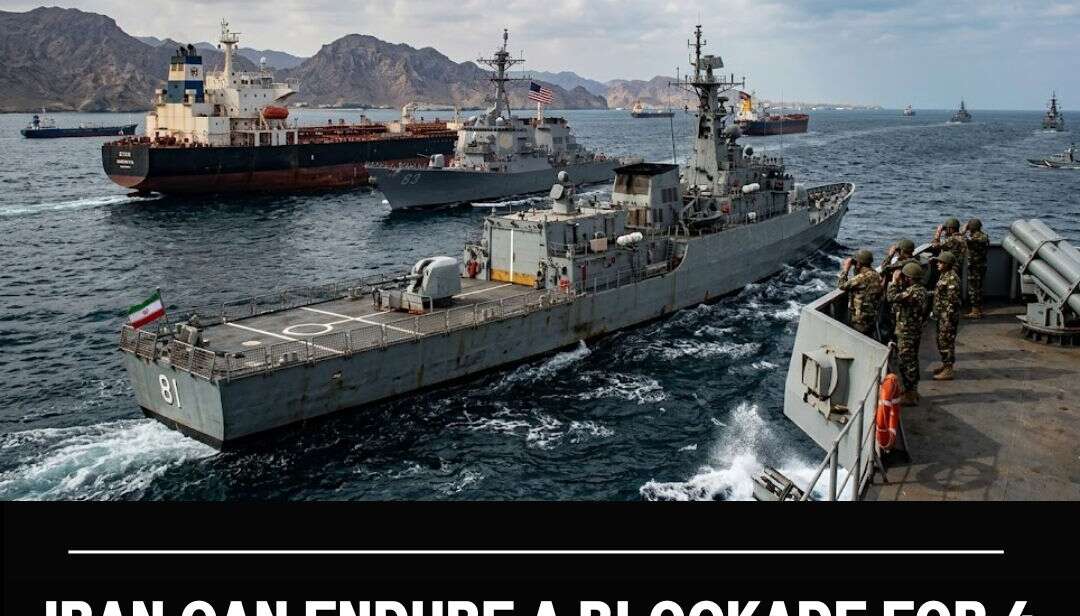
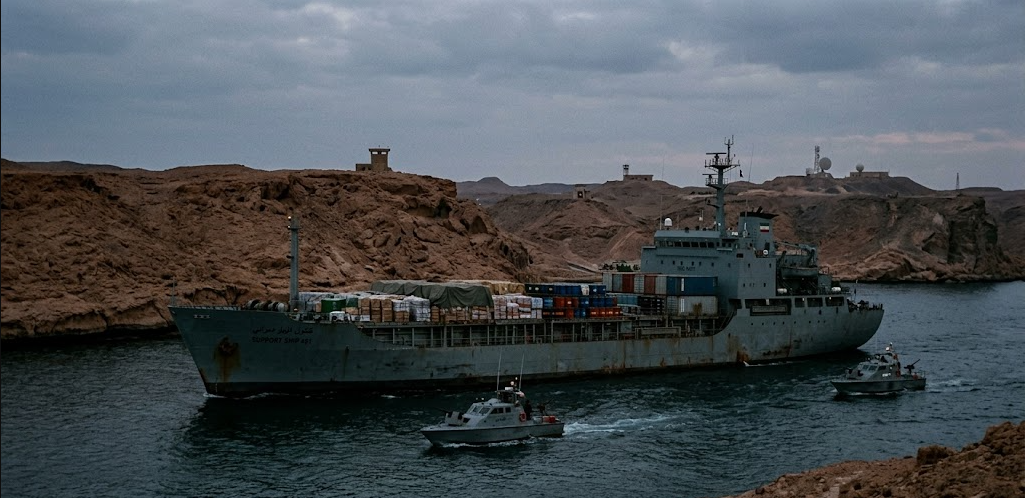
The CIA assessment arrives as the Strait of Hormuz itself has become the most kinetically tense waterway on earth. Iranian Revolutionary Guard Corps naval vessels have increased their presence and patrol tempo across the strait in recent weeks, conducting what the U.S. Navy’s Fifth Fleet has characterised as “unsafe and unprofessional” intercepts of commercial shipping. At least three incidents involving IRGC speedboats approaching international vessels at close range have been logged in the past fortnight alone.
Iran has also conducted what it described as “routine naval exercises” in the strait — exercises that included the simulated mining of shipping lanes and the deployment of anti-ship missile batteries along its southern coastline. Military analysts tracking the exercises note that their scale and configuration closely mirror the operational posture Iran would adopt in the early stages of an actual Hormuz closure operation.
Washington has responded by reinforcing the Fifth Fleet’s surface and subsurface presence in the region, deploying additional mine countermeasure vessels and accelerating intelligence surveillance operations across the strait’s chokepoints. The USS Abraham Lincoln carrier strike group remains within operational range, a visible and deliberate signal of American military readiness.
Why Four Months Changes the Strategic Equation
The four-month endurance window fundamentally alters the calculus of a Hormuz blockade as a coercive instrument in several critical ways.
First, it means a blockade would need to be sustained for longer than any previous American naval pressure operation in the modern era to achieve its intended effect — generating the kind of sustained political commitment and allied support that Washington has historically struggled to maintain in extended pressure campaigns.
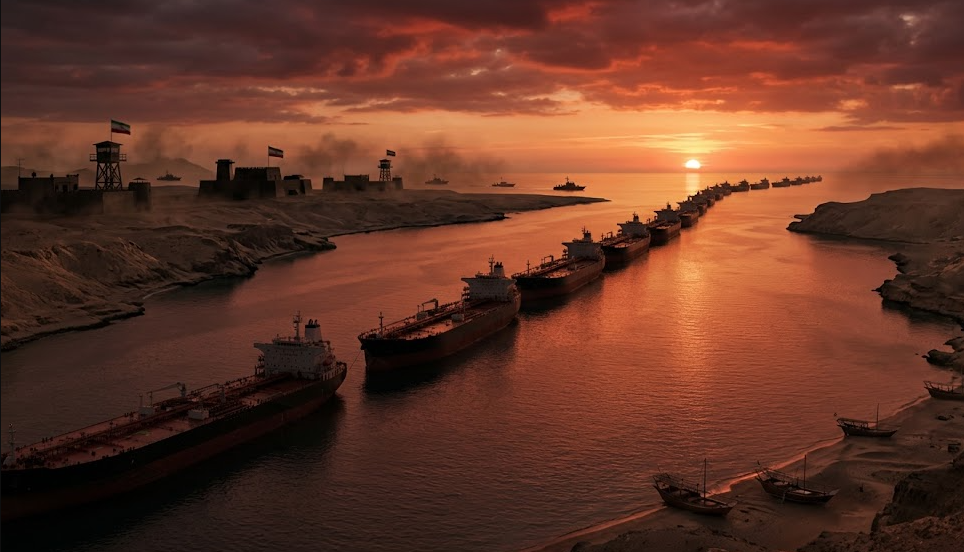
Second, it exposes the asymmetry of costs. While Iran absorbs four months of blockade pain internally, the rest of the world absorbs something far more immediate: the removal of approximately 20% of global oil supply from international markets. Within days of a Hormuz closure, oil prices would spike to levels capable of triggering recession conditions across Europe and Asia. The economic pain of the blockade would radiate outward from Iran far faster than inward toward it.
Third, and most strategically significant, it gives Iran a negotiating window. Four months is enough time to sue for terms, reach a diplomatic framework, and present a blockade’s end as a political achievement rather than a military defeat — provided Tehran judges the moment correctly and Washington is prepared to offer an off-ramp that Tehran’s leadership can accept without existential loss of face.
The Global Oil Market Dimension
Energy markets are already pricing in Hormuz risk with a volatility premium that has pushed oil above levels that make inflation management significantly more complicated for the Federal Reserve and its counterparts in Frankfurt and Tokyo.
Gulf state producers — Saudi Arabia, the UAE, Kuwait, and Iraq — are in private discussions about emergency alternative export routing through the Red Sea and overland pipeline infrastructure that bypasses Hormuz entirely. But those alternatives, analysts note, can accommodate only a fraction of the volume that currently transits the strait. There is no logistical substitute for Hormuz at scale, and every energy security planner in the world knows it.
OPEC has refrained from making public statements about Hormuz contingency planning — doing so would accelerate the very market panic it seeks to avoid — but internal working groups are actively war-gaming supply disruption scenarios at a level of intensity not seen since the 2019 Abqaiq attacks on Saudi oil infrastructure.
What Washington Does With the CIA Warning
The four-month endurance assessment has not killed the Hormuz option within Washington’s policy toolkit. But it has significantly raised the threshold of strategic confidence required before any administration would pull that particular lever.
The practical effect of the CIA warning is to push American strategy further toward the diplomatic track — reinforcing the logic of the war-ending proposal currently before Iranian negotiators and strengthening the hand of those within the administration who argue that a deal, even an imperfect one, is preferable to a blockade whose costs would be borne as much by American allies as by Iran itself.
It has also, paradoxically, increased the value of the Hormuz threat as a negotiating instrument precisely because everyone now understands more clearly what using it would actually cost. A threat whose consequences are well understood by both sides is more credible, not less — because both parties know the stakes are real.
Iran can endure four months. The question Washington is now wrestling with is whether the rest of the world can endure it alongside them — and whether any American president can survive the political consequences of finding out.
Market Analysis
A quick snapshot of market trends, customer behavior, and competitor movements.